Category: Behavior Analytics

  • Marketing Analytics: What it Is, Why it Matters, and How to Start

    Marketing Analytics: What it Is, Why it Matters, and How to Start

    Crafting top-notch marketing campaigns is just half of the work. At the end of the day, you still have to find out if those marketing activities worked as well as they should.

    Marketing analytics is the key to optimizing your campaigns through data-driven decisions. 

    In this guide, we’ll do a deep dive into marketing analytics, why it’s important, and how to apply it to your own business.

    What is Marketing Analytics?

    You’ve launched a handful of marketing campaigns, made tweaks to your conversion strategies, and tapped into a new target cluster. How do you know if these marketing efforts met the goals you set at the beginning?

    When businesses want to measure the effectiveness of just about any strategy, they turn to data. In the case of marketing strategies, you need marketing analytics.

    Marketing analytics is the process of using data to assess the success of your marketing efforts. It goes beyond traditional metrics like sales or lead generation as it delves into finer details, such as customer behavior, engagement levels, campaign performance across different channels, and the overall customer journey.

    There’s no one perfect way to analyze your marketing data. Popular marketing analytics models and methods include:

    • Descriptive Analytics: Focuses on what has happened in the past to guide future marketing strategies.
    • Predictive Analytics: Uses data from past marketing campaigns to predict customer behavior.
    • Prescriptive Analytics: Uses all collected data to identify specific marketing strategies that could lead to higher engagement, conversion rates, or other objectives.

    Savvy businesses will use more than one or a mixture of all methods.
    man looking at stats and charts animated picture

    What Are the 5 Main Types of Marketing Analytics Tools?

    Marketing analytics tools help businesses optimize marketing efforts and demonstrate their value. Since there are multiple avenues of marketing, you might need to use more than one marketing analytics software.

    Here are the five main categories of marketing analytics software:

    1. Web Analytics

    Web analytics involves the measurement, collection, and analysis of web data to understand and optimize website usage.

    It gives you a better understanding of how users interact with your website, which parts of the site are most engaging, and where improvements can be made to improve the user experience.

    2. SEO Analytics

    SEO (Search Engine Optimization) analytics focuses on analyzing and understanding website performance in search engine results pages (SERPs) to improve visibility and rank higher for relevant queries.

    Analyzing these metrics can help you improve your SEO strategies, find high-performing keywords, optimize website content, and maximize overall search engine visibility to drive more organic traffic.

    3. Social Media Analytics

    Social media marketing is one of the most powerful forms of marketing, but it can sometimes be a hit or miss. Analyzing data from your platforms can help you understand social interactions and the performance of social media campaigns.

    Plus, you can craft more targeted marketing initiatives and tailor content to increase engagement and conversions.

    4. Lead Generation and Attribution Analytics

    Lead generation analytics focuses on tracking and analyzing the generation of potential customer interest in products or services. On the other hand, attribution analytics further examines which marketing channels and touchpoints contribute to conversions or sales.

    Both types of analytics can help you identify which lead generation strategies are most effective and how various marketing channels play a part in customer acquisition.

    5. Email Marketing Analytics

    Email marketing analytics allows marketers to upgrade their email campaigns, segment their audiences, and customize content to increase engagement and conversions.

    An effective email marketing analytics tool lets you gather important data, such as click rates, read-through rates, link engagement, and more. For example, using DMARC aggregate reports can help you get a better understanding of your email deliverability.

    Why is Marketing Analytics Important?

    A well-implemented marketing strategy can produce amazing results for your business. However, you want to know exactly how effective it was and how many of your goals you actually met. And this is where marketing analytics tools come in.

    With these tools, you’ll be better at:

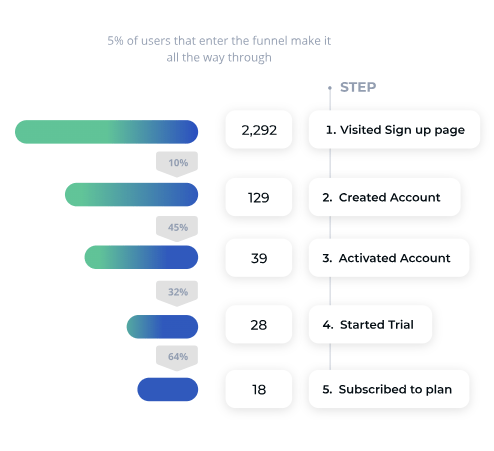
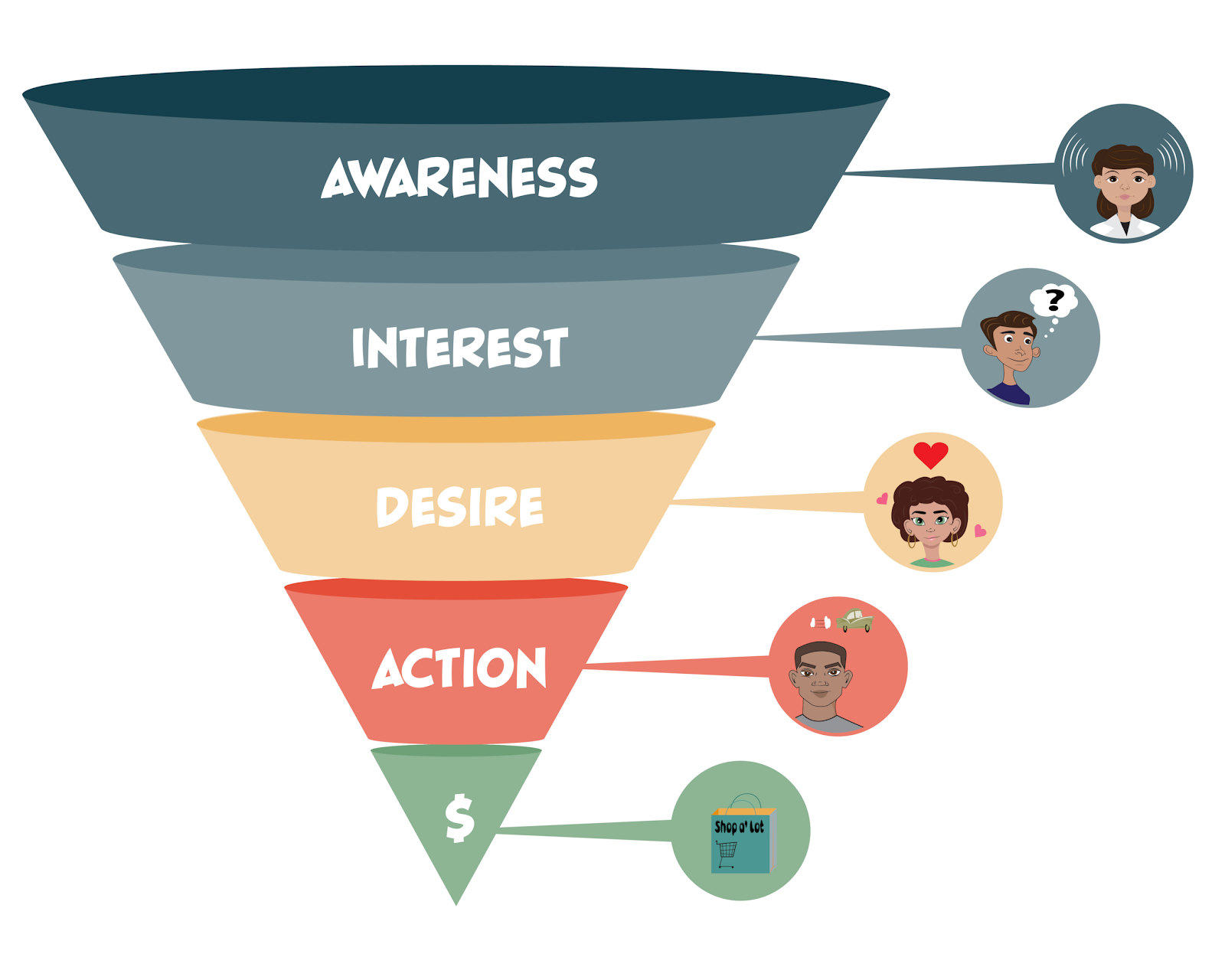
    Understanding the Customer Journey and Conversion Funnel

    Your customers are on an adventure of their own from the moment they hear about you until they decide to make a purchase (and beyond). Marketing analytics helps you map out their journey, showing you the paths they take, the stops they enjoy, and where they might get lost.

    Analyzing how your customers move through the conversion funnel lets you identify where you lose potential customers and where you get the most conversions. In turn, you can better optimize your strategies to improve conversion rates.

    Refining Your Marketing Strategies

    The main goal of marketing analytics is to show you what you need to improve and which strategies are working the best. So, marketing analytics allows you to refine your strategies and make sure that your resources are invested in the most effective paths.

    For instance, marketing analytics can pinpoint which marketing channels (social media, email, search engines, etc.) are driving the most engagement, leads, or sales.

    Quantifying Your Claims

    In the world of marketing, claims are your bold flags planted in the ground. But to ensure they’re seen and respected, you need to back them up with solid, quantifiable proof.

    Marketing analytics provides the evidence to support your claims, turning “We believe we’re the best” into “Here’s the data that shows we’re the best.”

    For example, let’s say a clothing brand launches a summer ad campaign on social media, claiming it was a huge hit. Without marketing analytics, that statement is just words. However, the brand can back up its claim with solid numbers:

    “Our summer ad campaign generated a 30% increase in social media engagement and boosted online sales by 25% compared to the previous month.”

    three women discussing a strategy

    Transforming Marketing Data Into Valuable Insights

    Marketing teams can use data analytics to make strategic decisions based on facts. In other words, marketing analytics take out most of the guesswork when strategizing new marketing efforts.

    Marketing teams can also visualize these insights through dashboards, charts, and reports. Visual representations help marketers and decision-makers understand complex data and identify the next best steps.

    Measuring Your ROI

    We’ve already mentioned that marketing analytics can help you evaluate the effectiveness of your marketing performance. From a business owner’s point of view, analytics gives you a clearer view of your return on investment (ROI).

    Marketing analytics aggregates all cost data, including ad spend, marketing tool subscriptions, salaries of marketing personnel, and any other associated costs.

    At the same time, it offers detailed insights into key performance indicators (KPIs) such as click-through rates, conversion rates, customer acquisition cost (CAC), customer lifetime value (CLTV), and more.

    Adding these two segments (plus other variables) helps you clearly see how well your marketing dollars have paid off.

    How to Use Marketing Analytics to Maximize Your Growth

    Using data analytics to evaluate your marketing performance is one of the best ways to determine if your investments are working as well as they should. 

    Here’s a marketing analytics game plan you can start with:

    1. Set Clear Goals

    First up, decide what you’re aiming for. More website visitors? Bigger sales numbers? Keeping your customers coming back? 

    Make your goals clear and keep them realistic. Think about what success looks like for you, but keep it simple—no need for overly complicated targets (save that for later!)

    2. Establish Your Benchmarks

    Take a good look at where you’re at now. How’s your website doing? How do your social media accounts look compared to the competition? Are you reaching your target audience as well as you should?

    It’s always better to go for a more direct approach. Here are some essential KPIs that should be on your radar:

    • Website Traffic: Total number of visits to your website. It’s the big-picture view of your online presence.
    • Conversion Rate: The percentage of visitors who take a desired action (e.g., buying a product or signing up for your membership). It’s all about how effectively you’re turning visitors into customers or leads.
    • Pageviews and Time on Page: Shows how engaging your content is. If people stick around to read, watch, or interact, you’re probably doing something right.
    • Bounce Rate: The percentage of visitors who leave after viewing only one page. A high bounce rate might mean your landing pages aren’t as compelling as they could be.
    • CAC: The total cost of acquiring a new customer. It includes everything from marketing and sales expenses to software costs. Keeping CAC in check while growing is key to a healthy business.
    • CLTV: The total revenue a business can expect from a single customer over the course of their relationship. It’s a big-picture metric that helps you understand the value each customer brings.

    Keep in mind that KPIs can look different from business to business. Make sure you know what metrics you should be tracking before you analyze and measure your marketing performance.

    3. Collect Marketing Data

    Now, it’s time for the most challenging part: collecting your marketing analytics data. Luckily, there are plenty of ways you can do this:

    • Surveys and Questionnaires: Gathering direct feedback from customers about their preferences, satisfaction levels, and product/service expectations.
    • A/B Testing: Comparing two versions of a webpage, ad, or email campaign to see which performs better in terms of engagement, conversions, or other predetermined metrics.
    • Organic Content Engagement: Analyzing how users interact with content that isn’t promoted through paid advertising, such as blog posts, social media posts, and videos. Metrics include likes, shares, comments, and time spent on the page.
    • Paid Ad Engagement: Measuring the effectiveness of paid advertising campaigns on platforms like Google Ads or social media. Key metrics include click-through rate (CTR), conversion rate, cost per click (CPC), and return on ad spend (ROAS).
    • Social Media Analytics: Tracking engagement rates, follower growth, mentions, and hashtag performance to understand how audiences interact with your brand on social platforms.
    • Website Analytics: Using tools to measure website traffic, user behavior, bounce rate, page views per session, and conversions to optimize the user experience and content strategy.

    men looking at charts on a tablet

    4. Apply Marketing Analytics Tools

    The next step is to find the right tools for the job. There are tons of analytics tools out there, so pick the ones that fit what you’re trying to do. Here are some of the most popular ones:

    • FullSession: A comprehensive toolbelt for web analytics, including interactive heat maps, session recordings and replays, market segmentation capabilities, and more.
    • Google Analytics: The must-have tool for tracking web traffic, user behavior, and customer acquisition channels. It’s versatile, widely used, and offers both free and paid versions (Google Analytics 4).
    • Sprout Social: Provides top-notch social media management and analytics, including engagement tracking, audience growth analysis, and competitor comparison.
    • SEMrush: A powerful tool for SEO, content marketing, competitor research, PPC, and social media marketing. It’s great for tracking keyword rankings, backlinks, and SEO health.
    • Salesforce Sales Cloud: Offers comprehensive CRM solutions with powerful analytics to track sales performance, customer interactions, and more.
    • Shopify Analytics: If you’re running an e-commerce site on Shopify, its built-in analytics provide insights into sales, customer behavior, and site performance.

    5. Re-Strategize Your Marketing Strategy

    You now have your marketing data and have done deep data analysis. 

    Next, go back to the list of objectives you set before all this. Based on the insights you’ve gathered, how can you improve your marketing efforts so that you meet those goals?

    At this point, it’s time for human talent to take over. Marketers, product developers, customer relationship management teams, and other departments can now work together to improve marketing results and, in turn, the business’s bottom line.

    Use Marketing Data Analytics to Maximize Your ROI

    Marketing efforts without data analysis are pretty much shots in the dark. You won’t know if your campaigns are working, and even if they seem to be successful, you still need to measure by how much.

    Whether you’re new to marketing analytics or want to improve, you need the right digital marketing tools to analyze marketing analytics data effectively. Start with the best web analytics tool on the market: FullSession.

    FullSession Pricing Plans
    FullSession Pricing

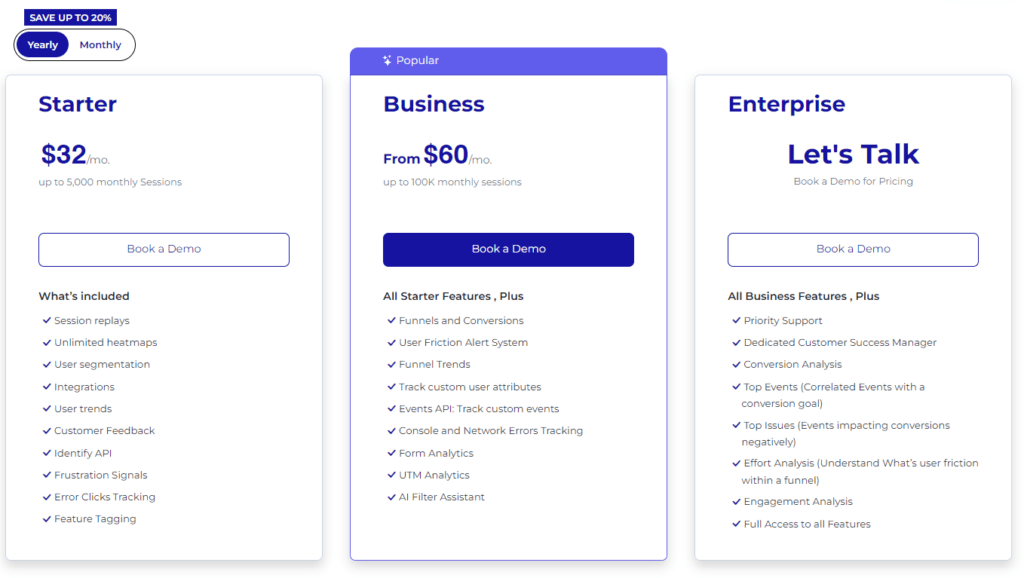
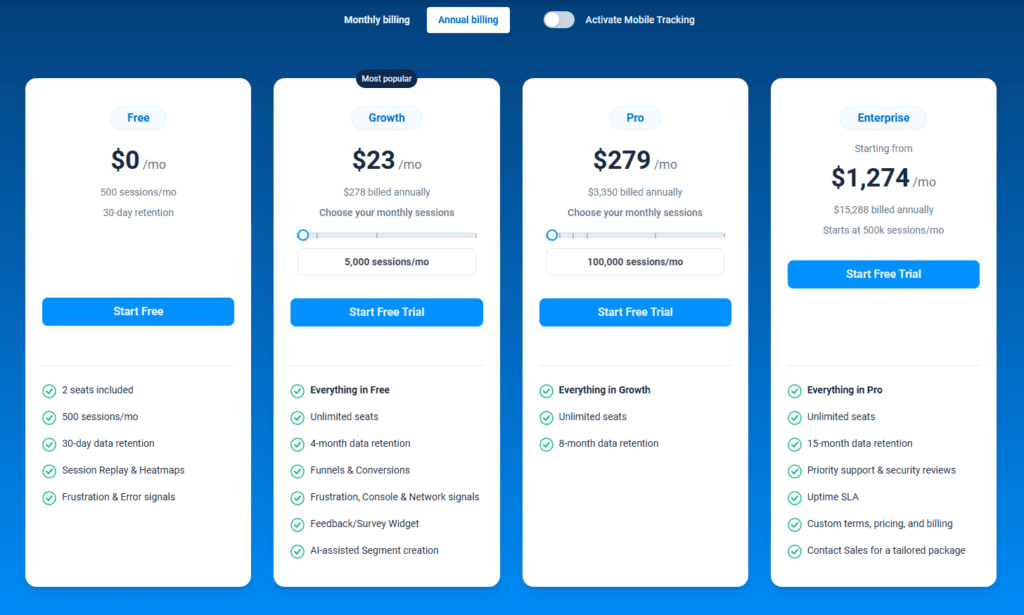
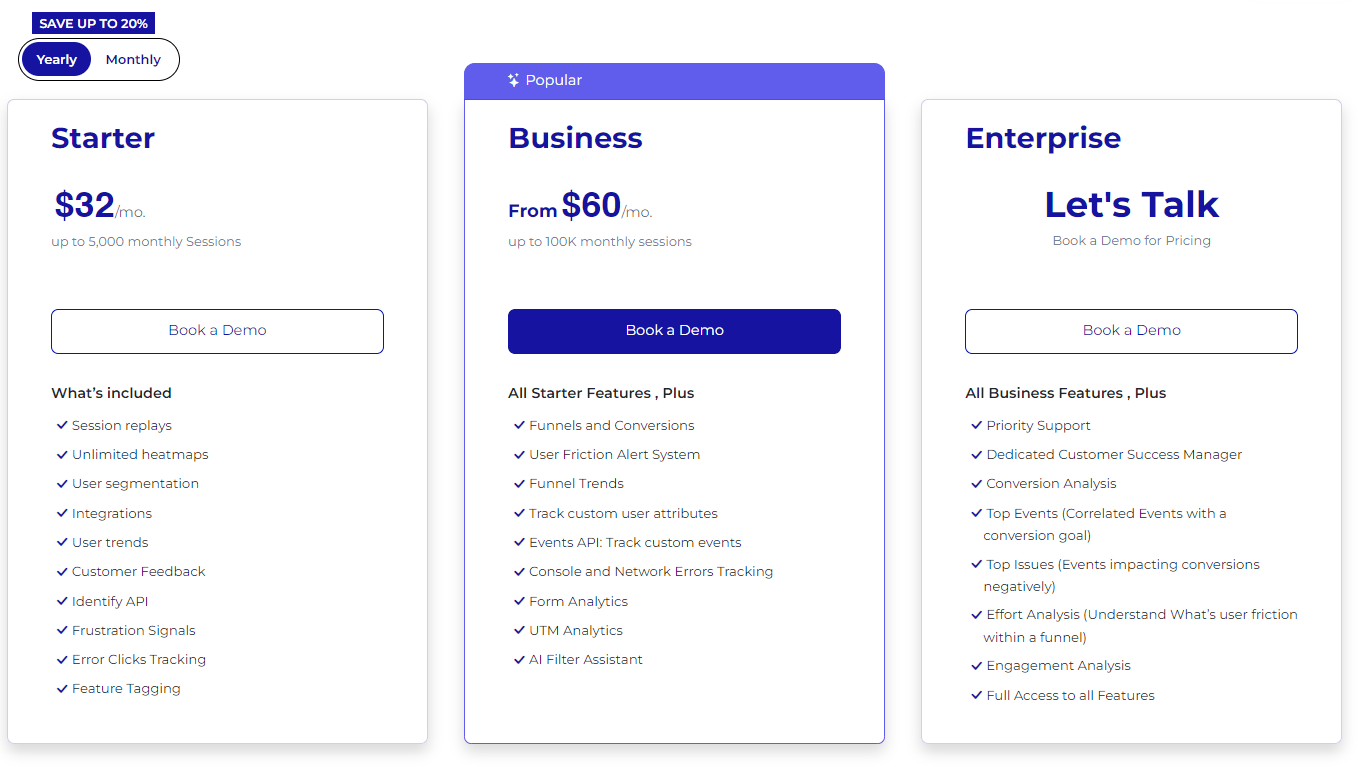
    The FullSession platform offers a 14-day free trial. It provides two paid plans—Basic and Business. Here are more details on each plan.

    • The Starter plan costs $39/month or $32/year and allows you to monitor up to 5,000 monthly sessions with up to 6 months of data storage.
    • The Business plan costs $75/month or $60/year and helps you to track and analyze up to 100,000 monthly sessions with up to 12 months of data storage.
    • The Enterprise plan has custom pricing and offers customizable sessions plus full access to all features.

    Book a demo today.

    Install Your First Marketing Analytics Tools Right Now

    It takes less than 5 minutes to analyze your marketing campaigns withFullSession, and it’s completely free!

    FAQs About Marketing Analytics

    Is marketing analytics only for big businesses?

    No. Businesses of all sizes can (and should) leverage marketing analytics to improve their strategies.

    How technical do I need to be to use marketing analytics?

    While some technical know-how is helpful, many tools make analytics accessible to non-technical users. Plus, a willingness to learn goes a long way.

    Can marketing analytics predict future trends?

    While not a crystal ball, marketing analytics can help forecast trends based on past and current data, giving you a competitive edge.

  • 17 SaaS Metrics You Need to Track (+ Formulas and Tips)

    17 SaaS Metrics You Need to Track (+ Formulas and Tips)

    The international software-as-a-service (SaaS) industry grew to $237.48 billion in 2022 and is expected to reach over $900 billion by 2030. The market is supersaturated to the point that the competition is kicking the weakest links out before they can even gain traction.

    On the flip side, the SaaS companies sitting on top are perfecting their business strategies, workflows, and services to stay successful. Their secret? Maximizing the wealth of data they have at their fingertips.

    Analytics is your best friend when running a successful SaaS business. Complex data tells you what you’re doing right and how you can be even better. However, keeping track of all the information available is a fool’s errand–if you want to optimize your business, you need to choose the right SaaS metrics to track.

    Let’s look at 17 key metrics SaaS companies should focus on if they want a more straightforward path to success.

    What Are SaaS Metrics?

    SaaS metrics offer a comprehensive overview of a company’s performance and overall health status. Most SaaS businesses measure success by the volume of regular subscribers and how well they can keep current customers.

    SaaS metrics, especially when well-chosen, tell companies if they are hitting these targets. Plus, analyzing these data points identifies opportunities for improvement and helps predict customer retention, which are some of the most crucial aspects of running a SaaS business.

    Why Do Key SaaS Metrics Change Over Time?

    Man walking up arrow held by hand animation

    SaaS businesses don’t keep track of the same metrics, nor do they track all of them. If you want to optimize your company’s growth, choose the right growth metrics depending on your current stage, business model, and goals.

    Picture a SaaS company as a growing kid. When they’re just starting, it’s all about getting those initial users through the door and making sure they stick around—like ensuring a kid eats their veggies and gets enough playtime. At this stage, it’s all about user acquisition and retention. You want to see lots of new faces and make sure they’re happy enough to stay.

    But as the company grows up, things start to shift. It’s no longer just about gathering a crowd; it’s about making serious cash and broadening the horizons. Now, think of this as the teenage years, with more focus on building meaningful relationships and laying the groundwork for the future. For a more mature SaaS company, the game changes to optimize revenue and make sure the customer base doesn’t just grow but becomes more diverse and stable.

    Nevertheless, there are three crucial aspects to any SaaS business model, regardless of age:

    • Profitability: SaaS companies rely on subscriptions to generate profit. You always want to stay in the black, where metrics like gross margin, annual recurring revenue, and monthly recurring revenue (MRR) come in.
    • Growth: A successful SaaS business is constantly growing, whether expanding services or tapping into a new market. Stagnant growth usually follows a decline in profitability, even in traditional businesses.
    • Cash Flow: Successful SaaS companies strive for cash flow positivity through various strategies, such as reasonable upgrades, upselling products, and minimizing delays between expenses and revenue. In contrast, spending more than you receive can easily lead to a downward spiral.

    Additionally, mature SaaS businesses can re-track early-stage metrics as related issues arise. For example, a company seeing a sudden decline in existing customers can review its churn rate to get an idea of what’s happening.

    Most Important SaaS Metrics For Early-Stage Companies

    The biggest concern of SaaS startups is getting their foot in the door, acquiring customers, and keeping any attention that comes their way, all while tackling the challenge of having limited resources. At this stage, the focus is on identifying the most important aspects of the business and figuring out how to optimize them.

    These core metrics are a great starting point for a fresh SaaS business:

    1. Retention Rate

    The retention rate quantifies the percentage of customers who remain subscribed or continue purchasing after their initial transaction, serving as an important indicator of customer satisfaction and product or service value.

    Retention Rate Formula: (number of customers at the end of a given period – number of new customers) ÷ total number of customers at the beginning of that period.

    2. Traffic-to-Lead Rate

    The traffic-to-lead rate shows the percentage of your website visitors that you successfully convert into a lead, whether that means signing up for a newsletter or booking a trial. Tracking this metric helps you determine if your lead-generation strategies are working.

    Traffic-to-Lead Rate Formula: (number of website visits ÷ number of generated leads within the same period) x 100

    3. Customer Conversion Rate

    Once you’ve got potential customers’ attention, the customer conversion rate (also known as the lead-to-customer rate) tells you just how many customers are digging into their pockets to buy what you’re selling. A high conversion rate means your onboarding tactics work well, and customers see your product’s value quickly.

    Customer Conversion Rate Formula: (total number of trial users converted to a paid subscription ÷ total number of trial users.

    4. Churn Rate

    Churn rate measures two types of losses. Customer churn rate shows the percentage of customers giving up their accounts every month compared to your total number of customers. On the other hand, revenue churn quantifies the amount of cash your revenue stream loses every month, calculated as the percentage of your revenue lost from your total revenue.

    Both revenue and customer churn can be helpful indicators of customer attrition and your company’s overall health. However, most SaaS companies find revenue churn more useful; the number of customers lost doesn’t always reflect how much you lose in revenue.

    Churn Rate Formula: (number of churned customers in a given time frame ÷ total number of customers at the beginning of the period) x 100

    5. Daily Active Users and Monthly Active Users

    Daily active users (DAU) and monthly active users (MAU) give you a snapshot of how many people are using your service every day or month. Substantial numbers here suggest your users are really into what you’re offering, which is a good sign for keeping that retention rate healthy. However, you can’t use DAU or MAU on their own.

    The DAU/MAU ratio helps you understand how often existing customers return to the application within a month. A higher ratio indicates that users engage with the service daily, suggesting high user retention and a more engaged, active user base. For instance, a DAU/MAU ratio of 0.5 means that, on average, half of the monthly users use the service daily, a strong indicator of a highly engaging product.

    DAU and MAU Ratio Formula: (number of unique daily active users ÷ number of monthly active users) x 100

    6. Customer Engagement Score (CES)

    CES goes a step further by measuring not just if users log in but how they interact with your product. Are they exploring, clicking, and getting involved? The customer engagement score helps you see which parts of your product are hitting the mark and where you might need to up your game to keep users interested.

    Unlike a single formula that applies universally, the CES is typically customized to each company’s specific context, reflecting how users interact with their product or service. To calculate a CES, companies often consider a variety of factors, including but not limited to:

    1. Frequency of Use: How often a user interacts with the product or service within a given time frame.
    2. Depth of Use: The variety of features or services within the user’s product.
    3. Duration of Use: The amount of time spent during each interaction.
    4. Breadth of Use: The number of different functions or features used.
    5. Recency: How recently the user has interacted with the product or service.
    6. Growth: Increases in usage over time.
    7. Conversion Actions: Specific actions that indicate a higher level of interest or engagement, such as making a purchase, upgrading an account, or completing a set of tasks.

    A company will assign weights to these factors to create a CES formula based on their importance to the business objectives. For example, a SaaS company might consider frequency and depth of use as more critical engagement indicators and assign them higher weights. The formula might look something like this:

    CES=(w1×Frequency)+(w2×Depth)+(w3×Duration)+…CES=(w1​×Frequency)+(w2​×Depth)+(w3​×Duration)+…

    where w1,w2,w3,…w1​,w2​,w3​,… represent the weights assigned to each factor.

    After calculating the scores, companies can segment users into different engagement levels (e.g., low, medium, high) to tailor their marketing, support, and product development efforts accordingly.

    7. Monthly Recurring Revenue (MRR) and Annual Recurring Revenue (ARR)

    Monthly recurring revenue and annual recurring revenue track the steady flow of cash your subscriptions are bringing in each month and year. These metrics are your go-to SaaS revenue recording process, best for understanding how your financial health looks and where it’s headed. They’re critical for planning, budgeting wisely, and ensuring you’re on track to grow and keep your company thriving.

    Annual Recurring Revenue Formula: Total annual contract value ÷ number of years

    Most Important SaaS Metrics for Late-Stage Companies

    Animation of people on browser placing coins and clicking link

    As SaaS companies transition from their early stages of growth to more mature phases, the focus of their metrics shifts towards optimizing revenue, sustainability, and long-term customer value.

    Understanding and leveraging these metrics becomes crucial for steering the company toward continued customer success, and scalability:

    8. Average Revenue Per Account (ARPA)

    ARPA, also known as average revenue per user (ARPU), is a vital metric for gauging the average revenue generated per customer account over a specific period. It offers insights into the revenue impact of your customer base and helps identify trends in upselling and customer growth.

    As your SaaS company matures, ARPA becomes an essential indicator of how well you’re maximizing the value of each customer, guiding strategic decisions around pricing, product development, and customer segmentation.

    Average Revenue Per Account Formula: Monthly recurring revenue ÷ total number of active subscriptions

    9. Activation Rate

    The activation rate is the most important among SaaS metrics as it measures the number of customers who realize the value of your service and activate their accounts.

    A high activation rate is often a predictor of future, customer retention rate and satisfaction, making it a critical metric for understanding the initial user experience and the effectiveness of your product in meeting user needs.

    Activation Rate Formula: number of customers who perform your desired action ÷ total number of users

    10. Customer Acquisition Cost (CAC)

    CAC calculates the total cost of acquiring a new customer, including marketing and sales expenses. It’s a cornerstone metric for assessing the efficiency of your growth strategies and the sustainability of your business model.

    A lower CAC about customer value indicates a healthy, scalable company. Monitoring CAC closely helps late-stage SaaS businesses refine their acquisition strategies to ensure long-term profitability. Remember, the faster you can recover customer acquisition costs, the faster you can reinvest that positive cash flow into your business.

    Customer Acquisition Cost Formula: Total amount of money spent on sales and marketing within a time frame ÷ number of new customers acquired within that time frame

    11. Customer Lifetime Value (CLV)

    Customer lifetime value estimates the total revenue a business can expect from a single customer account throughout their relationship. This metric is crucial for understanding the long-term value of customer relationships and for making informed decisions about how much to invest in customer acquisition and retention.

    A high customer lifetime value indicates a strong, loyal customer base and suggests that the company’s offerings continue to meet and exceed customer expectations over time.

    Customer Lifetime Value Formula: (Revenue x customer lifetime) – customer acquisition cost and maintenance

    12. CLV-to-CAC Ratio

    Comparing your average customer’ lifetime value and customer acquisition cost helps you determine whether your marketing efforts are working. A healthy CLV-to-CAC ratio (typically 3:1 or higher) signifies that a company is spending its resources efficiently, generating significant value from its customers compared to what it spends to acquire them.

    For example, if you earn $1,000 from one customer within a given period, your SaaS business should only spend up to $300 to acquire that customer. This helps ensure you’re not losing money.

    Customer Lifetime Value (CLV) to Customer Acquisition Cost (CAC) Ratio Formula: Customer lifetime value over a period: customer acquisition cost over the same period

    13. Expansion Revenue

    Expansion revenue measures the additional revenue earned from existing customers through the sales process upselling, cross-selling, and upgrades. It’s a testament to a company’s ability to grow its revenue base without solely relying on new customer acquisition.

    High expansion revenue indicates effective account management and product value, contributing to company growth and customer satisfaction. Focusing on this crucial metric can help you fight the negative effects of customer churn.

    Expansion Revenue Formula: Total MRR from upselling and/or cross-selling

    14. CAC Payback Period

    The CAC payback period measures how long it would take you to recoup the costs (typically from sales and marketing) of acquiring a customer. This metric is crucial for understanding cash flow implications and financial health, especially for SaaS businesses where upfront acquisition costs can be significant.

    A shorter payback period improves cash flow and reduces the risk associated with long-term investments in a customer acquisition strategy. This can also be a valuable metric for SaaS companies in the middle of the growth stage who want to avoid potential cash flow issues.

    CAC Payback Period Formula: CAC ÷ MRR from a new customer

    15. Net Promoter Score (NPS)

    Net Promoter Score (NPS) is a straightforward yet powerful tool to measure customer satisfaction and loyalty. It’s based on a simple question: “On a scale of 0 to 10, how likely are you to recommend our product/service to a friend or colleague?”

    Here’s how the NPS is calculated:

    1. Respondents are categorized into three groups based on their rating:
      • Promoters (9-10): These are your most enthusiastic and loyal customers. They will likely sing your praises to friends and colleagues, driving organic growth.
      • Passives (7-8): Satisfied but unenthusiastic customers vulnerable to competitive offerings. They’re happy enough but not blown away.
      • Detractors (0-6): Unhappy customers who can hurt your brand and impede growth through negative word-of-mouth.
    2. Calculate the percentage of Promoters and Detractors: Once you have your survey responses, calculate the percentage of respondents that are Promoters and Detractors. Passives count towards the total number of respondents, normalizing the score, but they don’t directly affect the NPS.
    3. Subtract the percentage of Detractors from the percentage of Promoters: The formula looks like this:

    Net Promoter Score Formula =(Percentage of Promoters)−(Percentage of Detractors)NPS=(Percentage of Promoters)−(Percentage of Detractors)

    The result is your NPS, ranging from -100 (everyone is a Detractor) to 100 (everyone is a Promoter). A positive NPS (>0) is generally good, and a score above 50 is excellent, indicating strong customer loyalty and a customer satisfaction score.

    16. Net Revenue Retention

    NRR measures the percentage of recurring revenue retained from existing customers over a given period, factoring in upgrades, downgrades, and churn. It’s a powerful indicator of customer satisfaction, product-market fit, and the effectiveness of retention strategies.

    High NRR values suggest that a company is not only retaining its customer base but also successfully encouraging additional spending.

    Net Revenue Retention Formula: (Retained revenue ÷ base recurring revenue) x 100

    17. Gross Margin

    Gross margin reveals the profitability of a company’s core activities by subtracting the cost of goods sold (COGS) from total revenue. For SaaS companies, this typically includes the costs associated with delivering the service, such as hosting and support. Monitoring gross margin helps ensure that as the company scales, it does so profitably and that revenue growth outpaces the growth of direct costs.

    Gross Margin Formula: ((Revenue – cost of goods sold) ÷ revenue) x 100

    What SaaS Metrics Can Web Analytics Track?

    Man tracking analytics on dashboard animation

    Web analytics can be a goldmine of data for SaaS companies. These tools track how users interact with your website, providing insights that can help optimize the customer journey, improve product features, and ultimately drive growth. Here are some key SaaS metrics that web analytics can measure:

    1. Traffic-to-Lead Ratio: This measures the effectiveness of your website in converting visitors to leads. By analyzing website traffic and the actions visitors take, you can understand how well your site attracts and captures potential customer interest.
    2. Lead-to-Customer Conversion Rate: Web analytics can track the journey of leads as they progress through your conversion funnel, helping you identify how many leads become paying customers.
    3. Customer Engagement and Product Usage: Integrating web analytics with your SaaS product can help measure how users interact with your product. Metrics such as feature usage, session duration, and frequency of use provide a clear picture of engagement levels, which are vital for customer retention and product development.
    4. Churn Rate: Although web analytics alone may not capture churn directly, it can provide early warning signs of customer dissatisfaction through decreased engagement, reduced session time, or declining frequency of use. These indicators can help you take proactive measures to reduce churn.
    5. Daily Active Users (DAU) and Monthly Active Users (MAU): Web analytics tools can track the number of existing customers who engage with your product daily and monthly, offering insights into your product’s stickiness and regular usage patterns.
    6. Customer Acquisition Cost (CAC): Tracking marketing and advertising expenses alongside conversions from various channels can help you calculate the cost of acquiring a new customer, a critical metric for understanding the efficiency of your marketing efforts.
    7. Page Views per Session and Time on Site: These metrics give you an idea of how engaging your content is. High page views and longer time on site often indicate that visitors find your content valuable, which can be a good indicator of potential lead quality.
    8. Bounce Rate: This represents the percentage of visitors who navigate away from the site after viewing only one page. A high bounce rate might indicate that your landing pages are not relevant or engaging enough for your target audience.
    9. Traffic Sources: Understanding where your traffic comes from (e.g., organic search, paid ads, social media) can help you identify which channels are most effective at driving engaged users and leads, allowing you to allocate your marketing budget more effectively.
    10. Funnel Analysis: Web analytics can help you map out and analyze the customer journey, identifying bottlenecks where users drop off. This analysis is crucial for optimizing the conversion path and improving the overall user experience.

    Install Your First Website Feedback Form Right Now

    It takes less than 5 minutes to set up your first website or app feedback form, with FullSession, and it’s completely free!

    Monitor the Most Crucial SaaS Metrics with FullSession

    Understanding the SaaS metrics most relevant to your company is an excellent starting point for business optimization. You don’t want to waste time tracking metrics that don’t matter. In the same vein, you want a way to track these important metrics efficiently.

    FullSession is an intuitive platform that gives you access to a host of powerful tools, including:

    • Funnel data: Identify which parts of your conversion funnel are causing potential customers to drop out. Track KPIs like site visits, sign-up rates, bounce rates, and more.
    • Session recordings: FullSession offers replays and live recordings of customers using your website, giving you a clear idea of how they navigate your site and things that can cause frustration.
    • Interactive heat maps: Website heatmaps track clicks, scrolls, and dynamic elements like drop-down menus and pop-ups. A heatmap provides a visual representation of which items are gaining the most attention vs. getting ignored, and potential issues like confusing graphics.
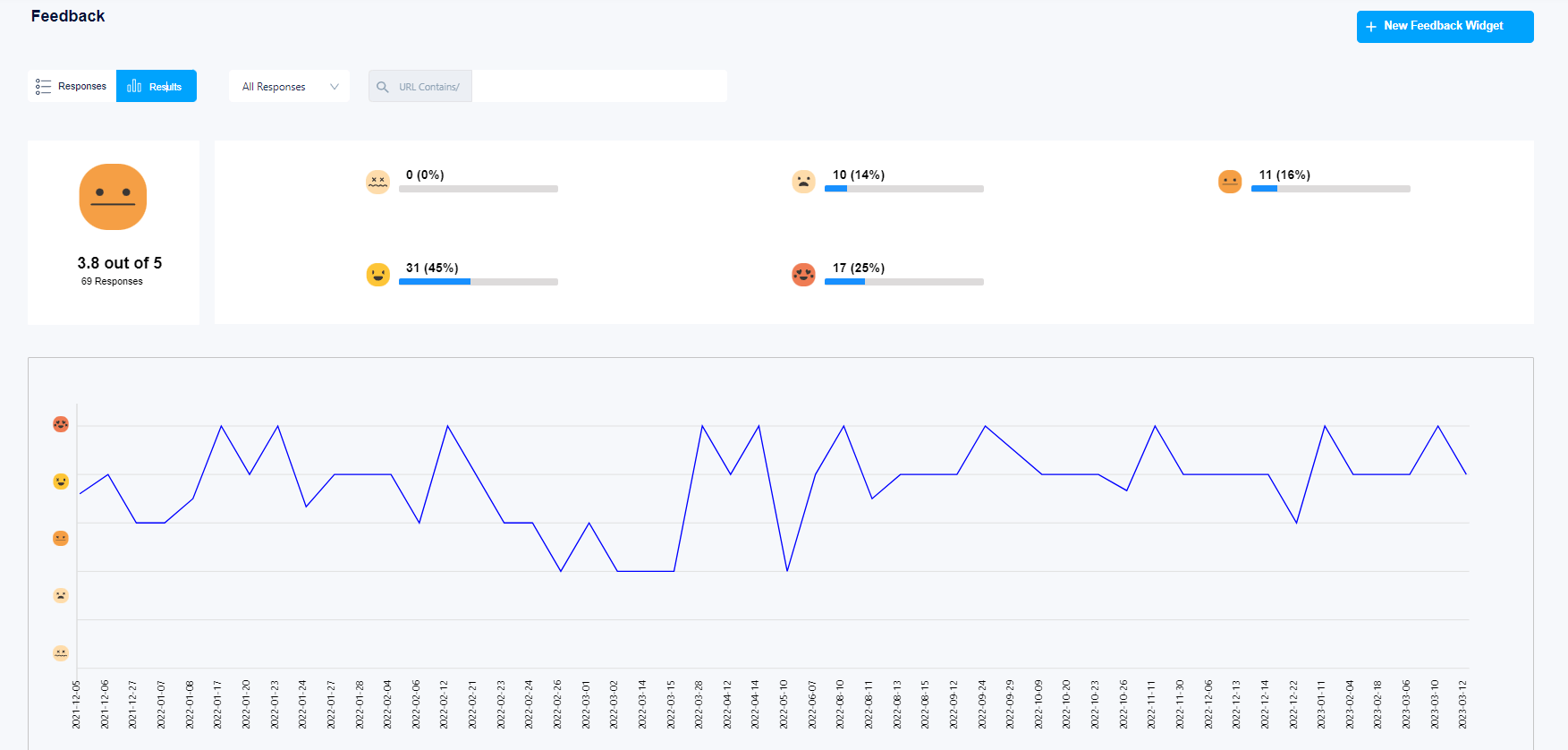
    • Customer feedback tools: FullSession lets you integrate customer feedback tools into your website, letting visitors leave instant reviews you can use to optimize your SaaS business.

    FullSession Pricing Plans

    FullSession Pricing

    Here are more details on each plan.

    • The Starter plan costs $39/month or $32/year and allows you to monitor up to 5,000 monthly sessions with up to 6 months of data storage.
    • The Business plan costs $75/month or $60/year and helps you to track and analyze up to 100,000 monthly sessions with up to 12 months of data storage.
    • The Enterprise plan has custom pricing and offers customizable sessions plus full access to all features.

    Book a demo today.

    FAQs About SaaS Metrics

    How often should I review my SaaS metrics?

    Ideally, review your key metrics on a monthly basis, but some, like DAUs or MAUs, may require more frequent monitoring.

    Can I use all these metrics from the start?

    While it’s possible, it’s more effective to focus on the metrics most relevant to the current stage and objectives of your SaaS business.

    How do I improve my SaaS metrics?

    Start by identifying areas of weakness or opportunity, then implement targeted strategies, such as improving user onboarding for better activation rates or optimizing marketing strategies to lower CAC.

  • Categorical Data: How to Use It For Website Conversions

    Categorical Data: How to Use It For Website Conversions

    Anyone who’s taken a statistics class is probably already familiar with qualitative and quantitative data. One includes numerical values and the other describes qualities or traits. One can be counted, and the other cannot, plain and simple. But wait, are we forgetting another type of data?

    Categorical data takes qualitative data and divides them into specific categories. It seems complicated at first glance, but as you read further, you’ll find that it’s the most simple form of data to collect and analyze.

    In this guide, we’ll go over the details of categorical data, how it differs from quantitative data, its applications in the business world, and much more.

    What is Categorical Data?

    Categorical data is defined as qualitative data divided into distinct groups or categories. This is different from numerical data, which consists of numbers that can be calculated. Categorical data focuses on classification instead of values that can be added, subtracted, or measured.

    For example, if you had a collection of different fruits, categorical data would organize them according to specific characteristics, such as color or fruit kind.

    Types of Categorical Data

    Categorical data primarily branches into two distinct types: nominal and ordinal data. Each type has specific characteristics and applications, emphasizing the importance of understanding the differences to use the most appropriate analytical approaches and accurately interpret the results.

    The two main types of categorical variables are:

    Nominal Data

    Nominal data, also known as “label” or “named” data, is the most basic type of categorical data. The main characteristic of nominal data is that it distinguishes between things or subjects based on name or category without assuming any kind of order or ranking among the categories.

    Essentially, nominal data labels and categorizes data, but the categories have no underlying numerical value or hierarchical position.

    Ordinal Data

    Ordinal data differs from nominal data as it not only categorizes and labels but also assigns a clear order or ranking to the categories. This form of categorical data is distinguished by the relative order of the categories, implying a hierarchy or sequence. However, the separations between these ranks or places are not always equal or quantifiable.

    Features of Categorical Data

    With its unique characteristics and analytic approaches, categorical data is essential to many fields, such as business intelligence, research, and statistics. Handling and interpreting this kind of data effectively involves an understanding of its features.

    Here’s a closer look at the key features of categorical data:

    1. Categories: Categorical data is defined by the way it’s organized into groups or categories. These categories are typically determined by similar characteristics among the data fragments and are not numerical. For instance, a survey might categorize respondents by their favorite type of music, with options such as rock, jazz, classical, and pop.
    2. Qualitative Data: Since categorical data describes traits or attributes rather than quantity, it is fundamentally qualitative. Instead of measuring or counting the data, it offers insights into the type or nature of the data.
    3. Interval Scale: Ordinal data, a subtype of categorical data, involves categories with a meaningful order or ranking among them. However, the intervals between these rankings are not necessarily consistent or quantifiable. An interval scale, more common in quantitative data, has equal distances between points, which is not a feature of ordinal categorical data but is relevant when considering the relationship between different types of data.
    4. Analysis: Categorical data analysis often involves statistical procedures that differ from those used for numerical data. Chi-square testing, logistic regression, and frequency distribution analysis are standard methods for identifying patterns, correlations, and differences between categories.
    5. Numeric Values: Interestingly, categorical data can sometimes take on numeric values, but these numbers serve as labels rather than quantitative measures. For example, a survey might use numbers to represent different categories of satisfaction (e.g., 1 for ‘Very Unsatisfied’, 2 for ‘Unsatisfied’, etc.), but these numbers simply categorize responses rather than indicate any mathematical value.

    Categorical Data Examples

    Data analysis animation

    Categorical data is widely used in a variety of sectors and scenarios, showing its broad applicability and effectiveness. Here are some situations demonstrating how categorical data is used in real-world contexts:

    • Feedback Ratings: Customer feedback in surveys often uses categories like “satisfied,” “neutral,” or “dissatisfied.”
    • User Engagement Types: Interactions on social media platforms can be categorized into likes, shares, comments, etc.
    • Accommodation Types: Options are categorized into hotels, hostels, bed and breakfasts, or vacation rentals.
    • Course Categories: Academic courses can be categorized by their subject area, such as sciences, humanities, arts, etc.
    • Customer Types: Shoppers might be classified based on their behavior or purchasing patterns, such as “frequent buyers,” “first-time visitors,” or “seasonal shoppers.”
    • Census Data: Information collected includes categories like marital status, employment status, and educational attainment.
    • Credit Risk Ratings: Credit scores are often categorized into ranges such as “excellent,” “good,” “fair,” and “poor.”
    • Climate Zones: Geographic areas are categorized by climate types, such as tropical, arid, temperate, or polar.
    • Species Classification: Organisms are classified into categories like mammals, birds, reptiles, amphibians, or insects.

    What is Numerical Data?

    Numerical data, often known as quantitative data, is information presented in numerical form and can be quantified or measured. This type of data is characterized by its ability to undergo mathematical operations, such as addition, subtraction, multiplication, and division, allowing a wide range of statistical analysis.

    Numerical data is used in a variety of industries, including science, finance, and social research, as a basis for quantitative analysis, projections, and decision-making processes.

    Types of Quantitative Data

    Quantitative data is divided into two types: discrete data and continuous data. Each type has distinct properties that make it suitable for different analytical methods.

    Discrete Data

    Discrete data consists of countable numbers representing unique entities or categories that cannot be split. The main feature of discrete data is that it contains a finite or countably infinite number of values. This type of qualitative data is typically represented by whole numbers.

    Some examples of discrete data include the number of students in a classroom, the number of cars in a parking lot, and the number of books on a shelf.

    Continuous Data

    Continuous data can have any value within a specific range, including fractions and decimals. This form of data is measured rather than counted, and it often involves observations or measurements that fluctuate indefinitely along a continuum.

    Examples of continuous numerical data include the height of individuals, weight produce in the grocery store, and the temperature of a room throughout the day.

    Categorical and Numerical Data: What’s the Difference?

    User analysis animation

    Categorical data is qualitative in nature, meaning it describes attributes or properties that are not inherently numerical. On the other hand, numerical data (sometimes known as quantitative data) deals with numbers and values that can be measured or quantified.

    Key Differences Between Categorical and Numerical Data

    You need to understand the differences between categorical and numerical data to be able to each type effectively. Let’s take a closer look at how these two types of data differ:

    1. Nature of Data: The key difference between these two data types is in the nature of the data itself—categorical data is qualitative and concerned with traits, whereas numerical data is quantitative and focused on measurable quantities.
    2. Statistical Analysis: The types of statistical analyses that can be performed vary greatly. Categorical data analysis may include frequency counts, mode, or chi-square tests, while numerical data analysis may involve a broader range of mathematical computations such as mean, median, standard deviation, and correlation coefficients.
    3. Visualization Techniques: When it comes to data visualization, categorical data can be presented as bar charts, pie charts, and histograms (for ordinal data) that highlight the distribution across categories. Line graphs, scatter plots, and histograms (for discrete data) are commonly used to show numerical data, highlighting trends, correlations, or value distributions.
    4. Data Collection Methods: The methods used to collect the type of data may also differ. Categorical data is often collected via surveys, observations, or established classifications. On the other hand, numerical data usually comes from measuring and counting.

    How Does Categorical Data Apply in Business?

    Shopping on tablet animation

    Categorical data provides valuable information that businesses can use to guide decision-making, improve customer experiences, and optimize operations. Here are some of the most common applications of categorical data in business:

    eCommerce

    Categorical data helps organize goods into specific categories such as apparel, electronics, and home goods, which improves site navigation and search functionality. This categorization enables targeted marketing methods and simplifies the shopping experience for customers by making it easier to find the products they want.

    Additionally, customer segmentation enables customization of marketing efforts and recommendations based on purchasing habits, preferences, or demographics, thereby increasing conversion rates and promoting client loyalty.

    Categorizing transactions based on their type, such as online purchases or in-store pickups, also provides a deeper understanding of customer behavior. This benefit allows businesses to fine-tune their inventory management and logistics strategies.

    Customer Service

    Customer service benefits significantly from the strategic application of qualitative data. Businesses can speed up the resolution process by categorizing customer inquiries and complaints and routing them to the right departments. Plus, this categorization helps optimize service ticket prioritizing by ranking issues based on urgency or severity, assuring that the most crucial concerns are addressed first.

    Customer Feedback

    Customer surveys are a vital tool in measuring customer satisfaction and preferences. These surveys often ask customers to rate their level of satisfaction across multiple characteristics of the product or service, using categories like “very satisfied” to “dissatisfied,” to help businesses identify operational strengths and weaknesses.

    Plus, asking customers to select their preferences from a specified list of categories can provide meaningful insights into current consumer trends and preferences, which can prove extremely useful for adapting products and services to better suit market demand.

    How Can You Collect Categorical Data?

    Categorical data collection is an essential part of generating insights that guide business decisions and improvement efforts. You can collect this type of data using different methods, such as:

    • Surveys and Questionnaires: Surveys and questionnaires are some of the most direct ways to collect categorical data. They can be created with multiple-choice questions, checkboxes, or drop-down menus allowing respondents to select from specified categories. For example, a survey may ask participants to use a Likert scale to indicate their age group, income range, or level of satisfaction with a service.
    • Observational Studies: Observational research involves gathering data by observing participants in their natural setting without interfering. This method can categorize behaviors, actions, and events that are not often self-reported or easily recorded. A store, for example, may use observation to categorize shopper activities such as browsing, pricing comparison, and purchasing.
    • Transactional Data Analysis: Businesses can gather categorical data by reviewing transactional records. This involves classifying transactions according to specific criteria, such as the type of product purchased, the payment method utilized, or the time of purchase. Transactional data analysis can reveal patterns in consumer behavior, preferences, and purchase trends.
    • Social Media and Online Analytics: Social media sites and web analytics tools provide an abundance of numerical and categorical data. Businesses who track social media interactions can categorize comments, likes, and shares to evaluate public sentiment, discover trends, and understand consumer preferences. Similarly, website analytics can divide visitor data based on demographics, site behavior, and conversion actions, providing useful insights for digital marketing and content strategy.

    How Can Categorical Data Help Your Website Analysis

    Collecting qualitative data for your business often requires multiple approaches to cover a wider scope of people and categorical variables. Unfortunately, this can take up a lot of time, which you may not have enough of.

    This is where web analytics tools like FullSession come in handy. FullSession automatically collects both qualitative and quantitative data from your website that can help you optimize multiple aspects of your business. Plus, it can translate categorical data into quantitative data for easier statistical analysis.

    Don’t let data collection intimidate you. With FullSession, you can gather different types of categorical data and gain deeper insights into what you can improve for a better conversion rate.

    FullSession Pricing Plans

    FullSession Pricing

    The FullSession platform offers a 14-day free trial. It provides two paid plans—Basic and Business. Here are more details on each plan.

    • The Starter plan costs $39/month or $32/year and allows you to monitor up to 5,000 monthly sessions with up to 6 months of data storage.
    • The Business plan costs $75/month or $60/year and helps you to track and analyze up to 100,000 monthly sessions with up to 12 months of data storage.
    • The Enterprise plan has custom pricing and offers customizable sessions plus full access to all features.

    Book a demo today.

    Install A Better Web Analytics Tool Within Minutes

    It takes less than 5 minutes to set up your first website analytics tool with FullSession, and it’s completely free!

    FAQs About Categorical Data


    Details

    How important is categorical data for businesses?

    Categorical data is crucial for businesses as it aids in market segmentation, customer profiling, and trend analysis, enabling targeted marketing strategies and informed decision-making.

    Can businesses use categorical data to improve customer service?

    Yes, businesses can use categorical data to classify customer inquiries and feedback, which helps in prioritizing and efficiently addressing customer needs.

    Can categorical data be used to monitor business performance?

    Absolutely. By categorizing sales, customer feedback, and service quality, businesses can identify performance trends and areas for improvement, guiding strategic adjustments.

  • 11 Customer Experience Metrics You Need to Track

    11 Customer Experience Metrics You Need to Track

    You’ve perfected your branding, optimized your conversion funnel, and polished your website until it’s a shiny reflection of your brand’s mission, vision, and quality. Now what?

    The next logical step is to determine if your strategies are working, and one way to do that is to measure customer experience.

    Customer experience is the impression of your buyers throughout the customer journey, the culmination of their feelings, perceptions, and experiences with your brand. While customer experience is highly subjective, you can measure its aspects into quantifiable metrics.

    In this article, we’ll review the top customer experience metrics, how to measure customer experience, and what role web analytics plays.

    What is Customer Experience?

    Customer experience (CX) is the sum of all interactions a buyer has with your brand throughout the customer journey, from the initial website visit to the post-purchase follow-up.

    From a narrower point of view, CX is an effective indicator of how likely the customer is to make repeat purchases and recommend your brand to others.

    So, how do you gauge the effectiveness of your customer experience?

    11 Key Customer Experience Metrics

    Measuring customer experience is the best way to see if current business strategies are working as well as they should. Are your buyers getting what they need from your brand? Does your website need more work? Are there weak points in the customer journey?

    Eliminate the guesswork and use CX metrics instead. Here are the most important metrics for customer experience analysis:

    1. Customer Satisfaction Score

    Customer satisfaction stands as the bedrock of customer experience metrics. The customer satisfaction score (CSAT) is the direct pulse check on how customers feel about a specific interaction or overall experience with your brand, essentially a measure of satisfied customers.

    Customer satisfaction is typically measured through survey questions like, “How satisfied were you with your experience?” and responses on a scale (e.g., 1-5 or 1-10), which offers immediate feedback.

    It’s the go-to metric for gauging short-term satisfaction post-interaction as it allows businesses to identify strengths and areas for improvement quickly.

    How to calculate CSAT: Add up the number of 4 and 5 ratings, divide by the total number of responses, and multiply by 100.

    2. Net Promoter Score (NPS)

    NPS measures customer loyalty and the likelihood of word-of-mouth promotion. By asking customers how likely they are to recommend your brand to others on a scale of 0 to 10, NPS categorizes them into Promoters (9-10), Passives (7-8), and Detractors (0-6).

    • Promoters (score 9-10): Loyal customers who are likely to refer others and fuel growth.
    • Passives (score 7-8): Satisfied but unenthusiastic customers who are vulnerable to competitive offerings.
    • Detractors (score 0-6): Unhappy customers who can hurt your brand through negative word-of-mouth.

    This simple yet powerful metric goes beyond surface-level satisfaction, diving into customers’ emotional connection and loyalty towards your brand. 

    A high NPS is a strong indicator of customer loyalty and future business growth, as it reflects overall satisfaction and the willingness of customers to become brand ambassadors.

    How to calculate NPS: Subtract the percentage of Detractors (0-6 ratings) from the percentage of Promoters (9-10 ratings).

    3. Customer Effort Score

    Customer effort score reveals the ease of customer interactions with your brand. It asks customers to rate the effort they had to exert to resolve their issue, complete a purchase, or achieve their goal.

    The principle behind the Customer Effort Score is that the less effort required, the more satisfied and loyal a customer is likely to be. High effort can lead to frustration and increased customer churn, making CES a very important metric for identifying friction points in the customer journey.

    How to calculate CES: Add up all the individual customer effort ratings and divide by the total number of responses to get the average score.

    4. Churn Rate

    The customer churn rate provides a stark but important measure of how many customers you lose over a specific period.

    High churn rates can signal deep-seated issues with customer satisfaction, product-market fit, or competitive positioning. Monitoring can help you identify trends, understand the impact of changes or improvements on lost customers, and gauge long-term customer loyalty and satisfaction.

    How to calculate Churn Rate: Subtract the number of customers at the end of the period from the number of customers at the beginning, divide by the number of customers at the beginning, and multiply by 100.

    woman buying online

    5. Customer Retention Rate

    Customer retention rate (CRR) measures how well a company keeps its customers over a specific period. A high retention rate means customers are happy and loyal, indicating they’re likely to stick around and continue doing business.

    Needless to say, every business needs to focus on customer retention for long-term success. Loyal customers provide steady revenue, cost less to retain than acquire new customers, and often refer others, driving business growth.

    How to calculate CRR: Subtract the number of new customers acquired during the period from the number of customers at the end, divide by the number of customers at the beginning, and multiply by 100.

    6. First Response Time

    First response time (FRT) measures the speed at which your team responds to customer inquiries or service requests. This metric should never be ignored because the initial response to a customer’s concern can set the tone for the interaction.

    A swift first response is often seen as a sign of a company that values its customers and is eager to resolve their issues. In today’s fast-paced world, customers expect quick acknowledgments and a delayed response can lead to frustration and diminished satisfaction, even if the eventual resolution is favorable.

    Generally, an FRT of 24 hours or less is the standard for most businesses.

    How to calculate FRT: Subtract the time of the customer’s initial inquiry from the time of the first response by the support team, then average this time across all inquiries.

    7. First Contact Resolution

    First contact resolution (FCR) measures how often customer issues get completely resolved during the first interaction with support. Unlike first response time, which only looks at how fast a rep replies initially, FCR is all about solving the problem right away.

    A high FCR rate means customers don’t have to keep coming back with the same issue, which makes them happier and more loyal.

    Getting a good FCR should be a priority because it saves customers from the hassle of follow-ups and repeated explanations. This way, customer issues are handled quickly and effectively, which can help lead to exceptional customer experiences.

    How to calculate FCR: Divide the number of customer issues resolved on the first contact by the total number of issues, then multiply by 100.

    8. Average Resolution Time

    Average resolution time takes the concept of response time further by measuring how long it takes to fully resolve a customer’s issue from the moment it’s reported.

    This customer experience metric sheds light on the efficiency and effectiveness of your customer support team. It reflects not just the speed of service but also the quality, as faster resolution times are often indicative of a more efficient problem-solving process.

    However, it’s important to balance speed with thoroughness; the goal is to resolve issues effectively, not just quickly. Monitoring average resolution time helps businesses identify bottlenecks in their support process and opportunities for training or resource allocation to improve overall customer satisfaction.

    How to calculate ART: Add up the total time taken to resolve all customer issues, then divide by the number of resolved issues.

    9. Customer Lifetime Value

    Customer lifetime value (CLV) is the total revenue a business generates from a single customer throughout its relationship with the company.

    CLV helps you understand the long-term value of maintaining positive customer experiences. It goes beyond transactional analysis to evaluate the overall worth of a customer. The customer lifespan value also takes into account repeat purchases, loyalty, and the potential for brand advocacy.

    By increasing CLV, you can justify the investment in customer experience improvements and loyalty programs. Understanding CLV also allows for more targeted marketing and retention efforts, focusing resources on high-value customers or identifying strategies to maximize the value of others.

    How to calculate CLV: Multiply the average purchase value by the average purchase frequency rate, then multiply by the average customer lifespan.

    10. Customer Referral Rate

    Customer referral rate shows how often your current customers recommend your business to others. It’s a clear sign of how happy and loyal they are, indicating they’re pleased enough with their experience to share it with friends, family, and colleagues.

    A high referral rate means customers trust and value your products or services—so much so that they become your brand ambassadors.

    How to calculate Customer Referral Rate: Divide the number of customers who referred others by the total number of customers, then multiply by 100.

    11. Visitor Intent

    Looking at visitor intent aims to understand why people are coming to your website. Are they looking for information, ready to make a purchase, comparing products, or needing customer support? Knowing the reason behind their visit helps you tailor your content and design to meet their needs.

    Figuring out visitor intent can up customer engagement and conversion rates. Plus, when you address their specific intents, you can create more targeted content, improve the user experience, and achieve better results in terms of customer satisfaction and business success.

    How to gauge Visitor Intent: Analyze website analytics, conduct user surveys, monitor search queries, and observe user behavior patterns to understand why visitors come to your site.

    customer experience metrics

    How to Measure Customer Experience Accurately

    A well-planned approach is a must if you want to measure customer experience accurately and precisely. It sounds complicated, but don’t worry, we have a few expert tips to help you get started:

    Integrate Feedback Across All Touchpoints

    You can employ a unified system that consolidates feedback across all channels. This could involve integrating customer feedback tools with your website or customer support software.

    Doing this will help you identify patterns and pinpoint areas for improvement that might be missed when viewing channels in isolation.

    Leverage Technology

    Advanced tech is a boon for capturing, analyzing, and acting upon customer experience data. CRM systems, for instance, can track customer interactions and transactions, providing a rich dataset for understanding customer behavior and preferences.

    Similarly, analytics platforms can sift through large volumes of data to identify trends, customer sentiments, and areas of friction within the customer journey. More on this later.

    Act on the Data

    Collecting and analyzing data is only the first step. The real value comes from using these insights to drive action. This means not only addressing immediate issues but also implementing strategic changes based on customer feedback and behavior trends.

    For example, if data reveals a common point of friction in the customer journey, you should look to simplify this process or provide additional support to customers at this stage.

    Acting on data also involves closing the feedback loop with customers, including informing them about the changes made based on their feedback, which can enhance customer satisfaction and loyalty. 

    Showing your customers that their feedback matters helps you foster a more genuine relationship with them.

    Keep It Continuous

    Perhaps the most important aspect of measuring customer experience accurately is recognizing that it is a continuous, cyclical process. Customer expectations and market dynamics evolve, and what satisfies customers today may not suffice tomorrow. 

    Continuous measurement allows businesses to stay ahead of these changes, adapting their strategies and offerings to meet and exceed customer expectations.

    This ongoing process involves regularly updating measurement tools and metrics, soliciting continuous feedback, and staying agile enough to respond to new insights. It also means fostering a culture that values customer feedback and sees CX improvement as a shared goal across the organization.

    Web Analytics and Customer Experience

    Now you know the key metrics to track and best practices to use in your approach. But what tools can you use for customer journey analytics?

    user metrics

    This is where web analytics tools like FullSession come in. Here’s a closer look at the various ways web analytics contributes to improving CX:

    Understanding Customer Behavior

    Web optimization tools track various metrics, such as page views, session duration, bounce rates, and paths through a site. By analyzing this data, you can gain a deep understanding of how customers engage with your online presence.

    For instance, high bounce rates on specific pages might indicate that the content is not meeting users’ expectations, or a common exit point on a purchase path could signal a frustrating checkout process.

    Example: An e-commerce website uses web analytics to discover that a significant number of users spend a lot of time on product comparison pages but do not proceed to checkout. 

    This insight leads to the introduction of a feature that simplifies product comparisons and highlights key benefits, resulting in increased conversion rates.

    Personalization and Targeting

    One of the keys to delivering an exceptional user experience is personalization. Web analytics allows businesses to segment their audience based on behavior, demographics, and other criteria, giving them more personalized content, recommendations, and offers.

    Example: A streaming service uses web analytics to segment its audience based on viewing habits and genre preferences. It then personalizes its homepage for each user segment, showcasing relevant content at the top. 

    This strategy increases user engagement and time spent on the platform as viewers find content that interests them more quickly.

    Identifying Pain Points and Opportunities for Improvement

    Web analytics can highlight areas of a website or app that are underperforming or causing friction for users, making it easier for designers and developers to address issues before they turn away more customers.

    Example: A software company notices through web analytics that there’s a high drop-off rate on the pricing page of their website. 

    Further investigation reveals that users find the pricing options confusing. In response, the company simplifies the pricing structure and adds a FAQ section directly on the pricing page, which leads to a decrease in bounce rates and an increase in sign-ups.

    Measuring the Impact of Changes

    Web analytics serve as a must-have tool for measuring the impact of recent CX improvements. This empirical approach makes sure that decisions are data-driven, reducing the risk of implementing changes that don’t positively affect the customer experience.

    Example: After receiving feedback that the checkout process is too lengthy, an online retailer uses A/B testing to compare the original checkout process with a new, more efficient version. 

    Web analytics show that the streamlined version has higher completion and lower abandonment rates, confirming that the new method provides a better customer experience.

    Predictive Analysis and Strategic Planning

    Advanced web analytics, incorporating AI and machine learning, can predict future customer behavior based on historical data. With this predictive capability, businesses can better anticipate customer needs, preferences, and potential issues before they arise, allowing for strategic planning and proactive CX improvements.

    Example: A travel agency uses web analytics to track seasonal trends in destination searches and bookings. Predictive analytics indicate a growing interest in certain destinations during specific times of the year. The agency proactively creates targeted marketing campaigns and special offers for those destinations, leading to early bookings and increased revenue.

    Improve Customer Experience with FullSession

    Optimize your customer experience strategy with FullSession, an all-in-one tool that shows you all the data you need to improve customer satisfaction and reduce churning. With FullSession, you gain access to:

    • Session recordings and replay: See how your customers navigate your website in real-time. Replay sessions to conduct CX analysis and pinpoint potential issues.
    • Interactive heat maps: Analyze summaries of your clicks, scrolls, and other web interactions with FullSession’s heat maps to identify which items get the most attention and which ones do not.
    • Market segmentation: Use FullSession’s filtering and segmentation tools to see how different groups in your target market interact with your content.
    • Customer feedback integration: Gain instant customer sentiment from happy or unhappy customers through FullSession’s website feedback forms.

    Stop the guesswork and get into the real customer data. Sign up for a free trial today!

    FullSession Pricing Plans

    FullSession Pricing

    Here are more details on each plan.

    • The Starter plan costs $39/month or $32/year and allows you to monitor up to 5,000 monthly sessions with up to 6 months of data storage.
    • The Business plan costs $75/month or $60/year and helps you to track and analyze up to 100,000 monthly sessions with up to 12 months of data storage.
    • The Enterprise plan has custom pricing and offers customizable sessions plus full access to all features.

    Book a demo today.

    Install Your First Website Feedback Form Right Now

    It takes less than 5 minutes to set up your first website or app feedback form, withFullSession, and it’s completely free!

    FAQs About Measuring Customer Experience

    How often should I measure customer experience?

    Continuously. Think of it as keeping your finger on the pulse of your customer satisfaction. Regular monitoring helps you catch and address issues before they escalate.

    Can small businesses measure CX without breaking the bank?

    Absolutely! Many tools and strategies are scalable and can be tailored to fit smaller budgets. Focus on key metrics and leverage affordable, high-value tools like FullSession.

    Is NPS really that important?

    Yes, because it gives you a direct line to understanding your customer’s loyalty, which is a strong predictor of business growth. However, it should be used with other metrics for a complete picture.

  • How to Create a User Engagement Strategy (9 Step Checklist)

    How to Create a User Engagement Strategy (9 Step Checklist)

    An engaged user audience is the best type of audience you can have. They click on your links, interact with your content, sign up for your stuff, and–most importantly–make purchases. Not only do they directly benefit your brand, but their engagement also helps increase brand awareness to other potential customers.

    However, keeping users engaged is not as easy as it may seem. An effective user engagement strategy requires a multi-faceted approach involving marketing, product development, web analytics, and more.

    In this article, we’ll review everything you need to know about user engagement, the best strategies to improve it, and the tools you need to optimize for it.

    What is User Engagement?

    Simply put, user engagement is the volume of users actively engaged with your product over a given period.

    In a broader sense, user engagement is about making your audience take notice and interact with your brand in a way that encourages them down the conversion funnel.

    Why is User Engagement Important?

    An effective user engagement strategy is necessary to increase your conversion rate, improving your website’s ability to create relationships with your users. Here are specific reasons why it matters:

    1. Building Meaningful Connections

    A focused user engagement strategy helps your message connect with your target audience. This connection fosters a sense of community and belonging, making your brand more than just a provider of goods or services but a part of your audience’s daily lives.

    2. Driving Brand Loyalty

    User engagement goes beyond the initial click or follow. It’s about creating a series of positive interactions that build trust over time. With every informative article, helpful tutorial, or responsive customer service encounter, you’re laying another brick in the foundation of brand loyalty.

    3. Enhancing Customer Insights

    Engaging with your audience provides valuable feedback and insights into their preferences, behaviors, and pain points. This information will allow you to tailor your offerings, fine-tune your messaging, and innovate to meet your audience’s needs more effectively.

    4. Improving Conversions and Customer Retention

    Engaged users are more likely to convert or perform the desired action, whether purchasing, signing up for your newsletter, or booking a call.

    A strong user engagement strategy also keeps your brand top-of-mind, which increases the likelihood of repeat business and reduces churn.

    5. Creating a Competitive Advantage

    In a competitive market, your user engagement strategy can set you apart. It’s an opportunity to showcase your brand’s unique voice, values, and commitment to your audience.

    While competitors may offer similar products or services, a superior user engagement strategy can make your brand the preferred choice by providing a more rewarding, personalized, and meaningful experience to your users.

    9 Metrics Measure User Engagement

    Viewing feedback from device animation

    Measuring user engagement will help you gauge how effective your current strategies are and determine the quality of the user experience on your website. Key user engagement metrics include:

    Page Views and Unique Visitors

    These basic metrics provide a snapshot of how many people are visiting your website and how frequently. While page views give you the total number of times your pages are viewed, unique visitors tell you how many distinct visitors have landed on your site within a given period.

    Time on Site

    The average amount of time users spend on your site is a strong indicator of how engaging your content is. Longer durations (higher website retention rate) suggest that visitors find your offerings compelling enough to stick around.

    Bounce Rate

    This metric measures the percentage of visitors who leave your site after viewing only one page. A high bounce rate could indicate that your site isn’t meeting the expectations of its visitors or that the user experience is lacking.

    Click-Through Rate (CTR)

    CTR is the ratio of users who click on a specific link to the number of total users who view a page, email, or advertisement. It helps gauge your calls to action (CTAs) and ads perform well.

    Conversion Rate

    Perhaps the most crucial metric, the conversion rate, measures the percentage of users who take a desired action, such as purchasing, signing up for a newsletter, or filling out a contact form. This metric directly ties user engagement to your bottom line.

    Social Shares and Comments

    Engagement on social media platforms can be a valuable indicator of how compelling your content is. High numbers of shares, likes, and comments suggest that your content is resonating with your audience and sparking conversations.

    Feedback and Surveys

    Direct feedback from users through surveys, feedback forms, and direct communication can provide qualitative insights into user engagement. This feedback can reveal what users like about your site or product and what areas need improvement.

    Net Promoter Score (NPS)

    NPS is a metric that measures customer experience and predicts business growth. Asking customers how likely they are to recommend your product or service to others can help gauge overall satisfaction and loyalty.

    Engagement Rate on Content

    For blogs, forums, and other content-driven platforms, measuring the engagement rate (comments, likes, time spent on the page) can help understand how content is performing and what topics are most engaging for your audience.

    8 Ways to Improve Your User Engagement Strategy

    Improvement is all about iteration. Use data to understand what works and what doesn’t, then tweak your tactics. Here are the best actionable ways you can improve user engagement today:

    Tracking User Engagement Metrics

    Keep a close eye on customer engagement metrics with a web analytics tool. This will show data on the metrics we’ve mentioned above.

    Optimizing Your Website

    Your website is your digital storefront. Make it inviting with a clean design, intuitive navigation, and fast loading times. Remember, a user-friendly website is an engagement-friendly website.

    Creating Personalized and Engaging Content

    Tailoring content to meet your audience’s interests and needs can dramatically boost user engagement levels.

    Specific strategies include personalized push notifications, personalized emails, and SEO. SEO helps ensure you’re producing content that your target market actually wants to see.

    Improving the User Experience

    A smooth user experience (UX) is crucial for keeping your audience engaged. Otherwise, you might end up with a high bounce and funnel drop rate. For example, a website that is difficult to navigate will likely frustrate a potential customer and cause them to exit from your site immediately.

    Eliminate any UX hurdles that could cause frustration, such as broken links, confusing layouts, or slow response times. Performing UX analysis is a great place to start.

    Rewarding Engaged Users

    Show your appreciation for engaged users with rewards, be it through exclusive content, discounts, or recognition. This user engagement strategy will help keep existing users engaged and increase the chances of repeat purchases.

    Improving the Product Based on Customer Feedback

    User feedback is a goldmine of insights for your products and services. Use it to refine your product, making it more in tune with what your customers really want. A pro tip is to use product analysis tools to see what customers like and don’t like about your product.

    Aside from being a way to perfect your product, leveraging user feedback will show your audience that you are listening to them–another incredible way to retain active users.

    Making it Easier for Customers to Give Feedback

    Encourage feedback by making the process as easy as pie. Provide multiple channels for feedback and ensure that giving it is as straightforward and hassle-free as possible. For instance, you can use customer feedback tools to integrate feedback options on your website and measure responses easily.

    Using an Omnichannel Approach

    Your audience is spread across multiple social media platforms. An omnichannel approach helps ensure you are present on these platforms and are offering a seamless and integrated user experience across all of them.

    How Does Web Analytics Affect User Engagement?

    viewing app analytics animated image

    Web analytics dives deep into the nuances of user behavior, preferences, and engagement patterns, offering a treasure trove of data that can transform your engagement strategy from guesswork into a precise, targeted effort.

    Here’s a closer look at how web analytics profoundly impacts user engagement:

    • Understanding User Behavior: To improve your user engagement strategy, you must understand how users interact with your website or platform. Web analytics provides detailed insights into user actions, allowing you to spot potential frustration points.

    • Identifying Preferences and Interests: Analytics tools can segment your audience based on various criteria, including demographic details, browsing behavior, and purchase history. This segmentation allows you to tailor your content and marketing efforts to match the preferences and interests of different user groups.

    • Highlighting Engagement Patterns: By analyzing trends over time, web analytics can highlight patterns in user engagement. These insights enable you to optimize your content strategy to align with when your audience is most receptive.

    • Optimizing User Experience: Web analytics tools often include heatmaps, scroll maps, and other features that show how users interact with your site’s interface. This data is invaluable for UX optimization, as it can reveal which elements are attracting the most attention and which are being ignored.

    • Improving Personalization: By understanding individual user behaviors and preferences, you can personalize content, recommendations, and offers to meet their specific needs and interests.

    • Measuring and Improving ROI: Web analytics enables you to measure the effectiveness of your user engagement strategies in real terms, such as increased time on site, higher conversion rates, and improved customer retention.

    • Better Decision Making: With real-time analytics, you can monitor user engagement as it happens, allowing you to be more agile and proactive in your decision-making.

    • Predicting Future Trends: Advanced analytics and predictive modeling can help you anticipate future trends in user behavior and engagement.

    How to Improve Your User Engagement With FullSession

    Use analytics to identify trends, track progress, and pinpoint areas for improvement. Tools like FullSession offer in-depth analytics that can help refine your engagement strategy for maximum impact.

    Here are specific FullSession tools that can help you optimize your customer engagement strategy:

    • Interactive heat maps: A website heat map shows you which items on your website are most effective and which ones you need to improve.

    • Customer feedback tools: FullSession makes it easy to collect feedback from both new and active users.

    • Market segmentation and filtering: FullSession allows you to easily segment and filter users based on different information, such as demographics.

    • Session recordings: Optimizing the user experience is a crucial part of any user engagement strategy. That’s why FullSession offers session recordings to record how your users interact with your website.

    FullSession Pricing Plans

    FullSession Pricing

    Here are more details on each plan.

    • The Starter plan costs $39/month or $32/year and allows you to monitor up to 5,000 monthly sessions with up to 6 months of data storage.
    • The Business plan costs $75/month or $60/year and helps you to track and analyze up to 100,000 monthly sessions with up to 12 months of data storage.
    • The Enterprise plan has custom pricing and offers customizable sessions plus full access to all features.

    Book a demo today.

    Install Your First Heatmap Today

    It takes less than 5 minutes to set up your first website heatmap with FullSession, and it’s completely free!

    FAQs About User Engagement

    What is user engagement and its importance?

    User engagement measures how actively involved your audience is with your brand, crucial for converting visitors into loyal customers and advocates. High engagement leads to better brand loyalty, increased word-of-mouth promotion, and higher conversion rates.

    How do I measure user engagement?

    Measure user engagement through critical metrics like page views, time spent on site, bounce rate, click-through rates, conversion rates, and social media interactions. Tools like FullSession offer analytics to track these metrics, providing insights into user behavior and interaction patterns.

    What are some tactics to boost user engagement?

    Enhance user engagement by optimizing your website for a better user experience, personalizing content, rewarding active users, incorporating customer feedback into product improvements, and facilitating accessible feedback channels.

  • What Is A Conversion Funnel And Why Is It Important? (Full Guide)

    What Is A Conversion Funnel And Why Is It Important? (Full Guide)

    In today’s competitive digital market, every click could lead to either a treasure trove or a dead end. If you want to stand out from the competition, understanding the map to success is crucial.

    But what exactly is that map?

    An effective conversion funnel is your secret weapon to crafting a customer journey that not only delights but converts. Read on to learn more about conversion funnels, funnel optimization, analysis tools, and the tools you need to create the perfect conversion funnel.

    What is a Conversion Funnel?

    A picture of how the funnel technology fullsession has works

    A conversion funnel is the journey a website visitor goes through from their first interaction with your business, up until the point that they’re a customer.

    This is the essence of a conversion funnel, also known as a sales funnel – a strategic model used to describe the journey a customer takes from the first spark of awareness about your brand to the ultimate goal of conversion (be it a sale, a sign-up, or any other action).

    The Three Stages of the Traditional Conversion Funnel

    The conversion funnel is a crucial model in the digital marketing space, illustrating the customer journey from awareness to action. This journey is typically broken down into three critical stages:

    Top

    The top of the funnel is all about awareness. It’s where potential customers first lock eyes with your brand, but aren’t that particularly interested yet.

    From a wider perspective, top-of-the-funnel customers are discovering new companies, figuring out what they need, and finding potential solutions. This means you’re in competition with other brands for customers at this stage, underlining the importance of an effective conversion funnel.

    Middle

    The middle of the funnel is where customers’ interests bloom. They know what they need and they’re looking to find the right solution. Customers are weighing their options, and your job is to woo them further down the funnel. Remember, you’re still competing with other brands.

    Bottom

    The bottom of the funnel is where the magic happens – decisions are made, and actions are taken. Customers have done their due diligence, weighed their options, and are ready to make a purchase.

    At this last stage of the customer journey, your goal is to turn leads into paying customers.

    Elements of a Traditional Marketing Funnel

    5 tier marketing funnel

    Now that you know the answer to the question “What is a conversion funnel?”, it’s time to look deeper into the customer journey.

    The conversion funnel is segmented into four critical stages: Awareness, Interest, Desire, and Action. Each stage plays an important role in nurturing the customer’s journey towards conversion, requiring distinct strategies and approaches.

    Awareness: The First Glimpse

    The journey kicks off with Awareness, the stage where customers first cross paths with your brand. They might know a little about your brand but aren’t aware of anything deeper than what the average customer sees at a surface level.

    At this point, your goal is to make a memorable impression, ensuring that your brand stands out in a sea of competitors. This stage is less about selling and more about introducing, focusing on visibility and reach to plant the seeds of interest.

    Interest: Sparking Curiosity

    Once you’ve caught their eye, the next step is to spark their Interest. Now that they’re aware of your brand, customers start to wonder whether you offer something they need or want.

    This is where targeted content comes into play, offering valuable information, insights, or entertainment that resonates with their specific needs or challenges. It’s about showing them that you understand their problems and have the expertise to solve them.

    Engaging blog posts, insightful newsletters, and compelling social media content are tools of the trade here, designed to pull them deeper into the sales funnel.

    Desire: Creating Demand

    With their interest piqued, customers move into the Desire stage of the conversion funnel. It’s no longer just curiosity; they’re now considering your offering as a viable solution to their needs. At this stage, your messaging shifts towards creating a sense of need or urgency.

    Testimonials, case studies, and detailed product demonstrations can play a pivotal role in showcasing the benefits and unique value proposition of your product or service.

    Action: Sealing the Deal

    Finally, the journey culminates in the Action stage, where desire translates into a definitive decision to purchase, subscribe, or engage with your brand. This is the moment of truth, where your efforts in guiding them through the funnel are put to the test.

    Clear, compelling calls-to-action (CTAs), an easy and seamless checkout or sign-up process, and perhaps a timely nudge or offer can be the final push they need to take the plunge. It’s crucial to eliminate any friction or doubts at this stage, ensuring that taking action feels like the natural next step for the customer.

    Conversion Funnel Optimization Strategies

    Let’s go back to the conversion funnel stages. Customers at each of these stages will have different wants, needs, and opinions about your brand. Therefore, your company’s conversion funnel requires optimization to ensure that it’s always pushing customers deeper into the funnel.

    Optimizing your conversion funnel will tie closely with your marketing strategy. Below are several ways you can improve your marketing efforts based on each conversion funnel stage:

    Top of Funnel

    At the Top of the Funnel, your main goal is to increase brand visibility among your target market and attract as many potential customers as possible. Here’s how are several strategies you can employ:

    • SEO (Search Engine Optimization): Optimize your website and content to rank better in search engine results pages (SERPs). This ensures that when potential customers are looking for information related to your industry, your brand shows up on the first page of the search engine.

    • Social Media Marketing: Utilize platforms where your target audience spends most of their time. Engage with them through regular posts, stories, and interactive content. Start conversations and build a community around your brand.

    • Content Marketing: Create valuable, relevant content that addresses the needs and interests of your audience. This could be in the form of blog posts, videos, infographics, or podcasts. The aim is to provide so much value that potential customers can’t help but pay attention to your brand.

    Middle of Funnel

    In the middle, focus on customer engagement and deepening customers’ interest in your brand. Here are potential strategies:

    • Email Marketing: Segment your email list to send personalized, targeted messages to target customers based on their interests and behaviors. Use nurturing campaigns to educate them about your product or service, share customer testimonials, and provide exclusive content that’s not available elsewhere.

    • Targeted Ads: Use retargeting campaigns to stay in front of prospects who have engaged with your brand but haven’t yet converted. Platforms like Google Ads and social media advertising allow you to target ads based on specific actions taken on your website, ensuring your brand remains top of mind.

    • Compelling Content: At this stage, content should go beyond general awareness and aim to solve specific problems or answer detailed questions. Use case studies, webinars, and detailed guides to provide deeper insights into how your product or service can address the unique needs of your audience.

    Bottom of Funnel

    At the Bottom of the Funnel, the focus shifts to conversion. The potential customer is on the brink of making a decision, and your job is to make that decision as easy and appealing as possible:

    • Optimize Landing Pages: Ensure that your landing pages are clear, concise, and compelling. Every element from the headline and copy to the images and CTAs should be optimized to drive conversions. Use A/B testing to find the most effective combinations.

    • Streamline the Checkout Process: Minimize friction in the checkout or sign-up process. The fewer steps and the simpler it is to convert, the better. Offer multiple payment options, clear instructions, and reassurance with security badges or guarantees.

    • Irresistible Offers: Sweeten the deal with offers that are hard to refuse. This could be a limited-time discount, free shipping, a bonus product, or access to exclusive content. Create a sense of urgency and scarcity to encourage immediate action.

    Conversion Funnel Analysis

    In all three stages of the conversion funnel, you want to avoid what’s called a funnel drop, or essentially a customer abandoning the funnel before they complete the desired action. Regular analysis of your conversion process helps prevent this.

    Conversion funnel analysis determines if your conversion funnel is working as well as it should be. It aims to identify bottlenecks, drop-off points, or areas of friction that may deter or delay a potential customer’s journey towards conversion.

    Crucial KPIs in Conversion Funnel Analysis

    When conducting conversion funnel analysis, understanding Key Performance Indicators (KPIs) helps you figure out what you’re doing wrong and how to employ a more customer-centric marketing strategy.

    Let’s expand on the significance of each KPI and how they contribute to a deeper understanding of your funnel’s performance:

    Retention Rate

    The Retention Rate measures the percentage of customers who continue to engage with your brand over time. A high retention rate indicates that customers find ongoing value in your offerings, suggesting that your customer satisfaction and loyalty programs are hitting the mark.

    Optimizing for retention involves analyzing customer feedback, improving product quality, and creating engaging loyalty programs.

    Repurchase Rate

    Closely linked to retention, the Repurchase Rate focuses on the frequency with which customers return to make additional purchases. Essentially, it measures the volume of your repeat customers.

    This KPI is especially relevant for businesses that thrive on repeat business, such as e-commerce platforms. A healthy repurchase rate signals that customers are satisfied with their initial purchase and trust your brand enough to buy again.

    Enhancing this metric requires a deep dive into product quality, customer service excellence, and personalized marketing efforts to encourage repeat engagements.

    Customer Lifetime Value (CLV)

    CLV refers to the total revenue a business can expect from a single customer throughout their relationship. It’s a powerful indicator of long-term business health and profitability.

    Strategies to enhance CLV include improving product offerings, customizing the customer experience, and implementing effective upselling and cross-selling tactics.

    Average Order Value (AOV)

    AOV tracks the average amount spent each time a customer makes a purchase. It’s a direct reflection of purchasing behavior and the perceived value of your offerings.

    Elevating AOV often involves strategic pricing, bundling products, and creating incentives for higher-value purchases, such as free shipping thresholds or exclusive access to premium products.

    Add to Cart & Cart Abandonment Rates

    These metrics offer insights into the online shopping experience and potential barriers to purchase. A high add-to-cart rate suggests effective product discovery and interest, while a high cart abandonment rate signals issues in the checkout process or second thoughts about the purchase.

    Addressing these issues might involve streamlining the checkout process, offering more payment options, and implementing abandoned cart recovery strategies like follow-up emails or retargeted ads.

    Click Conversion Rate (CCR)

    CCR measures the effectiveness of your CTA buttons in compelling users to take a desired action, be it signing up for a newsletter or completing a purchase.

    A low CCR could indicate unclear messaging, poor design, or a mismatch between the CTA and the user’s expectations. Optimizing CCR involves A/B testing different CTAs, refining messaging, and improving the overall user interface to make the desired action as straightforward as possible.

    Conversion Rate

    The ultimate barometer of your funnel’s health, the Conversion Rate, measures the percentage of visitors who take a desired action out of the total number of visitors. It encapsulates the effectiveness of your entire conversion funnel, from initial awareness through to the final action.

    Conversion rate optimization requires a holistic approach, addressing each stage of the funnel with targeted strategies to remove obstacles, enhance the user experience, and make the value proposition irresistible.

    The Role of Web Analytics in Conversion Funnel Optimization

    Web analytics helps you track where you’re losing customers and where you’re winning them over, allowing for data-driven decisions to enhance the customer journey. It has several functions, including:

    • Understanding User Behavior: Analyzes user interactions, identifying what attracts, engages, and causes them to leave.

    • Identifying Drop-off Points: Pinpoints where users exit the funnel, allowing for targeted improvements.

    • Measuring Conversion Success: Sets and tracks conversion goals to gauge funnel effectiveness.

    • A/B Testing and Optimization: Utilizes data for testing variations in pages, CTAs, and messages to improve conversion rates.

    • Segmenting Audience for Personalized Marketing: Enables audience segmentation for more tailored marketing efforts.

    • Enhancing User Experience: Informs usability enhancements for a better overall user experience.
    • Informing Content Strategy: Guides content strategy by identifying what content types and topics engage users most.
    • Competitive Analysis: Provides benchmarks against competitors, helping set realistic goals and improvement strategies.

    • Customer Churn Analysis: Tracks patterns that lead to customer churn, also known as customer attrition.

    How FullSession Creates a Conversion Funnel That Works

    Conversion funnel creation, optimization, and analysis don’t have to be a tedious process. FullSession’s suite of tools offers deep insights into customer behavior, pinpointing where potential customers drop off and why.

    Here are specific FullSession features that make conversion rate optimization a breeze:

    • Heatmaps: A website heat map shows you what items your customers are interacting with and which ones they ignore. Mouse movement and click maps can help you fix potential navigational issues, identify distractions, and optimize content placement.

    • Customer Feedback: FullSession comes with customer feedback tools that collect instant feedback from new or paying customers, which would help you address frustration points.

    • Advanced Market Segmentation: You need to know who your customers are if you’re going to make an efficient conversion funnel. FullSession provides clear insights into both demographic and psychographic data, allowing you to create a better buyer persona and, in turn, more targeted marketing campaigns.

    • Conversion Funnel Tracking: FullSession’s customer journey tracking tools track your conversion rates and other related data, such as time to convert, percentage of converted users, and more.

    FullSession Pricing Plans

    FullSession Pricing

    Here are more details on each plan.

    • The Starter plan costs $39/month or $32/year and allows you to monitor up to 5,000 monthly sessions with up to 6 months of data storage.
    • The Business plan costs $75/month or $60/year and helps you to track and analyze up to 100,000 monthly sessions with up to 12 months of data storage.
    • The Enterprise plan has custom pricing and offers customizable sessions plus full access to all features.

    Book a demo today.

    Final Thoughts

    Mastering the art of the conversion funnel is no small feat, but with the right approach and tools like FullSession at your disposal, it’s entirely within reach.

    Remember, the goal is to create a customer journey that’s not just a path to purchase but a memorable adventure that keeps them coming back for more. So, roll up your sleeves, dive into your data, and start optimizing your conversion funnel today.

    Get Insights Into Your Website Funnel With FullSession

    It takes less than 5 minutes to set up your first website or app feedback form, with FullSession, and it’s completely free!

    FAQs About Conversion Funnels

    How often should I analyze my conversion funnel?

    Aim for at least a quarterly review, though more frequent checks can help catch issues early.

    Can I apply conversion funnel strategies to any business?

    Absolutely! While the specifics might vary, the principles of guiding potential customers through a journey to conversion are universal.

    Is web analytics complicated?

    It can seem daunting, but tools like FullSession are designed to make it accessible, offering clear insights and actionable data.

  • Quantitative Data: Definition, Pros and Cons & Analysis Techniques

    Quantitative Data: Definition, Pros and Cons & Analysis Techniques

    Researchers rely on standardized quantitative data collection to ensure consistency and reliability, and most importantly, to allow for the objective analysis of data collected to inform conclusions and predictions.

    In this article, we will see which the the most popular data collection methods, see how to analyze the information we have gathered, and we will provide you with real-world examples to make it easy.

    What is Quantitative Data?

    Quantitative data deals with numbers and things you can measure objectively. It reflects quantities and includes values researchers can order, count, or measure.

    Such data is crucial in many fields for quantitative data analysis and applying the right data analysis methods.

    For example: in product research, quantitative data examples can be about sign-up form analysis, survey results with scaled responses, and population counts.


    What is The Purpose of Quantitative Data?

    Numeric by nature, quantitative data serves as the backbone for high-stakes decision-making across industries. It tells stories through digits—from survey responses rated on a measurement scale to sales figures tallied at quarter-end.

    Quantitative data is essential for conducting product analysis that are free from personal bias. It uses numerical values to objectively assess customer satisfaction, so it helps businesses pinpoint areas for improvement.

    When they use quantitative data, companies can perform a gap analysis to bolster their operations and services.


    Types of Quantitative Data

    Quantitative data helps us count and measure things. It gives precise results we can analyze with numerical data (math).

    • Discrete Data: This type links to things you can count. It’s about whole numbers, like the number of students in a class or cars in a lot. You can’t have half a student or car, so it fits with things that are countable and won’t split into smaller parts.
    • Continuous Data: This kind involves measurements of any value within a range. Think about height, temperature, or time. Continuous data isn’t stuck to whole numbers; it can have fractions and decimals, and show values that change smoothly without jumps.
    • Categorical Data: These are groups or categories. For example, blood types A, B, AB, and O are categorical because they sort blood into distinct groups. Shirt sizes like small, medium, and large also fall under this category because they label items without using actual measurements.
    • Nominal Measurement Scales: They name things without implying order. For instance, jersey numbers on a sports team tell us who is who but don’t rank players by skill or position.
    • Ordinal Data: Here we do have an order or rank. Grades in schools – A is higher than B – show ordinal data. We know which is better even if we don’t know how much.
    • Interval Data: With intervals, the distance between values matters. Temperature scales demonstrate interval data well because the difference between degrees is the same throughout.
    • Ratio Measurement Scales: These scales have all features of interval data plus a true zero point for comparison—like weight or height—allowing ratios to be formed (e.g., someone can be twice as tall as another person).


    How To Collect Quantitative Data?

    To collect data from your web survey questions or other types and forms, you need to have a proven system in place. These methods help you find answers to their specific research questions.

    1. Researchers use probability sampling to randomly choose a group of people from a larger population. This gives everyone an equal chance of being selected. They often use simple random sampling where they pick people by chance, like drawing names from a hat. Probability sampling helps get a representative sample that reflects the wider group.
    2. Online survey tools make it easy for people to answer questions on computers or phones. It is capable of reaching many people quickly.
    3. Questionnaires mailed to homes or handed out in public spaces are also common. They ask about things like habits, opinions, and experiences.
    4. Survey software helps collect responses which data analysts then examine for patterns and trends.
    5. Face-to-face interviews let researchers ask detailed questions. They record answers which are later turned into numbers for analysis.
    6. Phone interviews work well when meeting in person is hard. The method still allows for direct communication between the interviewer and the participant.
    7. Researchers sometimes use data collected by other organizations or studies. They look at open-source datasets that are free to use. It works perfectly with government records, health statistics, or education scores which already exist as numerical data.


    Quantitative vs. Qualitative Data

    Qualitative and quantitative data serve distinct roles, each with unique strengths. Qualitative data offers nuanced understanding, while quantitative data provides measurable evidence.


    Depth

    Qualitative data captures the depth of human experiences and provides much more context through face-to-face interviews and open narratives. It reveals the underlying reasons behind behaviors and decisions, getting into the subtleties that statistically analyzed figures may overlook.

    Such type of data is rich in details and is often presented in a tabular format to organize valuable insights.


    Purpose

    Quantitative data’s purpose is to quantify information and generalize results from a data sample. It relies on close-ended questions to provide concrete evidence that supports predictions about future data trends and patterns.

    It’s essential for hypothesis testing and offering a broad overview that can be easily compared and statistically analyzed.


    Use Cases

    Quantitative data shines in scenarios where objectivity is key—like frequency analysis in market research or gap analysis in performance metrics. People prefer it when they present information or findings from 100s of respondents. It’s indispensable in fields like finance or medicine, where precise measurements are crucial.

    Qualitative data, with its descriptive richness, is invaluable in fields such as anthropology or user experience analysis, where understanding the depth of human interaction with physical objects or services is essential.


    Advantages of Quantitative Data

    Quantitative data analysis methods have their advantages, and that’s why they are so frequently used. Let’s see some of the biggest pros.


    1. Objectivity in Numbers

    The quantitative data collected is made to be accurate. You’re comparing two products online and one has an average star rating based on thousands of users while the other relies solely on passionate testimonials. Which seems more trustworthy? That’s right, numbers don’t lie.

    Such objectivity is especially crucial when making big decisions affecting your business or research outcomes. When you put your faith in numerical evidence, you can identify website issues proactively, and take measures in no time.


    2. Scalability

    Sometimes size does matter—especially when it comes to data scalability. With quantitative methods, enlarging your study from 100 to 10,000 participants is easy to do. The scalability lets businesses grow their insights alongside their operations without skipping a beat.

    Beyond just piling up numbers, scaling quantitatively also means maintaining consistency throughout your analysis.


    3. Easily Presentable

    When you conduct quantitative data analysis, you can easily present information in front of your colleagues. You can use it on presentations, spreadsheets, etc.

    • No bias dressed as fact here – number-based insights keep things clear-cut and objective.
    • Growth potential? Absolutely – go ahead and scale those studies up.
    • Capturing widespread trends becomes easier because generalizing large groups isn’t playing guesswork anymore—it’s a strategy powered by statistics with a precision focus.


    Challenges Associated with Quantitative Data

    Quantitative data analysis might look perfect on the surface, but it’s not without its disadvantages. Let’s see in the next few paragraphs.


    1. Limits in Capturing Complexity

    Quantitative data captures everything fast and gives you the numbers quickly, but sometimes it misses the nuances—the emotions, motivations, and stories behind those figures.

    Sure, we can count how many people left your website after hitting the landing page (heatmaps might tell us that much), but why they bounced is a tale better told by qualitative insights.

    If you’re not careful, you’ll make calls based on half-painted pictures.


    2. Chances for Misinterpretation

    Numbers can easily be twisted if not read well. You’ve got piles of collected data—great. But that’s not all. It’s how you read the data as well.

    The key takeaway? Always pair stats with insights. Descriptive statistics can be both qualitative and quantitative, so it’s hard not to skip one for the other.


    3. Influence of Measurement Errors

    Due to the numerical nature of qualitative data, a little measurement error can throw off your entire dataset. Let’s say we’re tracking user engagement through a session recording software tool.

    If the results from the online surveys are not accurate (for example, a few entries weren’t logged and the satisfaction rate is 92% instead of 77%), you might draw inaccurate conclusions.


    Install Your First Website Feedback Form Right Now

    It takes less than 5 minutes to set up your first website or app feedback form, with FullSession, and it’s completely free!

    1. Install FullSession: Before creating a form, make sure FullSession is installed and set up on your website.
    2. Access Feedback Widget: Use the FullSession dashboard to access the feedback widget, which can collect varied customer insights.
    3. Customize the Form: Tailor your FullSession form to ask the right questions and gather the specific data you need.
    4. Set Collection Parameters: Define which segments of users or customer journeys you want to collect data from, ensuring relevance and precision.
    5. Analyze Collected Data: After data collection, use FullSession’s analytical tools to study the feedback, spot trends, and make informed decisions.

    Yes, it is that simple.

    FullSession Pricing Plans

    Fullsession Pricing

    Here are more details on each plan.

    • The Free plan is available at $0/month and lets you track up to 500 sessions per month with 30 days of data retention, making it ideal for testing core features like session replay, website heatmaps, and frustration signals.
    • The Growth Plan starts from $23/month (billed annually, $276/year) for 5,000 sessions/month – with flexible tiers up to 50,000 sessions/month. Includes 4 months of data retention plus advanced features like funnels & conversion analysis, feedback widgets, and AI-assisted segment creation.
    • The Pro Plan starts from $279/month (billed annually, $3,350/year) for 100,000 sessions/month – with flexible tiers up to 750,000 sessions/month. It includes everything in the Growth plan, plus unlimited seats and 8-month data retention for larger teams that need deeper historical insights.
    • The Enterprise plan starts from $1,274/month when billed annually ($15,288/year) and is designed for large-scale needs with 500,000+ sessions per month, 15 months of data retention, priority support, uptime SLA, security reviews, and fully customized pricing and terms.

    Book a demo today.

    Conclusion

    In conclusion, understanding quantitative data types and analysis techniques is crucial for making informed decisions. Quantitative data provides valuable insights into numerical trends and patterns.

    Knowing how to collect and analyze quantitative data empowers researchers and professionals to draw accurate conclusions from their findings. And if you learn how to do it with FullSession, you can easily take advantage of any situation.


    FAQs About Quantitative Data

    What distinguishes quantitative data from qualitative data?

    Quantitative data adds real-world evidence to support statistical analysis and predictions, unlike qualitative data, which is more about depth and context to behaviors and decisions.

    Why is quantitative data important in decision-making?

    Quantitative data is crucial for presenting information because you can measure unbiased results. And it’s very potent for scaling since you can easily measure results from 10 or 10,000 responses.

    How does quantitative data contribute to market research?

    When you apply quantitative data knowledge, you can easily spot news trends and identify patterns in user behavior. What’s more, it’s way more likely to collect many results in no time.

  • Qualitative Data: Definition and Ways to Collect It (+Use Cases)

    Qualitative Data: Definition and Ways to Collect It (+Use Cases)

    Knowing everything about customers sometimes goes beyond numbers. That’s the point of qualitative data—it captures life’s rich narratives beyond mere numbers.

    Dive into this read to get savvy about how these vibrant details shape research in ways spreadsheets never could.

    In this article, we’ll also show you some real-world examples where this data collection method simply shines. Stay tuned to learn more!

    What is Qualitative Data?

    Qualitative data works with non-numerical information collected through methods such as interviews, observations, and open-ended questions. It understands the subject matter deeply and supports a deductive approach.

    Think of it as the vibrant paint on an artist’s palette, ready to tell a story that numbers alone can’t.

    Unlike its quantitative counterpart, which loves to count and measure, qualitative data thrives on capturing the full spectrum of human experiences—those rich textures and shades that bring depth to our understanding.


    Why Qualitative Data Is Important?

    Qualitative data helps market researchers find much more detailed feedback from their customers. Sure, knowing how many people click a button on your website gives you something measurable. But it’s through watching session recordings or analyzing heatmaps provided by tools like FullSession that you get the “juicy” details.

    This type of insight is what sets businesses apart—the ability not just to collect dots but connect them, too.

    You might notice patterns emerge from this silent narrative that reveals more about usage habits than direct questions ever would because let’s face it—who doesn’t tweak the truth now and then?

    The thing about qualitative data? It may be trickier to quantify, yes, but it can see things beyond the line of the “visible.”


    Types of Qualitative Data

    In research and data analysis, it’s often the rich details from qualitative data that bring context and color to our understanding. Let’s see the main collection methods used in qualitative research.

    1. Interviews

    Through interviews, the data collected is rich and nuanced and provides a deep understanding of the participants’ perspectives, experiences, and attitudes. If you want to collect product feedback, interviews allow for detailed and specific responses, thus helping the researcher to comprehend the user’s experience and opinions.

    Such direct interaction ensures that the researcher collects data that is both comprehensive and specific to the study’s objectives

    In business settings for example, customer interviews help companies get under their market’s skin better.

    Such kind of intel is what helps brands stay ahead because they know exactly what makes their customers tick.

    2. Observations

    If interviews let us hear people’s stories firsthand, then observations allow us to watch these tales unfold in real-time sneakily (but ethically). User testing is one powerful tool for UX research to observe user behavior directly.

    This method lets researchers play detective without so much as whispering, “I suspect foul play.”

    It shines when studying how people use products naturally – revealing stumbling blocks they might not even be aware enough to articulate.

    3. Textual Analysis

    Last up is textual analysis – basically book clubbing your way through anything written down or typed up related to your study topic, from social media posts to academic papers.

    It is all about unpacking language patterns plus underlying meanings behind words.

    Beyond spotting trends across tweets or reviews, that technique digs deeper and exposes beliefs and attitudes, even cultural norms embedded within texts, making sure no page gets left unturned or any word misunderstood.

    Use Cases of Qualitative Data

    Qualitative data has many use cases, and it’s pivotal for many industries. We’ll touch base on some of them. Let’s see.

    1. In Business

    In business, companies often use customer interviews to get the nitty-gritty of user experience. It’s like detective work, where every opinion or facial expression can unlock secrets to improving products or services.

    For instance, through customer feedback sessions, businesses might discover that users find their website harder to navigate than a maze without an exit – crucial insight for any web development team.

    2. Healthcare

    The healthcare sector relies heavily on patient narratives because symptoms are not just physical; they’re personal stories.

    When doctors listen closely to these stories of discomfort or pain relief patterns during checkups, they gather reference material that is essential for diagnosis and treatment plans, turning patients into storybooks rather than just another number.

    3. Educational Insights from Classrooms

    Schools are gold mines for qualitative data collection, too. Educators may observe classroom interactions and realize some teaching methods spark excitement.

    Such in-depth analysis can greatly help universities, too. Both schools and universities utilize insights from attendance patterns, engagement levels, and resource usage to inform policy and curriculum development.


    4. Social Sciences

    In social sciences, researchers conduct ethnographic studies by immersing themselves within communities; it’s almost like going undercover but with more note-taking and less drama.

    Such a method could reveal how cultural nuances influence behavior subtly.


    Pros and Cons of Qualitative Data

    When it comes to understanding the intricacies of human behavior, qualitative data might be the right tool for each researcher. Still, it isn’t perfect, but we’re about to find out in the next paragraphs.


    Advantages of Qualitative Data

    Qualitative data gives us stories with depth. Imagine trying to understand why people love their favorite coffee shop; numbers might tell you how many customers come back, but conversations reveal the aroma’s nostalgic pull or the barista’s infectious smile.

    It’s this richness that helps businesses tailor experiences to connect emotionally with customers.

    Beyond anecdotes, qualitative research is flexible by nature—like an improvisational dance rather than rigid choreography.

    Researchers have room to explore unexpected avenues as they emerge during interviews or focus groups.


    Disadvantages of Qualitative Data

    But let’s not get lost in romanticism because there are real challenges, too. For starters, analyzing reams of text from interviews or field notes isn’t for faint-hearted novices—it requires skilled interpreters who can identify patterns without injecting personal bias.

    Furthermore, while quantitative results boast statistical significance and replicability, critics often view qualitative findings through skeptical lenses due to their subjective nature—as if they were trying to decipher abstract art instead of clear graphs.

    There’s also time consumption; where quantitative studies sprint toward conclusions with rapid number-crunching software tools at hand, qualitative data requires some (or all) of the following:

    • Pouring over transcripts
    • Analyzing video recordings
    • Coding textual responses manually takes patience—a luxury in fast-paced environments.

    So, while qualitative research invites us into a world rich with color and texture beyond mere digits’ black-and-white clarity, we must tread carefully around its pitfalls lest our insights slip into subjectivity’s quicksand.


    How to Collect Qualitative Data?

    The process of collecting data for your research includes five steps. Let’s see which they are:

    1. Define Your Research Objectives: Clearly outline what you aim to understand through qualitative research. It’s paramount to pay a lot of attention because you might miss your targets if you do it incorrectly.
    2. Choose Your Data Collection Methods: Select the most appropriate qualitative data collection methods for your study. Each method has its strengths and caters to different types of research questions.
    3. Develop a Data Collection Plan: Prepare your data collection instruments, such as interview guides or observation checklists. Plan the logistics of your data collection. Select participants, schedule sessions, and address ethical considerations, like informed consent.
    4. Collect the Data: Implement your data collection plan. Be attentive and adaptable, as qualitative research often uncovers unexpected insights that may require you to adjust your approach on the go.
    5. Organize and Prepare Data for Analysis: After collecting your data, organize it for analysis. Having your data systematically organized will bring a more effective and thorough analysis process.


    How To Analyze Qualitative Data?

    If you want to analyze qualitative data, you need to use a systematic examination to find out patterns and trends from the collected data.


    1. Thematic Analysis

    Imagine thematic analysis as your research’s highlight reel. It’s about picking out recurring themes across your dataset—whether they’re glowing reviews or gripes about user experience.

    You sift through responses from interviews or focus groups and tag them with codes—a fancy term for labels—to track common threads.

    2. Coding

    Coding is less about ones and zeroes here; it’s more akin to sorting laundry by color and fabric type. Each piece of data gets sorted into categories you’ve created based on their significance to your study’s goals.

    But beware—the wrong coding strategy can leave you tangled in data without any useful insight. And you need someone with technical knowledge.


    3. Leverage Software Tools

    Gone are the days when researchers had to comb through stacks of paper with nothing but sticky notes and sheer willpower. Modern problems require modern solutions, so enter stage left software tools designed specifically for qualitative analysis.

    To make sense of complex user behavior patterns online, FullSession offers session recording features that turn abstract clicks into concrete stories worth reading—and learning from.

    image of session recording details

    Remember, peeling back layers of qualitative data gives context colors—it paints pictures quantitative stats can’t capture alone because life isn’t just black-and-white (or red-and-green bar graphs).

    Qualitative vs Quantitative Data: Which Is Better?

    Both qualitative and quantitative data add a lot of value for your business or organization. We can’t disregard each. That’s why we’ll try to see which one suits your next research better.


    1. Distinguishing Qualities

    The essence of qualitative data lies in its ability to capture the colorful intricacies of human experience, which often elude nominal data. It’s about focusing on behaviors and emotions that tick behind our decisions to understand why people do what they do. Meanwhile, quantitative data zeroes in on hard facts—the who, what, when, and where—with precision but may miss out on context.

    To grasp these differences more clearly:

    • Qualitative: Imagine interviewing someone about their favorite book—it’s all about feelings and opinions.
    • Quantitative: Now consider counting how many books they read last year—a straightforward tally.


    2. Critical Applications

    In business or research settings, context is king when making informed decisions, which makes qualitative insights priceless. For instance:

    • A focus group discussing a new product gives life to customer sentiments beyond mere satisfaction scores.
    • User testing sessions reveal not just if an app feature is used but how it feels intuitively to interact with it—crucial for UX designers crafting memorable digital experiences.
    • In healthcare, patient stories can illuminate subtleties in care quality missed by statistics alone.


    Start Collecting Qualitative Data Right Now

    It takes less than 5 minutes to set up your first website or app feedback form, withFullSession, and it’s completely free!

    After that, you will be able to collect high-quality feedback and avoid the guesswork.

    FullSession Pricing Plans

    FullSession Pricing

    Here are more details on each plan.

    • The Starter plan costs $39/month or $32/year and allows you to monitor up to 5,000 monthly sessions with up to 6 months of data storage.
    • The Business plan costs $75/month or $60/year and helps you to track and analyze up to 100,000 monthly sessions with up to 12 months of data storage.
    • The Enterprise plan has custom pricing and offers customizable sessions plus full access to all features.

    Book a demo today.

    Conclusion

    Qualitative data paints the full picture. It digs deep where numbers can’t reach, unveiling the human stories behind statistics.

    Bear in mind these pointers. While qualitative insights offer depth, watch out for biases. Approach analysis with a mix of creativity and rigor to get it right.

    Harness its power wisely: knowing when to use qualitative over quantitative data can make or break your research outcomes—so choose based on what story needs telling.

    FAQs in Relation to Qualitative Data

    What is the main benefit of using qualitative data in research?

    Qualitative data provides depth and detail and provides good insights into the ‘why’ and ‘how’ behind human behaviors and decisions, which numbers alone can’t reveal.

    What is qualitative vs quantitative data?

    Qualitative research explores the ‘why’ through words; quantitative research measures the ‘how much’ with numbers.

    Why might someone choose qualitative research over quantitative?

    If the research goal is to explore concepts or phenomena in-depth rather than to quantify them, qualitative research is the appropriate choice.

    Can qualitative data be quantified for analysis?

    While inherently non-numerical, qualitative data can be categorized and indirectly quantified through coding for thematic analysis and pattern identification.

  • Qualitative Vs Quantitative Data (Differences, Pros And Cons)

    Qualitative Vs Quantitative Data (Differences, Pros And Cons)

    Qualitative vs quantitative data. These two are the essence of data analysis, and for some, there is a clear winner. But don’t be too quick to judge.

    We’ll walk through what sets these two apart—and then dig into how they work in the real world. From capturing life’s complexities through qualitative means to crunching numbers for clear-cut answers quantitatively, this is where things get interesting.

    In this article, we’ll see what they mean, how they differ, and, most importantly, when to use them.

    What Is Qualitative and Quantitative Data?

    Qualitative and quantitative data are fundamental for all kinds of research and data analysis. They both serve a good purpose and choosing one over another is tricky. Let’s see what each brings to the table.


    What is Qualitative Data?

    Qualitative data analysis involves examining non-numerical data to understand concepts, opinions, or experiences.

    It often comes from interviews, open-ended survey responses, or observational studies focusing on the ‘why’ and ‘how’ of human behavior and experiences.

    The data type provides insights that help understand the depth and complexity of the subject under study.

    Examples of qualitative data questions:

    • What are your main reasons for choosing our product over competitors?
    • Can you describe your experience using our customer service?
    • How do you feel about the latest changes we made to our software interface?


    What is Quantitative Data?

    Researchers work with numerical data to analyze quantitative data. It often comes from structured data sources like surveys with closed-ended questions, experiments, and statistical records.

    Quantitative data analysis is used to quantify attitudes, opinions, behaviors, and other defined variables.

    It often uses different statistical tools to identify patterns, trends, or correlations within the data set. Such analysis is essential for making general conclusions and predicting future trends based on the data.

    Examples of quantitative data questions:

    • How many hours per day do you use our product?
    • On a scale of 1 to 10, how satisfied are you with our customer service?
    • How often (in a month) do you encounter issues with our software interface?


    What Are the Main Differences Between Qualitative and Quantitative Data?

    Qualitative and quantitative data serve different purposes. Qualitative research is more about the individual; thus, you can create a better image of your ideal customer and profile your target audience more precisely.

    However, quantitative data might be a powerful weapon if you can afford a considerable sample size, as you can collect many results and create in-depth charts.

    Yet, both methods have pros and cons, and we will touch base in the next section.


    Advantages and Disadvantages of Qualitative Data

    Qualitative data is available through many methods, like in-depth interviews and observations in a natural setting. It offers broader pictures of human behavior and social phenomena. While qualitative studies excel in interpreting non-numerical data to provide depth and context, they could be better if used by others.


    Advantages of Qualitative Data

    1. Qualitative data gives a more detailed view of people’s attitudes, behaviors, and experiences.
    2. Qualitative studies allow for flexibility in research methods since they adapt to changing behaviors.
    3. Gathering data in natural settings allows qualitative research to spot the complexities and nuances of real-life situations.
    4. The qualitative approach gives a voice to study participants and lets them express their perspectives and experiences in their own words.
    5.  Qualitative data is ideal for exploring new areas of research.


    Disadvantages of Qualitative Data

    1. The interpretation of qualitative data can be highly subjective and depends on the researcher’s perspective so it can be biased.
    2. Due to typically smaller sample sizes and non-standardized data collection methods, the findings from qualitative studies may need to be more usable for colossal sample sizes.
    3. Collecting and analyzing qualitative data, such as transcribing and interpreting in-depth interviews, might be time-consuming and labor-intensive, requiring significant resources.


    Advantages and Disadvantages of Quantitative Data

    Quantitative data shines with its numerical nature and often contrasts with qualitative data collected through open-ended questions. Still, it has its own “place” in many research fields. It provides a strong foundation for statistical analysis and objective conclusions, but like any method, it has its own advantages and disadvantages.


    Advantages of Quantitative Data

    1. Quantitative data offers a significant perk in statistical reliability and is known for its precise and objective analysis that can be replicated and verified.
    2. Quantitative data can be picked up from large populations, which makes it ideal for studies requiring a broad overview.
    3. Numerical data simplifies the process of comparing groups or variables. Doing that will help you make straightforward conclusions and trend analysis.
    4. Due to standardized feedback collection methods, results from quantitative research are often generalizable to a larger population.
    5.  Modern techniques for collecting quantitative data, like surveys and automated data capture, enable efficient and swift data collection


    Disadvantages of Quantitative Data

    1. Quantitative data may need more depth and detail found in qualitative data, potentially overlooking the subtleties of human behavior and experience.
    2. The structured nature of quantitative data collection can be restrictive, limiting the ability to explore unanticipated phenomena during the research process.
    3. Without the contextual background of qualitative data, there’s a risk of misinterpreting quantitative data, significantly when complex human behaviors are reduced to numbers.


    Qualitative vs Quantitative Data: Real-World Examples

    Qualitative and Quantitative data are both solid tools if you want to see how people see your product. Let’s see a couple of examples.


    Qualitative Data Examples

    • Customer Feedback Interviews: Gathering detailed opinions and feelings about a new product through individual interviews.
    • Ethnographic Research: Observing and documenting the behaviors and interactions of a specific cultural group in their natural environment.
    • Case Studies: In-depth analysis of a single event, situation, or individual to comprehensive insights into complex issues.


    Quantitative Data Examples

    • Survey Results: Analyzing responses from 1,000 participants on their product preferences, with 60% preferring Product A over Product B.
    • Educational Achievement: Measuring students’ performance in a standardized test, where 75% scored above the national average.
    • Market Analysis: Evaluating sales data to find that a particular product saw a 30% increase in sales following a marketing campaign.

    How Can FullSession’s Tools Help You Gather Customer Feedback?

    FullSession is entirely focused on providing valuable insights that you can utilize at a later stage. Our Customer Feedback tool will help you understand customers’ demands in much more depth. You can capture and analyze user interactions and draw result-driven conclusions, which are way more efficient than standard “guessing” methods.

    With FullSession, you can quickly discover areas of improvement and bolster your strengths to increase your traffic even more.

    Install Your First Website Feedback Form Right Now

    It takes less than 5 minutes to set up your first website or app feedback form with FullSession, and it’s completely free!

    FullSession Pricing Plans

    Fullsession Pricing

    Here are more details on each plan.

    • The Free plan is available at $0/month and lets you track up to 500 sessions per month with 30 days of data retention, making it ideal for testing core features like session replay, heatmaps, and frustration signals.
    • The Growth Plan starts from $23/month (billed annually, $276/year) for 5,000 sessions/month – with flexible tiers up to 50,000 sessions/month. Includes 4 months of data retention plus advanced features like funnels & conversion analysis, feedback widgets, and AI-assisted segment creation.
    • The Pro Plan starts from $279/month (billed annually, $3,350/year) for 100,000 sessions/month – with flexible tiers up to 750,000 sessions/month. It includes everything in the Growth plan, plus unlimited seats and 8-month data retention for larger teams that need deeper historical insights.
    • The Enterprise plan starts from $1,274/month when billed annually ($15,288/year) and is designed for large-scale needs with 500,000+ sessions per month, 15 months of data retention, priority support, uptime SLA, security reviews, and fully customized pricing and terms.

    Book a demo today.

    Conclusion

    So, you’ve journeyed through the maze of qualitative vs quantitative data. You’ve seen how each has its place—qualitative with its rich, detailed narratives and quantitative with its hard numbers.

    Remember this: Qualitative paints the picture; quantitative frames it. One gives depth, the other scale.

    Combine them, and what do you get? A complete view—a 360-degree take on whatever’s at hand. FullSession can help you blend both, so you can really see the full picture and enjoy much better results.

    FAQs in Relation to Qualitative vs Quantitative Data

    What is the difference between quantitative and qualitative data?

    Difference between quantitative and qualitative data: Quantitative data is numerical and used for measuring and counting, while qualitative data is descriptive and categorizing and conceptualizing.

    What is an example of quantitative data?

    The percentage of people in a survey who rate service as “excellent,” “good,” “average,” “poor.”

    How do you determine if the data is qualitative or quantitative?

    If the data can be counted or measured and expressed in numbers, it’s quantitative. In case it’s descriptive and involves characteristics that can’t be counted, it’s qualitative.

  • What is Behavioral Targeting and How to Do It Successfully?

    What is Behavioral Targeting and How to Do It Successfully?

    Successful businesses should always seek innovative strategies to connect with their target audience effectively. One such approach popular in recent years is behavioral targeting. This method involves the analysis of online user behavior to deliver personalized content and advertisements.

    Your audience clicks, and you learn! Gathering data points like fireflies in a jar, lighting up patterns of your customers’ interests. Tailored messages that speak to them so personally, it feels like you’ve read their diaries… only with permission!

    In this article, we’ll guide you through what is behavioral targeting, why it is so important, and how to do it successfully.

    What is Behavioral Targeting?

    Behavioral targeting is a strategy that includes analysis of users’ online behaviors, enabling you to tailor content and advertisements based on their individual preferences and actions. This approach contrasts with traditional mass marketing, which casts a wide net with generalized messages.

    Instead, behavioral targeting uses the wealth of data generated by users as they navigate websites, click on links, make online purchases, and engage with various online content.

    Why is Behavioral Targeting Important Nowadays?

    You’re probably aware that traditional advertising often misses the mark and behavioral targeting becomes a digital marketing savior. It’s not about guessing what might tickle your customers’ fancy; it’s about knowing what does based on their past clicks and scrolls.

    If you analyze patterns such as purchase histories and web browsing behavior, you can deliver personalized ads that speak to each individual rather than shouting into a void.

    Digital-savvy consumers are no longer impressed by generic pitches. They crave personalized ads that reflect their interests, a kind of digital empathy if you will. And here lies the beauty of behavioral data: it helps craft those relevant ads that lead to improved conversion rates. Let’s face it, we’re more likely to buy something when it feels like it was made just for us.

    Behavioral Targeting vs. Contextual Targeting

    Everyone has probably experienced contextual targeting without even realizing it. Seeing an ad for dog food on a pet care blog seems logical enough but it doesn’t necessarily mean you have a pooch begging for treats back home.

    This is where behavioral stands tall over contextual methods as it goes beyond mere relevance to current content; instead digging deep into users’ online activities over time.

    Personalized ads crafted from rich internet activity insights can boost engagement so much so that six or eight times may be all they need before deciding “Yep, I’m getting this.” Remember The Rule of Seven? Well with targeted approaches honed by behavioral insights, these numbers aren’t just rules, they’re results waiting to happen.

    The Mechanics Behind Successful Behavioral Targeting

    If someone is browsing the web, and ads for that quirky gadget they Googled last week keep popping up. Coincidence? Not at all. That’s behavioral targeting flexing its muscles, turning your target audience’s online behavior into a goldmine when you want to sell your stuff.

    But, how to do it? Let’s see what this process involves.

    Collecting User Data as the First Step

    First off, we need user data, and lots of it, to kickstart our journey into targeted advertising. From every click to time spent on pages, these digital breadcrumbs are scooped up faster than free samples at a bakery.

    It’s like piecing together a jigsaw puzzle of user profiles; only instead of ending with a scenic landscape, you get detailed insights into consumer behaviors.

    This isn’t just any old data collection. It’s about capturing those moments when users show us their true colors through their browsing behavior and purchase histories. If you leverage this treasure trove using sophisticated data management platforms, you can place behavioral targeting ads so relevant they almost read minds.

    Profiling Target Audience Through Their Online Activities

    The era of employing a broad approach to attract a diverse audience is a thing of the past. Today’s strategy revolves around precision, akin to fishing with customized bait. Profiling comes down to dissecting online activities until distinct audience segments emerge from the sea of users’ web browsing patterns.

    We don’t just look at the user’s web browsing, we dig deeper because context matters. What good is an ad for steak knives if someone is researching vegan recipes?

    By sifting through heaps of clicks and scrolls with an eagle eye on contextual clues too, you can deliver messages that resonate more deeply than ever before. Stats show that personalized ads are preferred by 91% of consumers because they make shopping feel less like guesswork and more like destiny unfolding one click at a time.

    image of session recording details

    Advantages of Leveraging Behavioral Data in Advertising

    Tapping into behavioral analytics is like unlocking a treasure chest for advertisers. With it, you can boost user engagement and ramp up conversion rates by tailoring your approach to match consumer behaviors.

    Enhancing Consumer Experience with Personalization

    We’ve all been there. Scrolling through the web when an ad pops up that feels like it was made just for us. That’s no coincidence, it’s successful behavioral targeting at work. By collecting nuggets of user data, from what they click on to how long they linger on a page, you can serve personalized ads that hit the mark way more often than traditional advertising ever could.

    Getting tailored recommendations based on past purchase histories or browsing behavior makes the online customer experience smoother and frankly, less annoying. This kind of relevant ad experience not only keeps consumers happy but also nudges them closer to making a purchase, hence improving conversion rates multifold.

    The beauty here lies in the subtlety. It’s about showing users they’re understood without overstepping privacy lines. Crafting ads based on users’ interests derived from their web browsing activities means you’re providing value while respecting boundaries.

    Crafting User Personas for Precision Marketing

    The days when ‘spray and pray’ tactics worked wonders in marketing campaigns are over. Today, precision is key, and creating detailed user personas helps unlock it. Imagine being able to pinpoint exactly who your ideal customer is using demographic info combined with their digital footprints across various management platforms.

    It’s like having x-ray vision into consumer habits which lets businesses place behavioral targeting companies right where they need them most.

    Digging deep into these insights allows you to create advertising messages that resonate deeply because they’re built around real-life behaviors rather than assumptions. Think of higher click-through rates because every message feels handpicked for each individual recipient. It doesn’t get much better than this.

    How to Create Buyer Personas for Behavioral Marketing

    Imagine being a detective, but instead of solving crimes, you’re decoding the DNA of your ideal customer for your advertising campaign. That’s what crafting buyer personas is all about, piecing together clues from demographic and psychographic data to nail down who really wants what you’re selling.

    Using On-page Surveys to Understand Your Audience

    Ever wish customers would just tell you straight up what they want? Enter on-page surveys. They’re like having a chat with your site visitors without needing to bring them coffee. These interactive quizzes can reveal important information about consumer preferences that are more telling than basic analytics could ever dream of being.

    You’ll learn stuff that goes beyond age or location. You’ll get the scoop on their pain points, desires, and even hobbies. Now, you’ve got yourself one fine-looking persona sketch.

    Conduct Customer Interviews for In-depth Insights

    If on-page surveys are first dates, then customer interviews are those deep conversations at 2 AM that leave an impression long after they’ve ended. By engaging in one-on-one dialogues, we dive deeper into the minds of our consumers.

    We aren’t talking small talk here; these interviews allow us to construct comprehensive profiles packed with insights no algorithm could guess, like why someone prefers eco-friendly products or splurges online post-breakup (it happens).

    Digital marketing can sometimes feel like shouting into the void, but not when armed with killer buyer personas crafted from rich layers of behavioral insights. When done right, ads become less “Hey buy this.” and more “I totally get you.”

    Personalized ads based on actual interests lead users down paths lined with relevant content rather than annoying dead ends filled with irrelevance. That’s successful behavioral targeting doing its magic dance toward improved conversion rates.


    How to Include Best Practices In Your Behavioral Campaigns

    To hit the bullseye with behavioral targeting, it’s not just about knowing your target audience; it’s about becoming a mind reader of sorts. You’ve got to collect relevant data points like you’re crafting tips to implement successful campaigns that make competitors weep.

    First things first: let’s talk user engagement. Behavioral tracking is all about reading digital body language, the clicks, scrolls, and hovers that tell you what users want even when they don’t say it out loud.

    By understanding these silent signals through real-time data analysis, you can tailor your ads so well they feel like personal letters from an old friend rather than generic billboards on the information superhighway.

    Creating Audience Segments That Stick

    Gathering information is crucial in this whole process. When collecting user data, consider it as assembling components for a valuable puzzle. Each piece signifies distinct online behaviors or purchase histories.

    Then, with personalized ads derived from web browsing behavior and additional insights like email campaign performance or past brand interactions across various instances, your approach shifts from aimless attempts to targeted precision.

    The Art Of Personalized Messaging

    Effective messages seem like those carefully wrapped presents under the Christmas tree, capturing attention as they are chosen specifically for your customers. The effectiveness of these messages relies on a deep understanding of consumer behaviors, facilitated by management platforms capable of handling intricate datasets seamlessly.

    Insights derived from significant data reveal the potential for higher click-through rates through the integration of highly personalized content at every stage of user engagement within behavioral strategies.

    The goal here is to make users feel valued and unique. Who doesn’t love feeling special?

    Get FullSession’s Behavioral Analytics Tools For a Successful Campaign

    To make the whole process more effective, FullSession’s robust suite of analytical tools can help with gathering behavioral data. Designed to decode user interactions seamlessly, FullSession provides a comprehensive arsenal to enhance your behavioral targeting strategies:

    • Session recordings: This tool helps you gain valuable insights by replaying user sessions, so you can witness firsthand how visitors navigate your website. Now you will see the pain points, user preferences, and areas of improvement and refine your targeting approach.
    • Interactive heatmaps: Heatmaps let you visualize user engagement patterns. This tool highlights the hotspots and cold zones on your website. Once you know where users concentrate their attention, you can strategically place targeted content for maximum impact.
    • Funnel and conversions: FullSession’s tools also allow you to map out user journeys, from the initial interaction to conversion. Identify drop-off points, optimize conversion paths, and tailor your messaging at each stage to guide users seamlessly through the conversion funnel.


    Start Behavioral Targeting With FullSession

    It takes less than 5 minutes to start your behavioral targeting campaign with FullSession, and it’s completely free!

    FullSession Pricing Plans

    FullSession Pricing

    Here are more details on each plan.

    • The Starter plan costs $39/month or $32/year and allows you to monitor up to 5,000 monthly sessions with up to 6 months of data storage.
    • The Business plan costs $75/month or $60/year and helps you to track and analyze up to 100,000 monthly sessions with up to 12 months of data storage.
    • The Enterprise plan has custom pricing and offers customizable sessions plus full access to all features.

    Book a demo today.

    FAQs in Relation to Behavioral Targeting

    What is an example of behavioral targeting?

    An ad for running shoes pops up because you’ve been looking at fitness articles and race schedules lately.

    What is behavioral advertising?

    Behavioral advertising targets ads based on your browsing history, clicks, and online habits to show relevant offers.

    What is behavioral targeting vs contextual targeting?

    Behavioral hones in on user activity; contextual focuses solely on the content of the page being viewed.

    What is targeting in consumer behavior?

    Aiming marketing efforts at specific groups based on their purchasing actions, preferences, and habits hits the mark every time.