.svg)
.svg)

Behavioral analytics for activation: what teams actually measure and why


Activation is rarely “one event”. It is a short sequence of behaviors that predicts whether a new user will stick, especially in PLG activation.
Definition: Behavioral analytics
Behavioral analytics is the practice of analyzing what users do in a product (clicks, views, actions, sequences) to understand which behaviors lead to outcomes like activation and early retention.
A typical failure mode is tracking everything and learning nothing. The point is not more events. It is better to make decisions about which behaviors matter in the first session, first week, and first habit loop.
Why behavioral analytics matters specifically for activation
Activation is the handoff between curiosity and habit. If you cannot explain which behaviors create that handoff, onboarding becomes guesswork. A behavioral analytics tool helps teams identify and validate the behaviors that actually lead to activation.
Standalone insight: If “activated” is not falsifiable, your behavioral data will only confirm your assumptions.
Activation should be a milestone, not a feeling
Teams often define activation as “finished onboarding” or “visited the dashboard”. Those are easy to measure, but they often miss the behavior that actually creates value.
The better definition is a milestone that is:
- Observable in-product
- Repeatable across users
- Tied to the first moment of value, not a tutorial step
What “activation” looks like in practice
In a B2B collaboration tool, activation is rarely “created a workspace”. It is “invited one teammate and completed one shared action”.
In a data product, activation is rarely “connected to a source”. It is “connected to a source and produces a result that is updated from real data”.
The pattern is consistent: activation combines value plus repeatability.
What teams actually measure: the activation signal shortlist
Most PLG SaaS team get farther with five signals than fifty events
You do not need a long taxonomy. Most products can start with a short set of behavior types, then tailor to their “aha” moment.
How to pick the one “value action”
Pick the behavior that is closest to the product outcome, not the UI. For example, “created a dashboard” is often a proxy. “Viewing a dashboard that is updated from real data” is closer to value.
One constraint: some products have multiple paths to value. In that case, treat activation as “any one of these value actions”, but keep the list short.
What to do with “nice-to-have” events
Scroll depth, tooltip opens, and page views can be helpful for debugging UI, but they rarely belong in your activation definition.
Keep them as diagnostics. Do not let them become success criteria.
A 5-step workflow: from raw behavior to activation decisions
This workflow keeps behavioral analytics tied to action, not reporting.
- Define activation as a testable milestone. Write it as “A user is activated when they do X within Y days”.
- Map the critical path to that milestone. List the 3–6 actions that must happen before activation is possible.
- Instrument behaviors that change decisions. Track only events that will change what you build, message, or remove.
- Create an activation cohort and a holdout. Cohort by acquisition source, persona, or first-use intent so you can see differences.
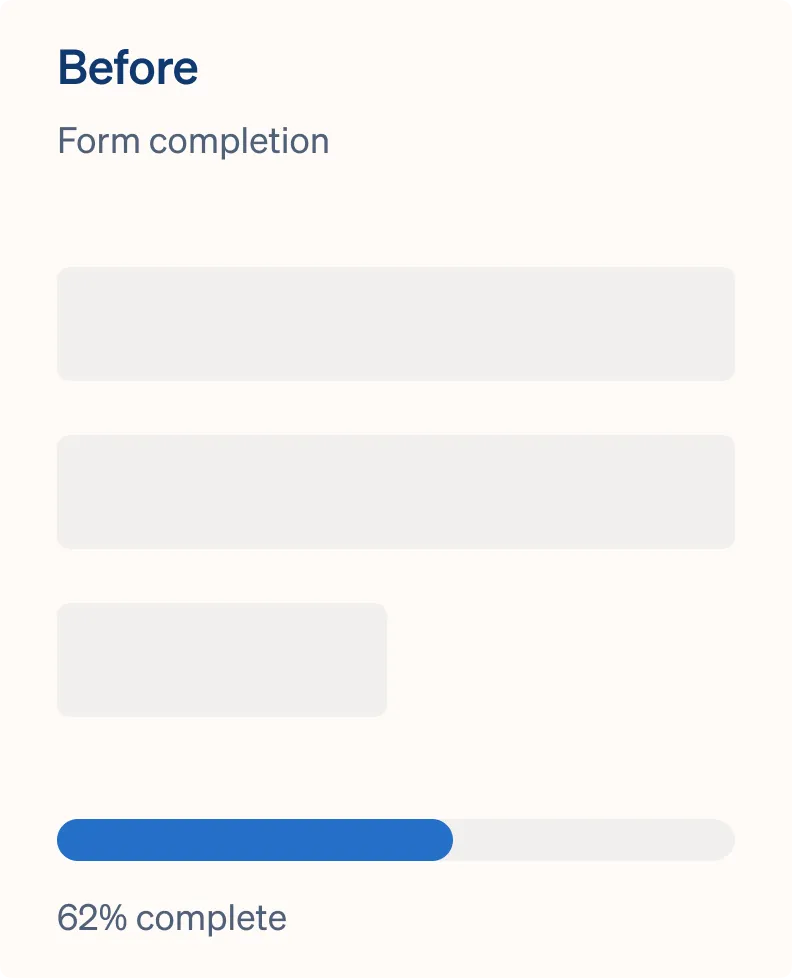
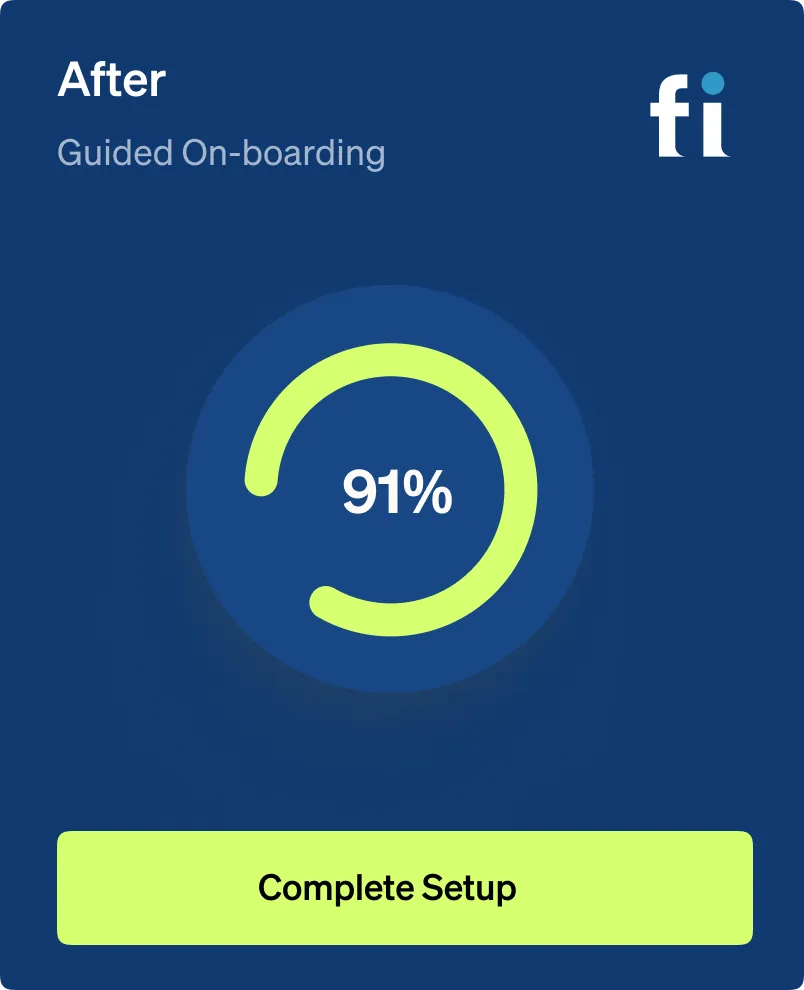
Validate with a before/after plus a guardrail. Look for movement in activation and a guardrail like early churn or support load.
The trade-off most teams ignore
Behavioral analytics makes it easy to overfit onboarding to short-term clicks. If you optimize for “completed tour”, you might improve activation rate while hurting week-4 retention. Always pair activation with a retention proxy.
Standalone insight: The best activation metric is boring to game.
Signal vs noise in the first session, first week, and post-onboarding
The same event means different things at different times, so sequence your analysis.
First session: remove friction before you personalize
In the first session, look for blocking behaviors: rage clicks, repeated backtracks, dead ends, error loops. These are often the fastest wins.
A common failure mode is jumping straight to personalization before fixing the path. You end up recommending features users cannot reach. Ecommerce teams can use the same friction signals to increase revenue per visitor with behavioral analytics by finding where shoppers stall, abandon carts, or miss high-value purchase paths.
First week: look for repeatability, not novelty
In days 2–7, prioritize signals that show the user can recreate value: scheduled actions, saved configurations, second successful run, teammate involvement.
Standalone insight: A second successful value action beats ten curiosity clicks.
Post-onboarding: watch for “silent drop” patterns
Past onboarding, behavioral analytics helps you see whether activated users build a pattern. But it is weaker at explaining why they stop.
When churn risk rises, pair behavior data with qualitative inputs such as short exit prompts or targeted interviews.
How to validate that behavioral insights caused activation improvement
You can keep validation lightweight and still avoid fooling yourself.
Validation patterns that work in real teams
Time-boxed experiment: Change one onboarding step and compare activation to the prior period, controlling for channel mix.
Cohort comparison: Compare users who did the “setup commitment” action vs those who did not, then check day-7 retention.
Step removal test: Remove a tutorial step you believe is unnecessary, then monitor activation and a support-ticket proxy.
What behavioral analytics cannot tell you reliably
Behavioral analytics struggles with:
- Hidden intent differences (users came for different jobs)
- Off-product constraints (budget cycles, legal reviews, internal adoption blockers)
- Small samples (low-volume segments, enterprise pilots)
When you hit these limits, use interviews, in-product prompts, or sales notes to explain the “why”.
Where FullSession fits when your KPI is the activation→retention slope
When you need to see what new users experienced, FullSession helps connect behavioral signals to the actual journey.
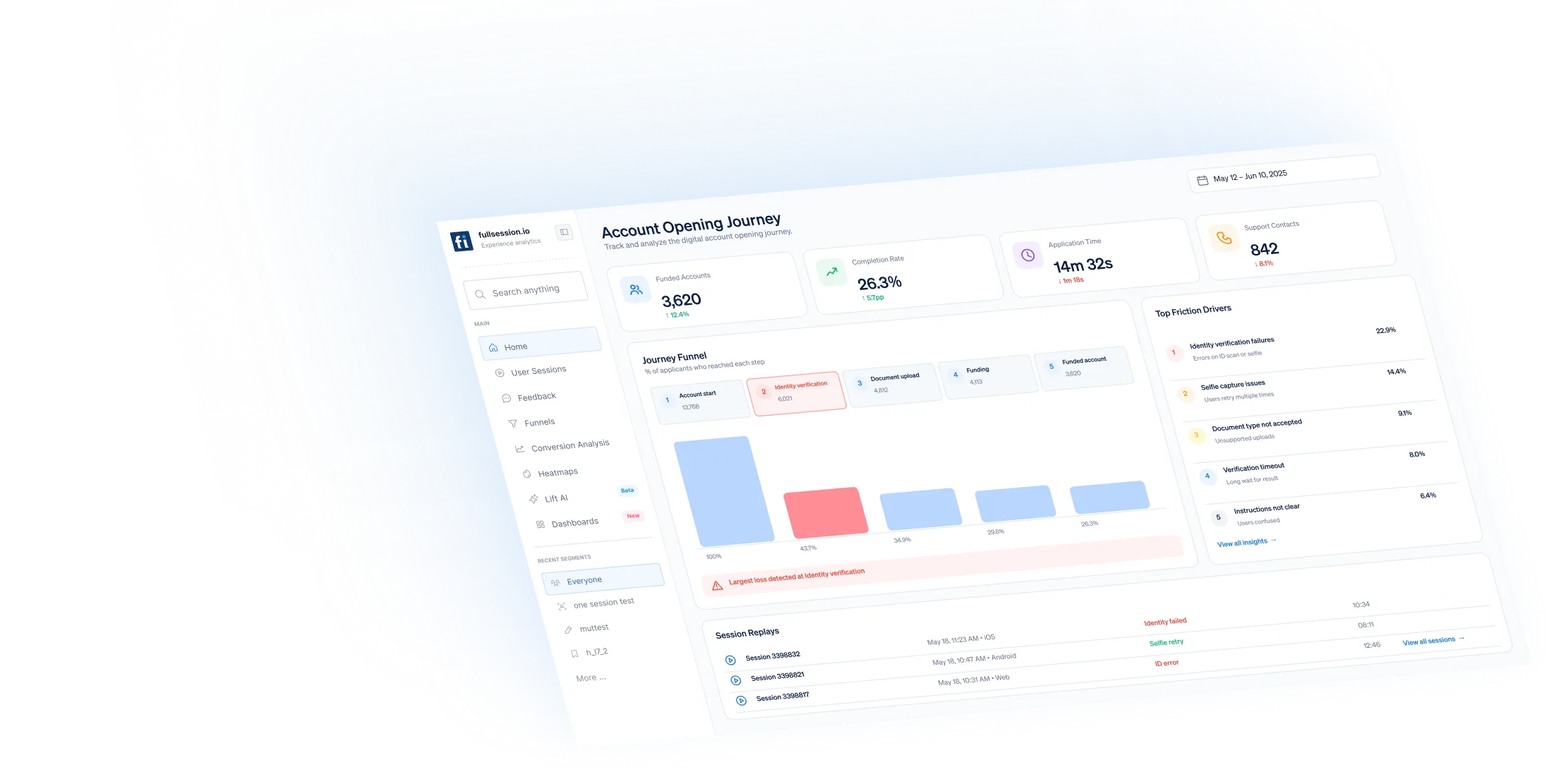
You would typically start with Funnels and Conversions to identify where users drop between “first session” and “value action”, then use Session Replay to watch the friction patterns behind those drop-offs.
If you see drop-offs but cannot tell what caused them, replay is the fastest way to separate “product confusion” from “technical failure” from “bad fit”.
When activation is improving but retention is flat, look for false activation: users hit the milestone once but cannot repeat it. That is where session replay, heatmaps, and funnel segments help you audit real user behavior without assumptions.
FullSession is privacy-first by design, which matters when you are reviewing real user sessions across onboarding flows.
A practical checklist for your next activation iteration
Use this as your minimum viable activation analytics setup.
- One activation milestone with a time window
- One setup commitment event
- One depth cue event
- One day-2 to day-7 return cue
One guardrail metric tied to retention quality
If you want to evaluate fit for onboarding work, start on the User Onboarding page, then decide whether you want to start a free trial or get a demo.
FAQs
Product analytics often summarizes outcomes and funnels. Behavioral analytics focuses on sequences and patterns of actions that explain those outcomes.
Start with 3–5 signals. If you cannot explain how each signal changes a decision, it is noise.
Use a small set of activation paths. Define activation as “any one of these value actions”, then segment by path.
Choose a window that matches your product’s time-to-value. For many PLG SaaS products, 1–7 days is common, but your onboarding reality should decide it.
Track the activation→retention slope by comparing day-7 or week-4 retention for activated vs non-activated users, by cohort.
Over-optimizing for easy-to-measure behaviors that do not represent value, like tours or shallow clicks.
See what’s costing you, and prove whats fixing it is worth
Watch the real journey, rank every issue by revenue impact, and validate the result against baseline.



.svg)



All systems operational.