.svg)

The engine that ranks every fix by revenue, predicts the lift, and proves it.
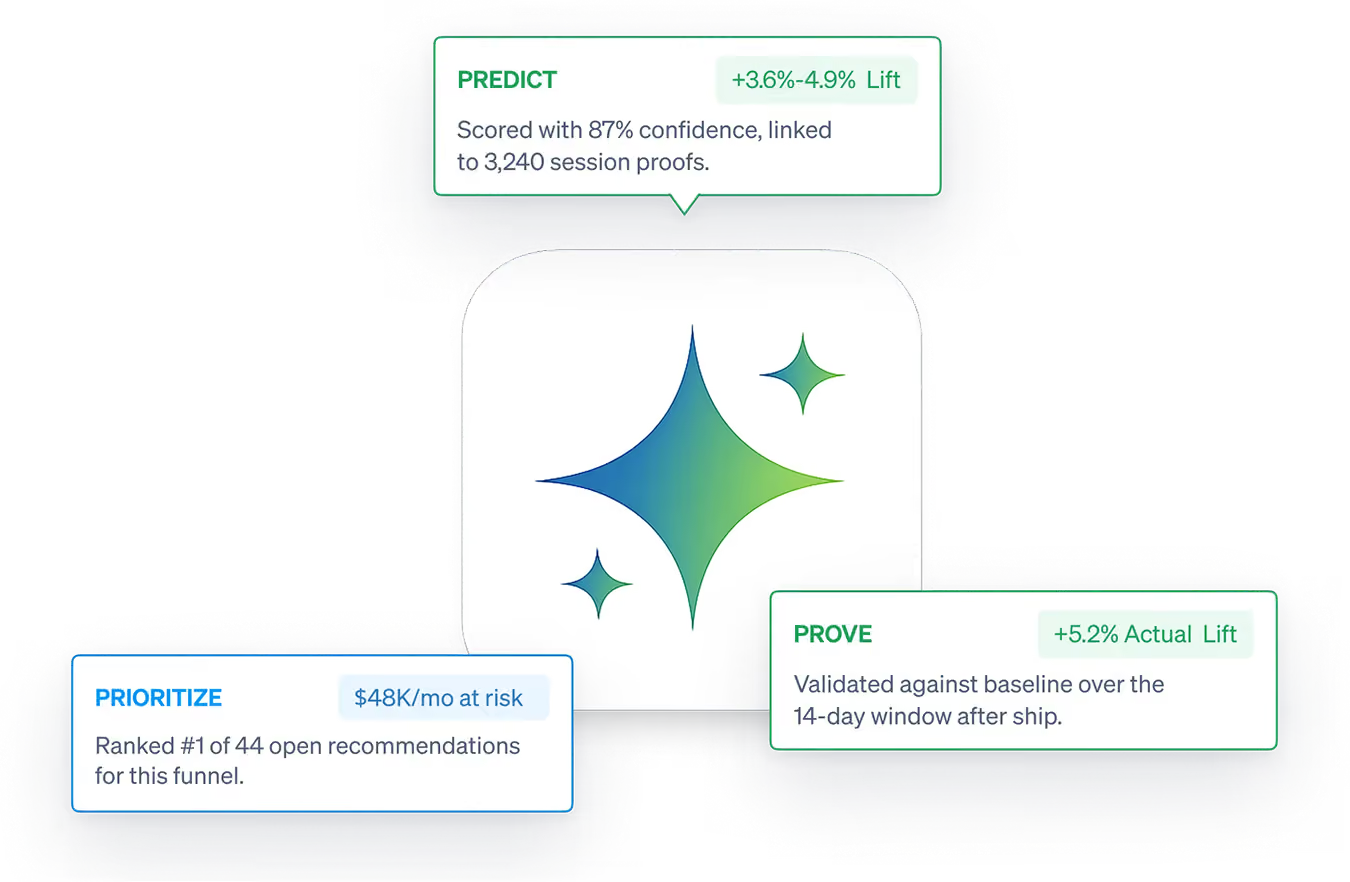
Choose a goal, rank every issue by revenue at risk, predict the lift before you build, and validate the result after you ship.






.svg)

What you can do with Lift AI
Every other tool in the category hands you more data and leaves the interpretation to you. Lift AI does the interpretation and hands you the decision.

Pick a goal, get a ranked list.
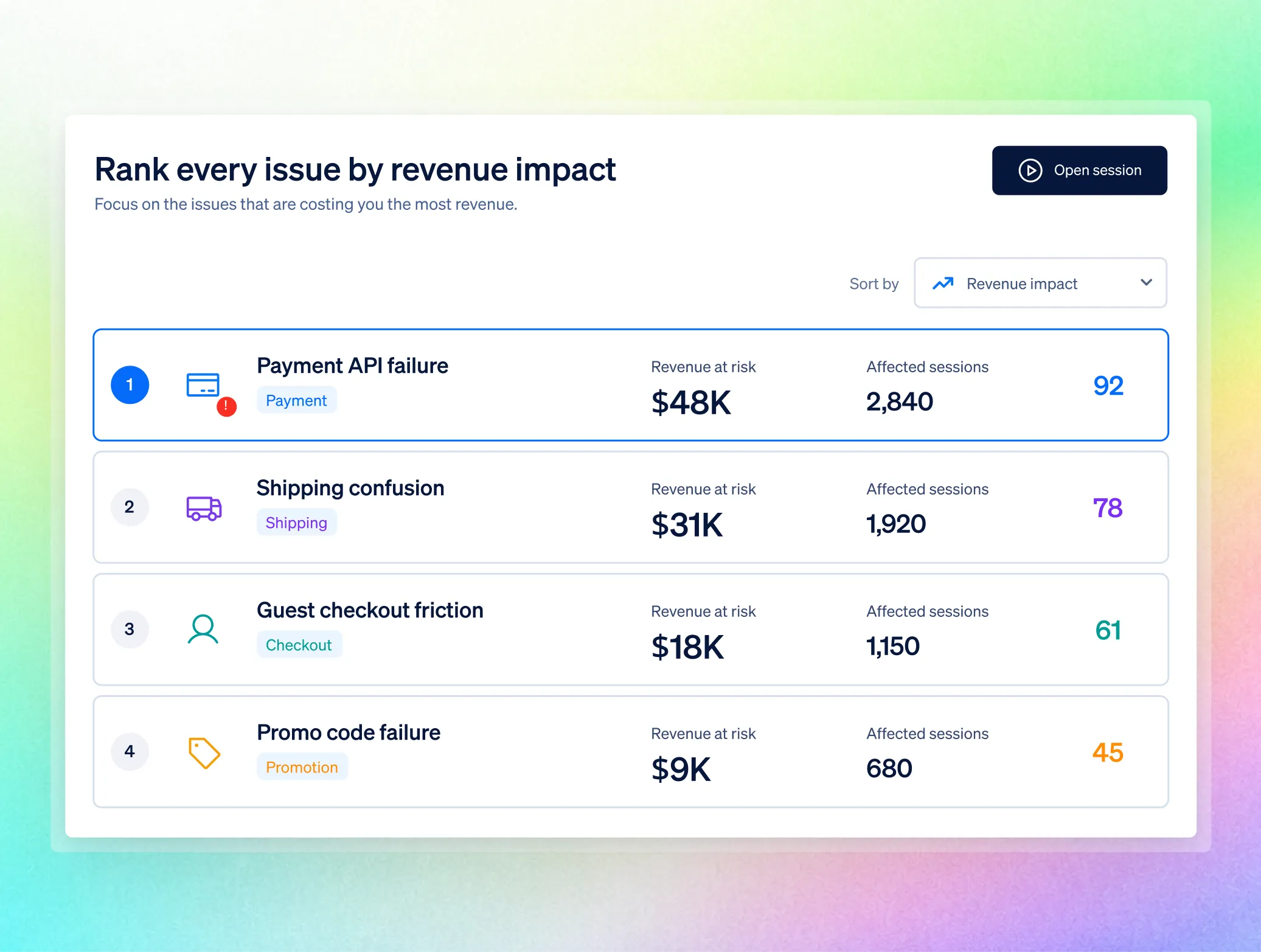
Choose checkout completion, revenue per visitor, or visitor-to-signup and see opportunities ordered by the revenue each is costing.

See a number before you build.
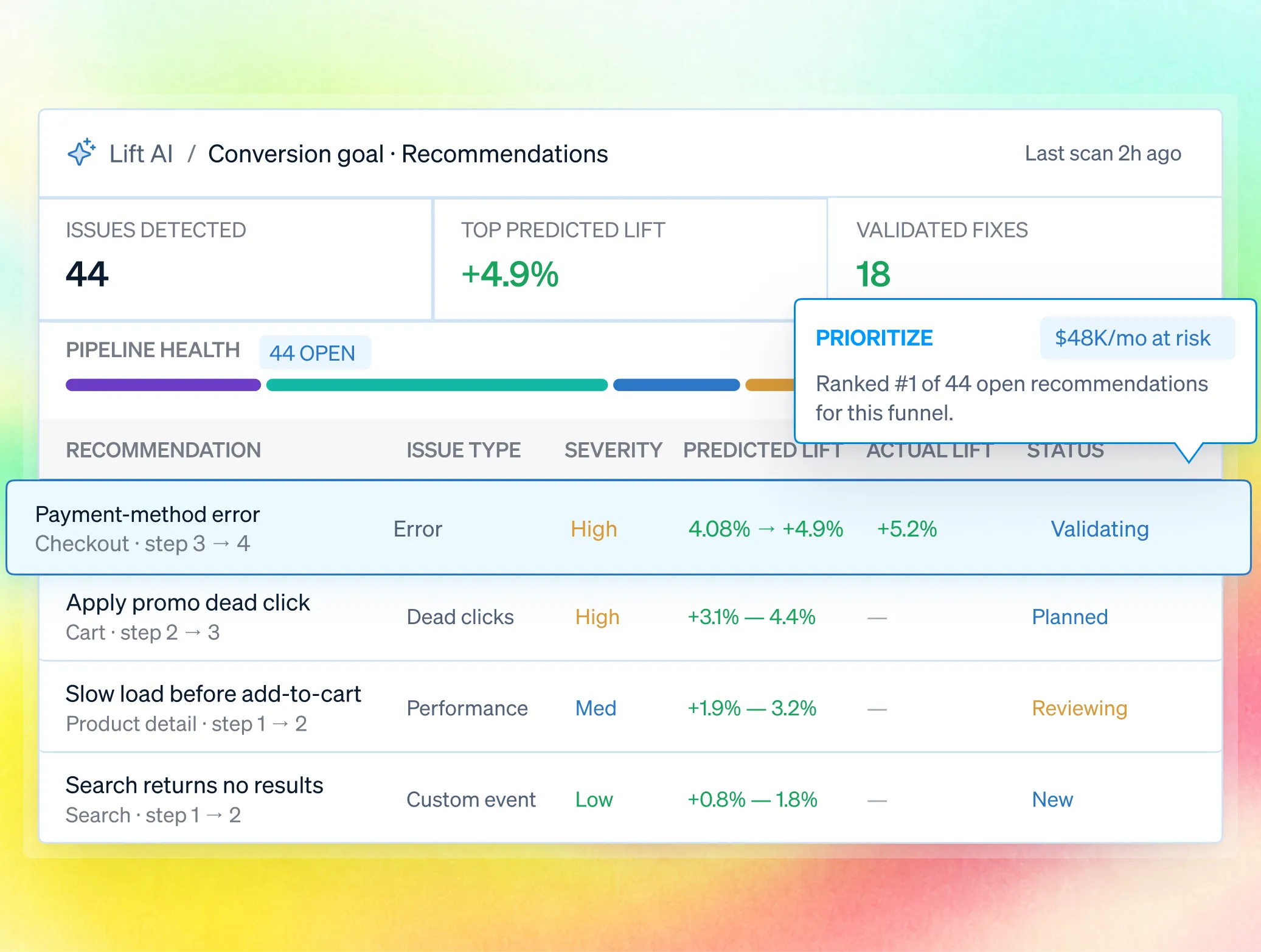
Every opportunity carries a predicted conversion-lift range, confidence score, and the exact sessions attached as proof.

Confirm it worked after you ship.
Lift AI measures actual lift against baseline, so every fix closes with a result instead of an assertion.
Lift AI in depth
Move from a goal to a revenue-ranked queue, a defensible prediction, and a validated result against baseline.
Analyze replay, heatmaps, funnels, errors, performance, and custom events, then score issues by severity and revenue impact.
See a conversion-lift range and confidence score linked to the specific session proofs behind every opportunity.

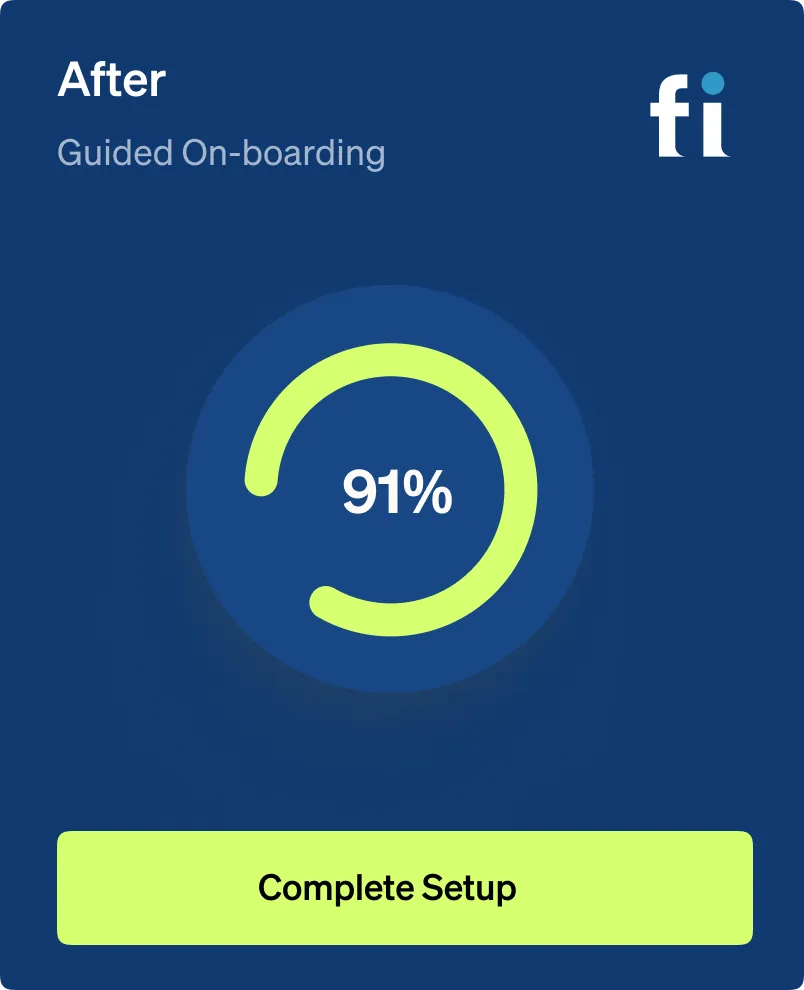
Lift AI selects the shortest statistically valid window, measures actual lift against baseline, and moves each item from New to Validated.

Prioritize every issue by revenue impact — Read the same captured stream that powers replay, heatmaps, funnels, errors, and feedback.

Who uses Lift AI

.avif)

Take a ranked, revenue-backed test into the next planning cycle instead of a dashboard hunch.

Order the roadmap by predicted impact and close each item with a measured result.
.avif)
.avif)

See where technical issues actually cost revenue, with the sessions and errors attached.
.avif)
.avif)
Is Lift AI safe on sensitive data?
Lift AI reads only what FullSession safely captures, with access controls and governance applied throughout.

Masking and blocking happen in the visitor’s browser before data reaches FullSession or Lift AI.

RBAC, SSO/SAML, audit logs, custom retention, security reviews, and an uptime SLA support controlled rollouts.

GDPR and CCPA are supported, PCI is supported for payment flows, and data residency is available in the US or Europe on request.
Teams use FullSession to turn behavior into proven outcomes.
"FullSession shows us exactly where users get stuck without digging through hours of recordings. It’s where we start when we know there’s something wrong and needs fixed. It was easy to launch and the FullSession team is super responsive and helpful."

12x
5x


Frequently Asked Questions.
It reads real behavior across sessions, funnels, errors, and technical context, scores every issue by revenue impact, and returns a ranked list with a predicted lift and confidence for each.
Before you build, each opportunity shows a predicted conversion-lift range and a confidence score, linked to the sessions behind it. After you ship, the actual lift is measured against baseline.
No. Lift AI determines the shortest statistically valid window for that funnel automatically, so results are not contaminated by other changes shipping at the same time.
Yes. Update the goal as your focus shifts and Lift AI re-evaluates the opportunities against it.
Yes. Lift AI runs on the behavior and session data you capture, on web, mobile web, and native apps.
No. It ranks the opportunities, predicts the impact, and attaches the evidence. The team decides what to build.
Professional and Enterprise. Enterprise adds more goal workspaces and portfolio views.
See what’s costing you, and prove whats fixing it is worth
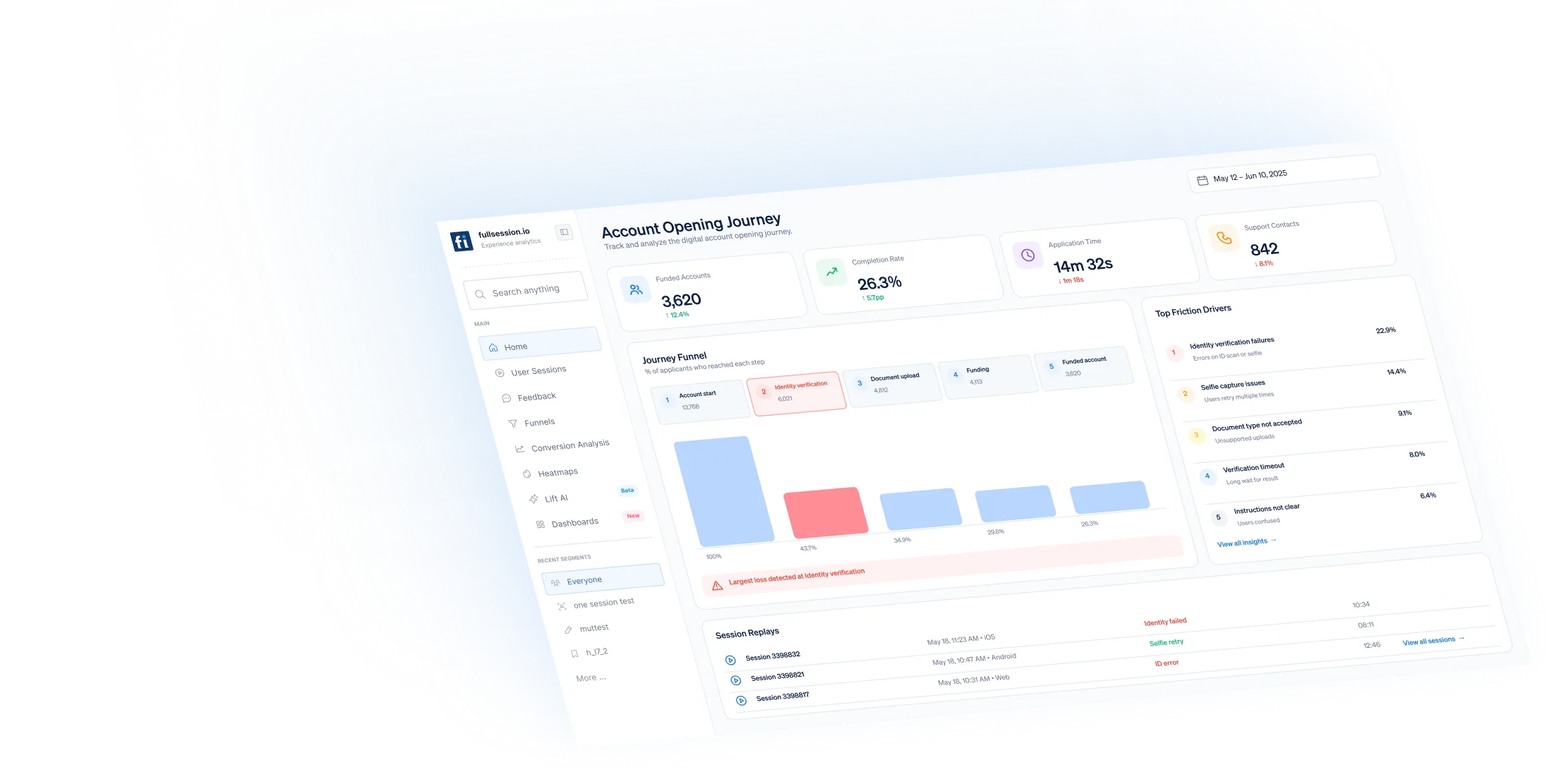
Watch the real journey, rank every issue by revenue impact, and validate the result against baseline.



.svg)
.svg)
212 E Stone Path St Derby, KS 67037 Phone: +1 415-649-4222


All systems operational.