.svg)

How to Use Session Replay to Diagnose Insurance Claim Form Drop-Off (and Validate Fixes Safely)

If you own the digital claims experience, you’ve seen the pattern: submission volume dips, support tickets spike, and your funnel shows a cliff, but not a cause. That’s the core problem behind session replay for insurance claims drop off: analytics tells you where claimants leave, not why they couldn’t finish.
A practical way out is to pair funnel metrics with governed replay. Use the funnel to isolate the failing step, then use replay to classify the friction and ship the smallest safe fix. This guide shows a repeatable loop using FullSession session replay routed through high-stakes forms workflows.
Quick Takeaway
To reduce insurance claim form drop-off, pair funnel metrics with session replay: use the funnel to isolate the exact step where claimants abandon, then watch governed replays to classify friction (UX confusion, upload failures, errors, verification loops). Fix the highest-impact issues first, then validate safely with pre/post comparisons and guardrail segments.
Why claims drop-off feels different
Most “form abandonment” content assumes checkout or lead-gen. Claims flows have different failure modes and higher stakes. For teams comparing regulated form journeys with online store behavior, session recording for ecommerce can show how shoppers move through product pages, carts, checkout steps, and abandonment points.
- Document upload breaks (size/type limits, mobile picker quirks, stalled progress states)
- Identity verification loops or timeouts
- Policy lookup friction and “record not found” dead ends
- Multi-channel continuation (save-and-resume via email/SMS)
- Handoffs to adjusters or call centers that look like abandonment if you don’t instrument them
The key point: claims drop-off is often a mix of UX, technical reliability, and governance constraints. You need a workflow that finds the real blockers without turning replay into a compliance risk.
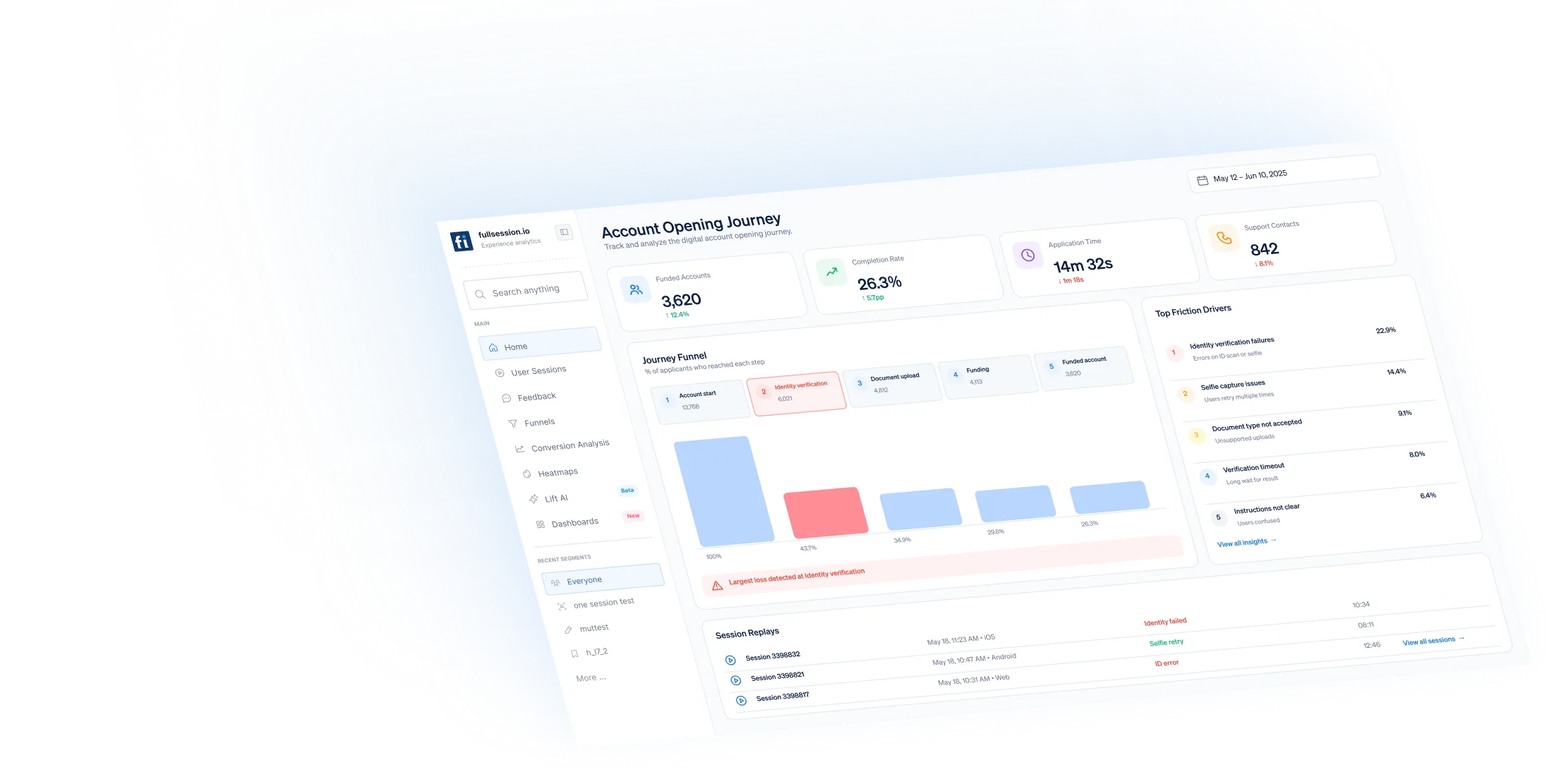
The funnels-to-replay workflow (quant + qual together)
Session replay is not a benchmarking system by itself. Treat replay as qualitative evidence that explains the “why” behind step-level funnel metrics.
Here’s a workflow that holds up in regulated, high-intent journeys:
- Start in the funnel, not in replay.
Define your claim submission steps and identify the sharpest drop. Use a funnel view (for example, funnels and conversion analysis) to quantify where the leak is. - Segment before you watch.
Narrow to the journeys that matter most. In claims, the highest-yield segments are usually:- device and browser
- upload file type/size (when uploads exist)
- claim type (simple vs document-heavy)
- authenticated vs guest
- network conditions
- accessibility settings and input methods
- Watch replays at the moment of drop-off.
Open replays for sessions that reached the failing step and did not complete. In FullSession session replay, focus on repeatable patterns: validation loops, stuck spinners, UI confusion, rage clicks, unexpected redirects, broken buttons, and slow responses. - Classify friction using a shared taxonomy.
Without a shared language, teams argue from anecdotes. With a taxonomy, Product, Engineering, and Ops can agree on root cause categories and prioritize fixes consistently. - Turn findings into a shipped fix, not a “replay highlight reel.”
Every investigation should end with a small “issue bundle”:- reproduction notes (what the claimant tried)
- evidence (what you saw, and where)
- owner (team and person)
- expected outcome (what should change in the funnel)
- risk notes (what needs extra validation because it’s regulated)
- Validate outcomes with guardrails.
Use the funnel to prove the fix helped completion rate, then spot-check replay post-release to confirm the intended recovery path is actually used.
Claims drop-off taxonomy (use this table to stop guessing)
Use this as your team’s shared language. It keeps investigations from turning into “I watched a few sessions and had a hunch.”
Prioritize what to fix first (impact × effort × risk)
Claims teams typically have more friction than they can fix in one sprint. A simple rubric works well in regulated flows:
- Impact: how many claimants hit it, and does it block submission or just slow it?
- Effort: copy/validation tweak vs frontend vs backend/integration
- Risk: does it touch compliance steps, verification, disclosures, or regulated messaging?
Start with high-impact, low-effort, low-risk items first. For high-impact but higher-risk issues, plan a controlled rollout and stricter validation.
Validate fixes safely (and avoid sample bias)
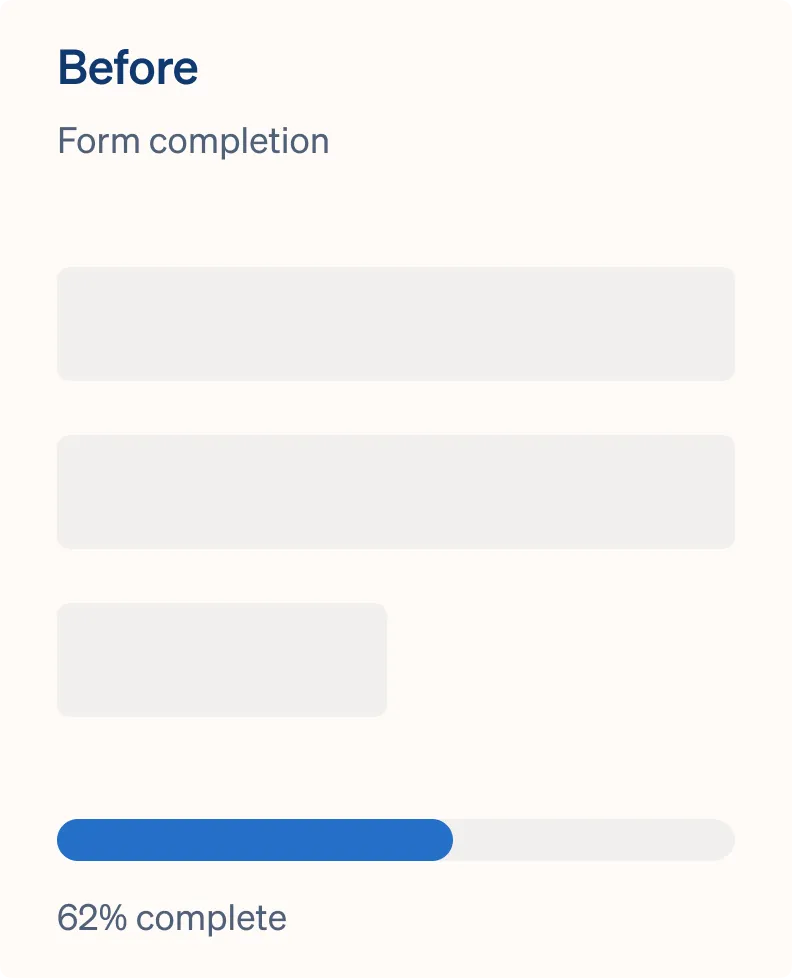
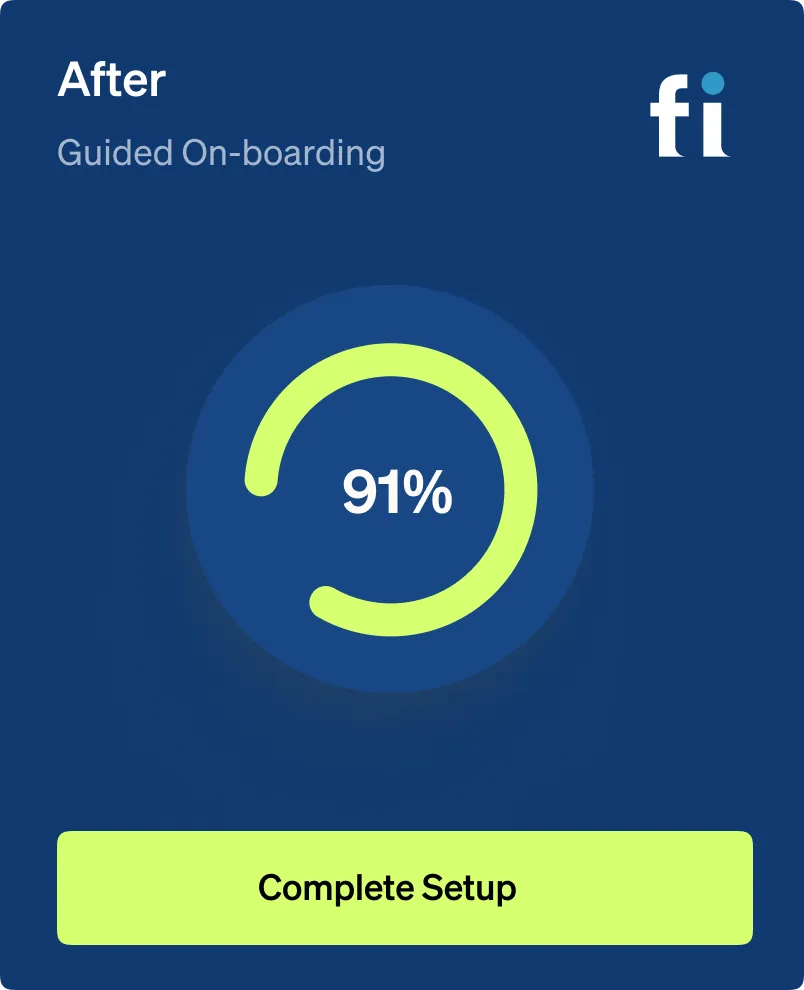
If replay helps you decide what to fix, you still need quantitative proof the fix improved claim submission completion rate.
A conservative validation checklist:
- Define success and guardrails up front.
Primary: submission completion rate. Guardrails: error rate, performance regressions, and segment-specific drop-off. - Do a clean pre/post read.
Keep funnel step definitions stable. Avoid changing tracking definitions at the same time as the UX fix. - Protect the segments that matter.
Always break out at least: mobile vs desktop, upload-heavy vs simple claims, verification-required vs not. - Confirm behavior, not just numbers.
After release, spot-check replay on the affected step to confirm the recovery path is used as intended. - Watch for sampling traps.
If you only review “worst sessions,” you can overfit to edge cases. Validate against overall funnel trends and your top segments.
Governance checklist for replay in claims (table stakes, not an afterthought)
In high-stakes journeys, “can we record it?” is not the only question. The operational question is: can we record enough to diagnose drop-off, while enforcing masking, access controls, and retention rules?
Start from safety and security expectations, then work backwards to what you need to observe.
Minimum checklist:
- Masking and capture rules: define what must never be captured (PII, claim details, IDs), then validate masking on the actual form.
- Access controls: limit replay access by role, align with incident response and audit expectations.
- Retention: keep only what you need to investigate and validate changes, then expire it.
- Auditability: be able to explain who viewed what and why, especially when replays are shared cross-functionally.
Product-truth note: confirm exact governance capabilities and configuration options for your FullSession plan during security review.
Operational loop: from insight to shipped fix
A repeatable loop prevents “one-off investigations” that never become outcomes:
- Triage: funnel identifies the steepest claim-step drop
- Reproduce: replay shows what claimants tried to do
- Log: issue bundle created with evidence + owner + expected outcome
- Ship: smallest safe fix released with risk notes
- Verify: replay confirms intended behavior and recovery paths
- Monitor: funnel step trend validates sustained lift, segmented by key cohorts
Related answers
- Funnels and conversion analysis to quantify where claimants drop.
- Errors and alerts to connect failures to impacted sessions and prioritize fixes.
- Safety and security for governance expectations in regulated journeys.
Next step
See how session replay plus funnel views can pinpoint where claimants abandon the flow, and use a repeatable validation checklist before rolling out changes. Start with FullSession session replay and route the investigation through high-stakes forms workflows.
Common follow-up questions
Enough to confirm whether a pattern repeats across real journeys. If every replay tells a different story, tighten segmentation and re-check which step you’re investigating.
Start with the biggest funnel drop, then segment by the largest volume drivers (device, claim type, verification path). Use replay to confirm the dominant pattern, not to collect anecdotes.
Funnels and form analytics quantify where users drop. Session replay explains why by showing the interaction sequence. The strongest approach uses metrics for prioritization and replay for diagnosis and post-fix verification.
Instrument save-and-resume as its own “success path,” not abandonment. Segment the funnel by resumed vs first-pass sessions so intentional pauses don’t look like failures.
Treat it like an incident. Segment to the verification path, capture replay evidence, correlate with errors, escalate to the vendor, and add a claimant-friendly recovery path.
Spot-check replays after release on the affected step, then monitor the funnel trend by cohort. If the metric improves but behavior looks wrong, you may be measuring the wrong “completion.”
See what’s costing you, and prove whats fixing it is worth
Watch the real journey, rank every issue by revenue impact, and validate the result against baseline.



.svg)
.svg)
212 E Stone Path St Derby, KS 67037 Phone: +1 415-649-4222



All systems operational.