.svg)

Top website feedback tools for marketing agencies: how to choose based on workflow, clients, and outcomes

Agencies do not lose time because they lack feedback. They lose time because feedback arrives in the wrong format, from the wrong people, at the wrong moment, and with no clean path to “shipped”.
If you lead delivery, your real job is to prevent review churn while still improving your SaaS clients’ activation. That requires a different selection approach than most “best tools” lists.
The agency problem with website feedback tools
Agencies pay for feedback twice: once to collect it, and again to translate it into work.
Most teams end up with a familiar failure mode. The client leaves comments. Users submit opinions. Analytics shows drop-off. Nobody can connect those signals into one prioritized queue, so the backlog becomes politics.
A practical rule: if feedback does not turn into a ticket within 48 hours, it becomes noise.
Common mistake: buying “more feedback” instead of fixing the pipeline
A typical agency stack adds another widget, another survey, another inbox. The result is more volume with the same triage bottleneck.
Your selection criteria should start with ownership. Who reviews new inputs daily? Who decides “fix now vs later”? Who closes the loop with the client?
What is a website feedback tool?
A website feedback tool is any system that captures qualitative signals from humans about a website experience, then helps teams route that signal into action.
That includes client annotations, on-page widgets, surveys, and user testing. It can also include behavior evidence like replays, heatmaps, funnels, and error context, because agencies often need proof of what actually happened before they change the site.
The categories that matter for agencies
You are not choosing a “best tool”. You are choosing which feedback input you trust most for a given engagement.
Client-facing annotation and QA feedback
This category reduces approval churn. It works when the main risk is miscommunication: “I meant this headline”, “that button is off”, “this state is broken”.
Trade-off: it reflects expert or stakeholder opinion, not real-user behavior.
Voice-of-customer and on-page prompts
This category helps you learn intent and objections. It works when the main risk is message mismatch: “I do not get it”, “pricing is unclear”, “I am not ready”.
Trade-off: the signal is easy to bias through targeting rules, and it can annoy users if overused.
Research-grade user testing
This category helps you catch comprehension failures early. It works when the main risk is onboarding clarity: “users cannot find step 2”, “setup is confusing”.
Trade-off: it is slower to operationalize. Agencies often under-resource it, then wonder why it does not change the roadmap.
Behavior evidence: replay, heatmaps, funnels, errors
This category helps you validate. It works when the main risk is hidden friction: rage clicks, dead elements, confusing scroll depth, form errors, and “cannot reproduce” activation bugs.
Trade-off: it requires governance. You need privacy controls and clear rules about what is captured.
An agency decision tree that actually narrows the shortlist
Choosing well starts with your delivery model, not a feature checklist.
Decision rule
If your engagement is “ship work fast”, prioritize annotation-to-task routing first.
If your engagement is “improve activation”, prioritize behavior evidence first.
If your engagement is “fix positioning”, prioritize voice-of-customer first.
Now apply it to real agency work.
If you sell landing pages and conversion sprints: you need fast iteration plus proof. Prioritize behavior evidence plus lightweight prompts.
If you run onboarding and activation retainers: you need repeatable triage and impact validation. Prioritize funnels, replay, and outcome reporting.
If you do ongoing site QA for multiple clients: you need governance and clean handoffs. Prioritize permissions, workspaces, and controlled access.
The repeatable agency workflow: collect → triage → ticket → verify → close
Tools only help if your workflow is explicit. Otherwise the loudest feedback wins.
- Collect feedback into two lanes: stakeholder lane (client annotations) and user lane (prompts, surveys, testing).
- Attach behavior evidence before you decide: replay or error context beats opinions when activation is on the line.
- Triage daily with a single owner: one person decides “act, park, or dismiss”, then assigns.
- Convert to tickets with acceptance criteria: define “done” as a measurable behavior change, not “looks better”.
- Ship and verify with the same evidence: confirm the friction is gone, and the target activation step improved.
- Close the loop with the client: show what you changed, why it mattered, and what you will watch next.
This is where many agency teams get stuck: steps 2 and 5 are missing. Without evidence, feedback becomes debate.
Multi-client governance and privacy
When you manage multiple SaaS clients, governance is not a checkbox. It is the difference between scalable delivery and constant risk reviews.
What “good governance” looks like in practice
You want workspace separation by client, permissioning that matches agency roles, and a clear policy for what you capture and what you never capture.
A practical constraint: scripts add weight. If your tool slows pages or breaks tag governance, engineering will push back and you will lose adoption.
Instrumentation pitfalls to avoid
Over-collection is the most common failure mode.
If you collect everything, you increase the chance of capturing sensitive data unintentionally. If you target prompts too broadly, you bias the sample and fatigue real users. If you run too many tools, you cannot trust any single dataset.
How agencies prove outcomes without building a reporting burden
If you cannot prove value, you will end up defending hours instead of outcomes.
The trick is to measure a small set of “activation-adjacent” proxies plus operational metrics that clients actually feel.
A mobile-friendly measurement table you can reuse
Quick scenario: what “proof” looks like for an activation retainer
A common setup is weekly activation work with multiple stakeholders. The client wants quick wins, but “quick” often becomes random.
A better pattern is to pick one activation milestone, baseline it, then run a two-week pilot. Each change gets: the original evidence, the fix ticket, and a post-change verification check. The client sees a clean narrative instead of a pile of screenshots.
When to use FullSession for activation-focused agency work
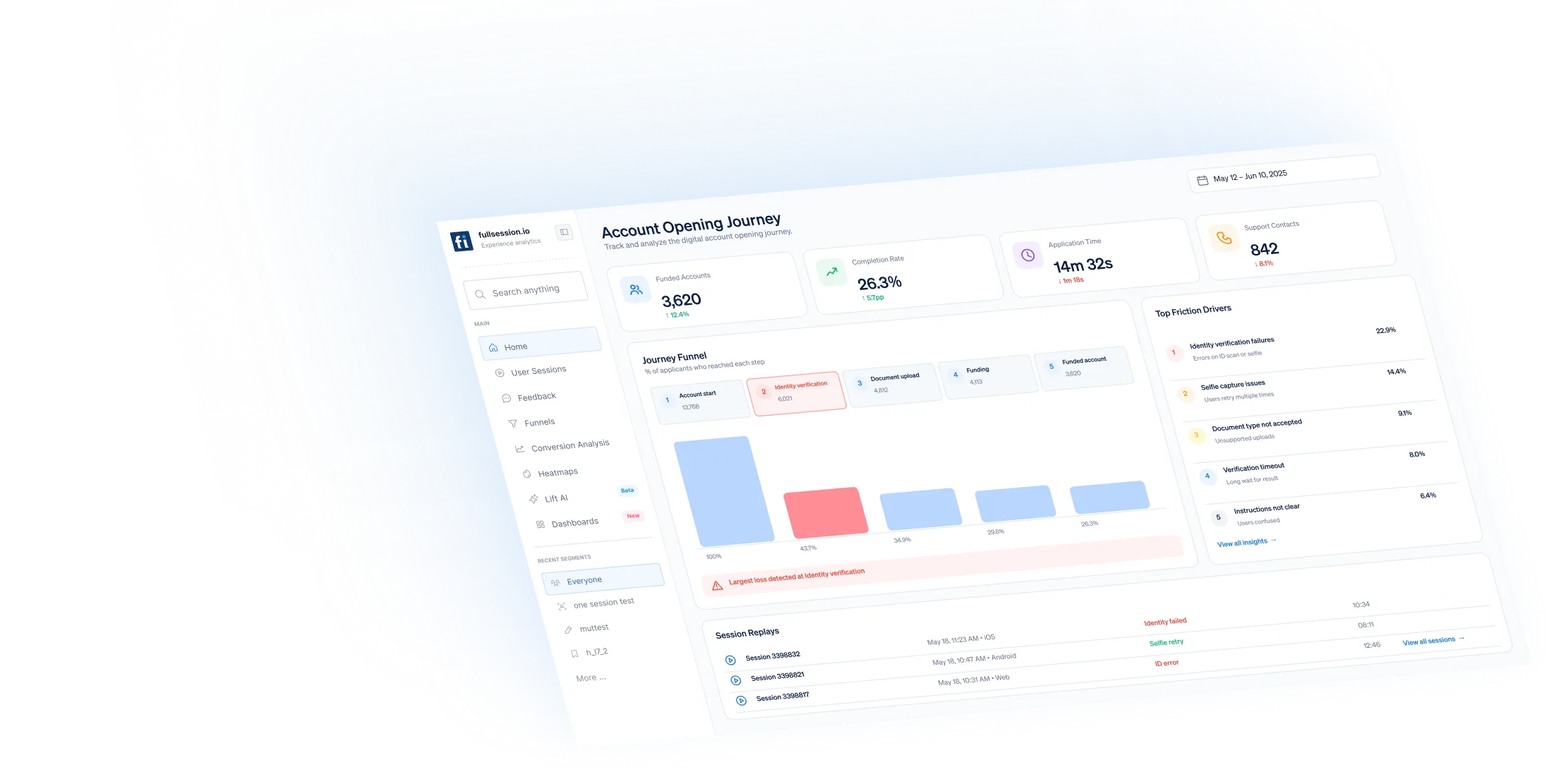
Agencies doing activation work need more than feedback volume. They need a system that links behavior evidence to decisions, then to verification.
FullSession is a privacy-first behavior analytics platform. It is a fit when you want to consolidate the “why” evidence that keeps activation work from becoming guesswork.
Use it when:
- You need to move from “users say X” to “users did Y, here is where they got stuck”.
- You need verification after shipping, not just investigation before shipping.
- You need a repeatable workflow across multiple clients without rebuilding the process each time.
If your main bottleneck is stakeholder review churn, pair your annotation workflow with behavior evidence so your team can resolve disputes quickly and keep the activation backlog moving.
Next steps: shortlist, pilot, then standardize
Start by choosing your primary lane: stakeholder review, voice-of-customer, or behavior evidence.
Then run a two-week pilot on one activation milestone. Keep the workflow tight: collect, triage daily, ticket with acceptance criteria, verify after shipping, and close the loop with the client.
If you want a faster way to connect friction evidence to activation work, explore FullSession’s Lift AI hub content and the PLG Activation solution page, then use a small pilot before rolling out across all clients.
FAQs
One primary system for behavior evidence, plus one primary system for stakeholder inputs, is usually enough. Beyond that, you are paying in implementation and triage time.
They can, if targeting is broad or timing is wrong. Treat prompts like experiments: narrow segments, explicit goals, and a plan to turn them off if they create noise.
Start with decision intent. Only collect feedback from users who reached a meaningful step, and separate new users from returning users. Then compare qualitative inputs against behavior evidence.
One accountable owner, even if multiple people contribute. Without ownership, feedback becomes a shared inbox problem and nothing closes.
Keep it simple: operational speed (cycle time, rework), the top friction themes, what shipped, and the activation proxy trend you agreed on. The story matters more than volume.
Set capture rules up front and document them. Avoid collecting sensitive inputs, use masking where needed, and restrict access by client workspace. If governance is unclear, adoption will stall.
See what’s costing you, and prove whats fixing it is worth
Watch the real journey, rank every issue by revenue impact, and validate the result against baseline.



.svg)
.svg)
212 E Stone Path St Derby, KS 67037 Phone: +1 415-649-4222



All systems operational.