Compare • Updated March 2026
Faster path from digital friction to measurable revenue impact
Contentsquare is a broad experience intelligence platform. FullSession is built for teams that want a simpler way to increase revenue. Lift AI helps prioritize what to fix next, and prove lift across onboarding, checkout, forms, and portal journeys—without a heavier platform rollout.
Find friction → prioritize fixes → validate impact
Trusted by teams at:









FullSession vs Contentsquare
Simple comparison. Faster decision.
Both platforms help teams understand digital experience. The practical difference is how quickly your team can move from behavior data to the next decision, how broad a platform you really need, and how predictable the rollout and buying process feel as usage grows.
Always verify current packaging and quote details directly with each vendor.
Complete coverage
One platform to see, prioritize, and improve critical digital journeys
From SaaS onboarding to ecommerce checkout to insurance, banking, healthcare, and other enterprise portals, FullSession gives teams the core workflow in one place: understand behavior, uncover friction, decide what to fix next, and measure impact.
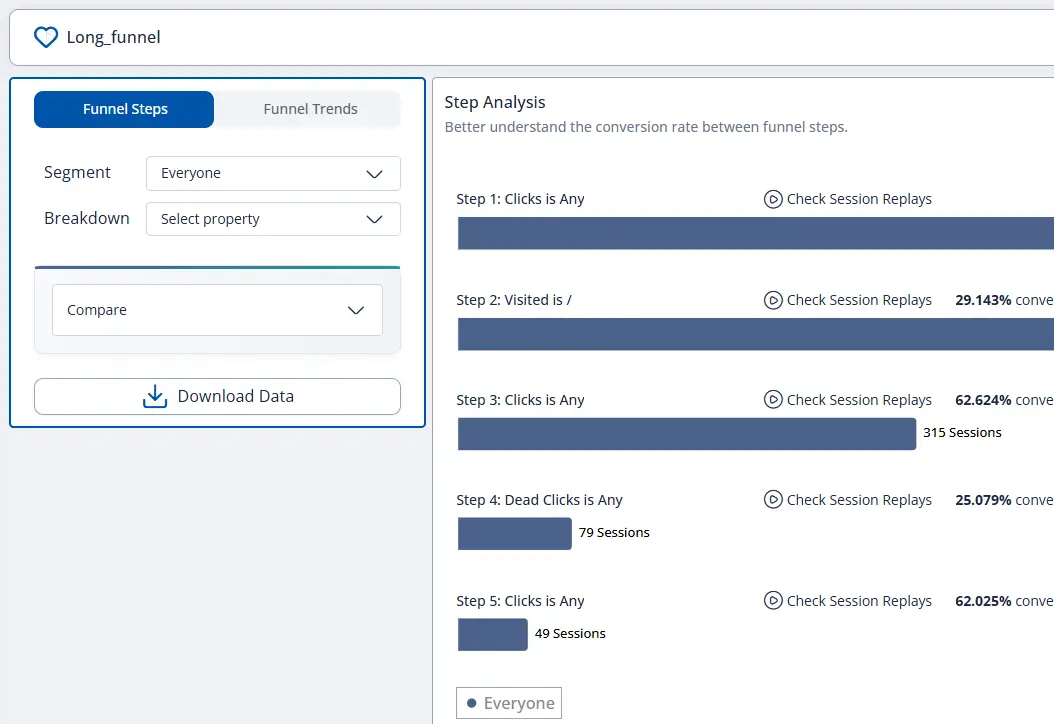
Funnels & Journeys
See where signup, checkout, applications, claims, and service flows leak conversion or completion
Funnels & Journeys
Find the exact step where users drop, hesitate, or fail to complete
- Build funnels for onboarding, checkout, bookings, applications, claims, and self-service journeys
- Spot the precise step where users abandon or slow down
- Jump from a journey step into the sessions behind the metric
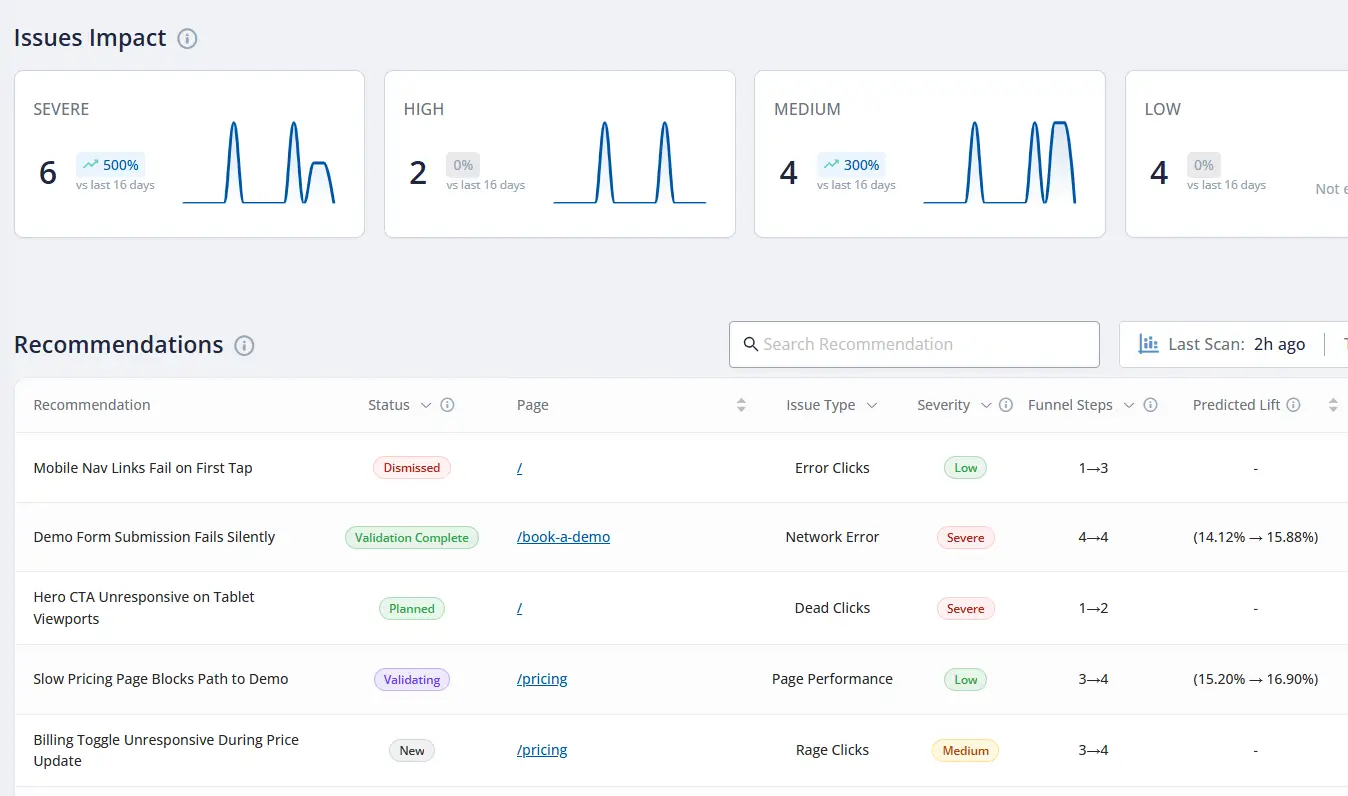
Lift AI
Prioritize the next fix by likely business impact — not just by noise or opinions
Lift AI
Move from observation to action faster
- Surface the issues most likely to affect conversion, completion, containment, or revenue
- Prioritize what to fix next based on expected business impact
- Validate whether the release actually improved the outcome after launch
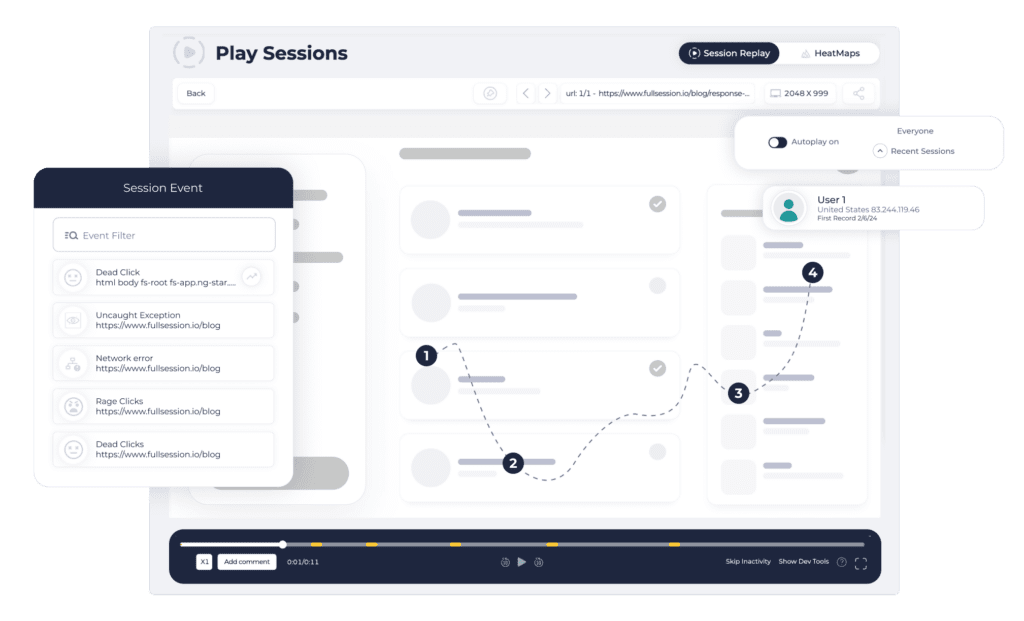
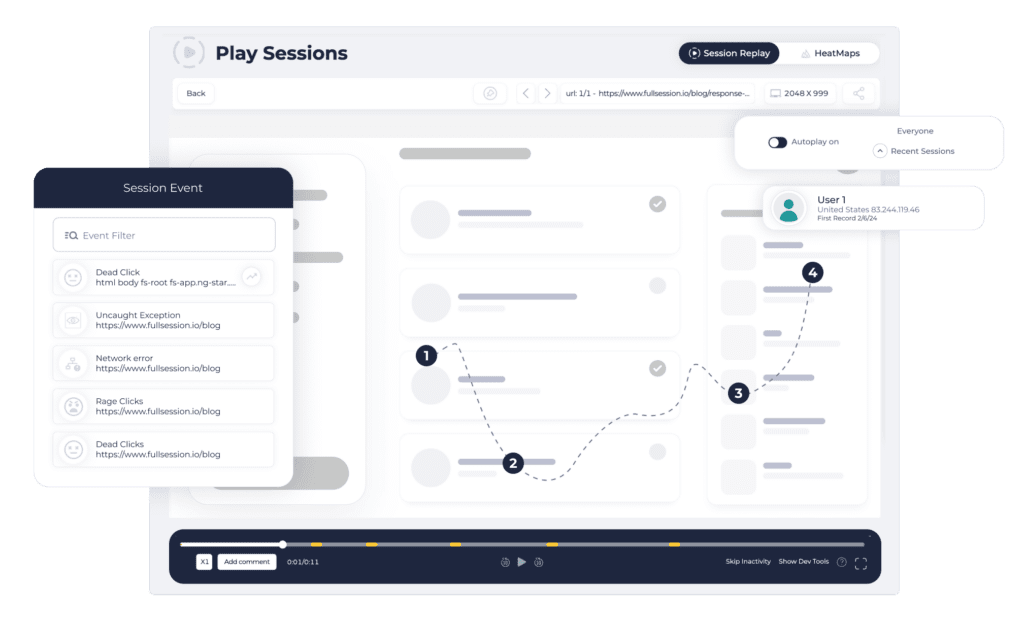
Session Replay
See exactly what users experienced across key journeys and failed moments
Session Replay
Give every team shared visual evidence
- Reproduce what users saw during onboarding, checkout, applications, or support journeys
- Move from funnels, errors, or feedback into exact session evidence
- Align product, support, operations, QA, and engineering around the same reality
Heatmaps & UX Signals
Understand attention, hesitation, weak CTAs, and friction patterns at scale
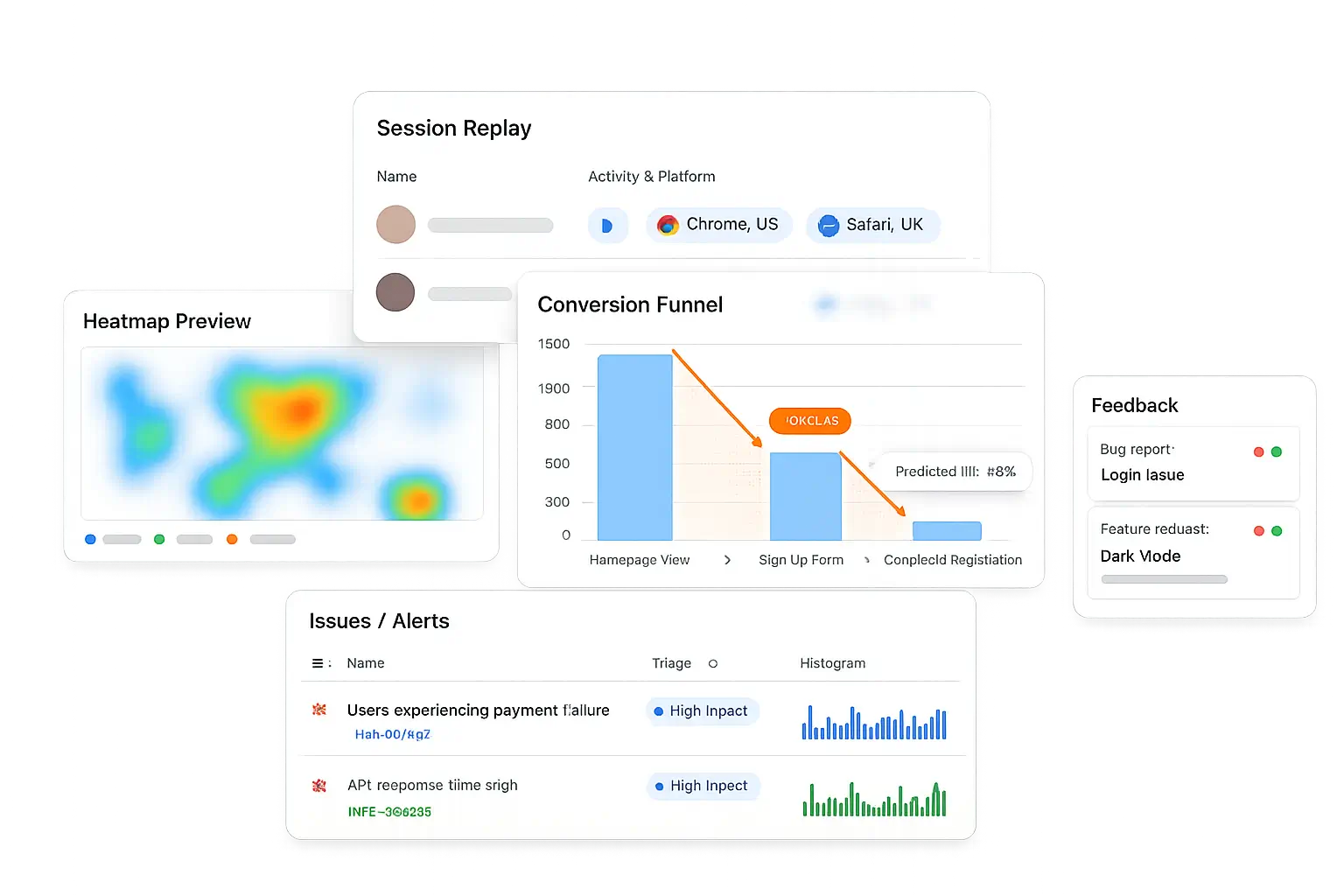
Heatmaps & UX Signals
See where users engage, hesitate, and miss what matters
- Track click, move, scroll, and frustration patterns on important pages and screens
- Identify weak CTAs, dead zones, and hesitation points faster
- Combine visual signals with replay and journey data for deeper diagnosis
Errors & Alerts
Connect issues to impacted users and failing journeys before complaints pile up
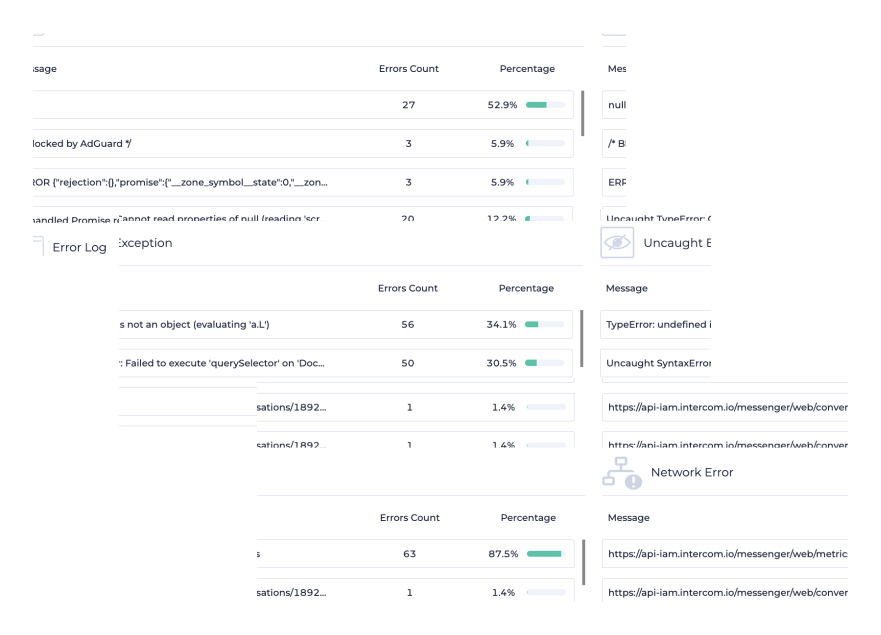
Errors & Alerts
Prioritize the problems that hurt users most
- Connect frontend and journey issues to the sessions where they occurred
- Prioritize by journey impact, not just raw error volume
- Reduce back-and-forth across product, QA, engineering, support, and operations
Feedback & Voice of User
Capture the why in users’ own words inside the journey where friction happens
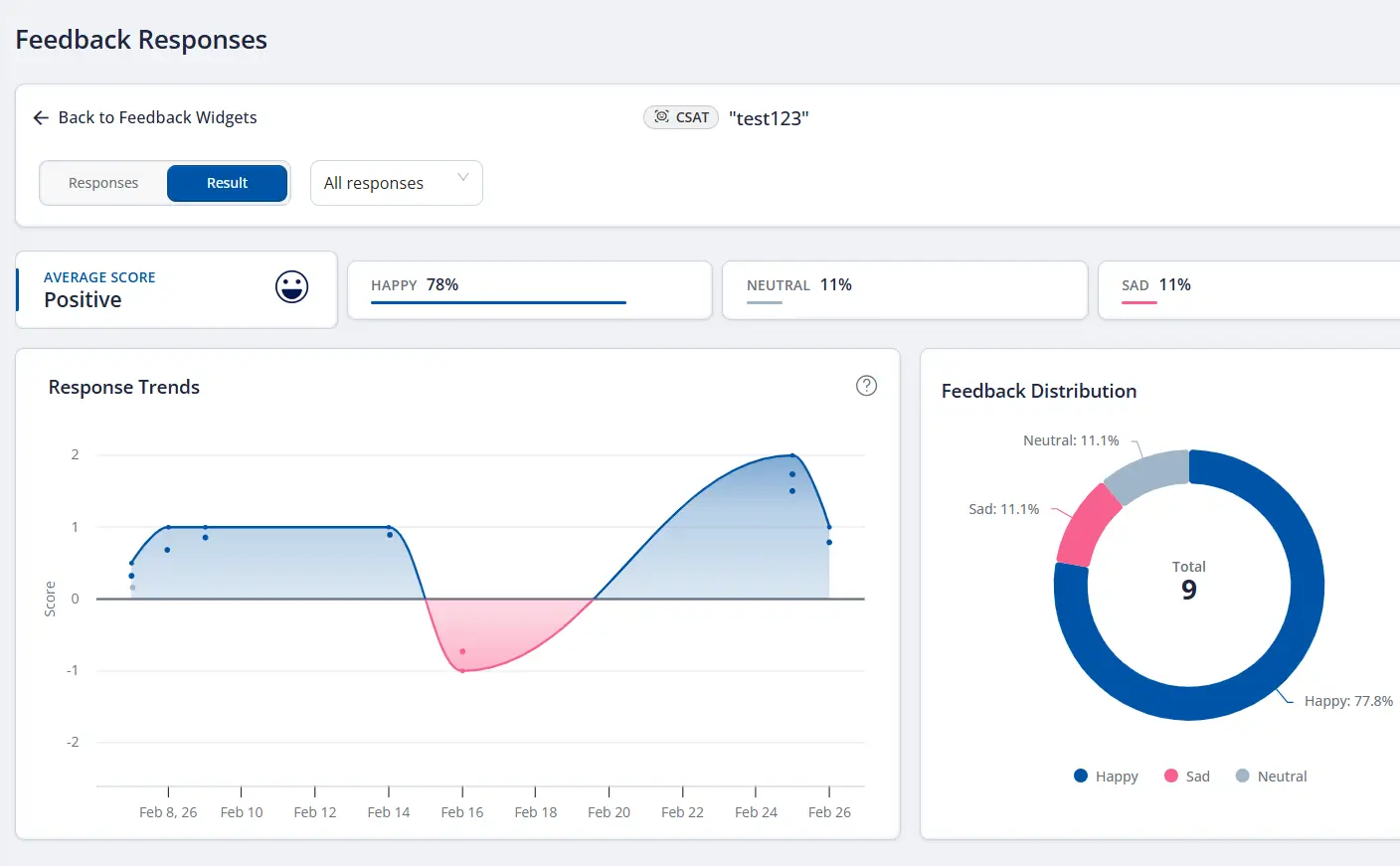
Feedback & Voice of User
Combine qualitative and behavioral evidence in one place
- Trigger feedback in checkout, onboarding, application, portal, or service flows
- Link comments directly to real session context
- Use what users say together with what they did for sharper decisions
Why teams switch
What usually pushes teams to look for a Contentsquare alternative
Most evaluation cycles are not about whether Contentsquare is capable. They start when the team wants a tighter workflow, a lighter rollout, or a more predictable buying path for the use cases they actually need to solve.
Reduce platform overhead
Teams often want strong replay, heatmaps, funnels, feedback, and issue context without buying into a broader multi-product stack that takes more internal enablement to operationalize.
Make cost easier to model
When a team only needs a focused behavior analytics workflow, transparent session-based pricing and unlimited seats can feel easier to evaluate than a quote-led enterprise process.
Move faster from signal to fix
Product, growth, ecommerce, and portal teams usually want to identify the biggest source of friction, prioritize the next release, and prove lift quickly—not spend weeks navigating a bigger platform footprint.
Choose FullSession if…
You want a cleaner path from friction to measurable improvement
FullSession fits best when product, growth, UX, support, and engineering need one shared view of the journey — then need to translate that evidence into prioritized work and measurable lift without a heavier enterprise platform rollout.
- ✓You want a practical alternative for onboarding, checkout, applications, bookings, claims, and other revenue- or completion-critical journeys.
- ✓You care about replay, heatmaps, feedback, errors, funnels, and Lift AI in one workflow.
- ✓You want pricing and implementation to feel straightforward before the evaluation turns into a larger buying program.
- ✓You need privacy and governance readiness for security-conscious or regulated teams.
Or keep evaluating
Contentsquare may fit better when you want broader platform breadth
If your organization wants a wider experience intelligence platform spanning multiple product areas, teams, and workflows — and you are comfortable with a more enterprise-style rollout and pricing path — Contentsquare may still be the better fit.
Best next step
Review one journey that matters most to your team — signup, checkout, onboarding, claims, account opening, or a critical form — and compare how quickly each platform helps you move from evidence to decision.
In a FullSession walkthrough
- Replay + heatmaps + feedback + funnels in one workflow
- Lift AI prioritization on a real friction pattern
- Privacy and governance fit for security-conscious teams
See the faster path from friction to impact
Get a tailored walkthrough focused on one journey that matters to your team — activation, onboarding, checkout, account opening, a booking flow, or a critical form.
FAQs
Quick answers for teams comparing FullSession and Contentsquare.
Is FullSession a good alternative to Contentsquare?
Yes, especially for teams that want strong behavior analytics coverage in a lighter product with a more straightforward workflow and buying path. If your organization wants a broader, more enterprise-style experience intelligence platform across multiple product areas, Contentsquare may still be the stronger fit.
Can FullSession replace Contentsquare for core use cases?
For many teams, yes. FullSession covers the workflows most execution teams use every day: session replay, heatmaps, funnels, errors, feedback, and AI-assisted prioritization with Lift AI — especially around onboarding, checkout, forms, bookings, and service journeys.
How does FullSession pricing compare to Contentsquare?
FullSession uses transparent session-based pricing with unlimited seats on paid plans, which makes cost easier to model up front. Contentsquare publishes Free and Growth options, while Pro and Enterprise pricing is handled through sales, so the best way to compare total cost is with side-by-side quotes based on your actual usage and team needs.
Does FullSession support privacy and enterprise governance needs?
Yes. FullSession supports masking, blocking, consent-aware controls, RBAC, SSO/SAML, and audit logs so privacy, security review, and cross-team governance can be part of the rollout from the start.